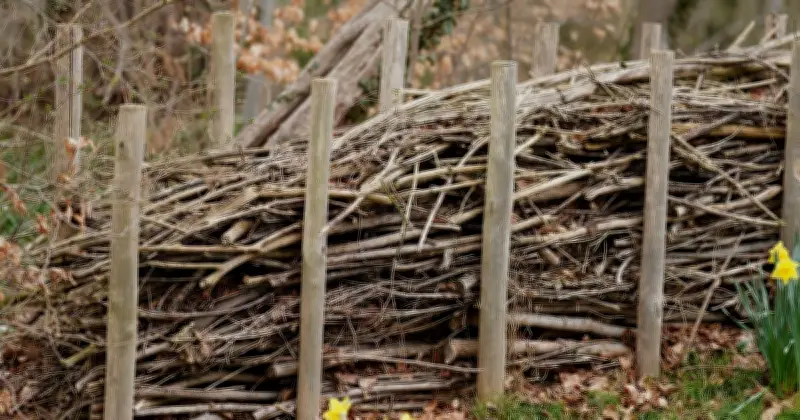
October brings plenty of cutting back and tidying jobs, but not every twig, branch or stem needs to leave the garden. Where pruning is appropriate, cuttings can become useful habitats, giving insects, amphibians, small mammals and other wildlife somewhere to feed, shelter or overwinter.
Build a dead hedge
Woody prunings from fruit trees, shrubs and suitable hedge trimmings can make a dead hedge. Drive two parallel rows of sturdy stakes into the ground, then pack branches and twiggy material lengthways between them. As the material settles and decays, simply add more on top.
A dead hedge can provide cover for insects and shelter for wildlife, while forming an attractive natural screen. If solid fences or walls divide your garden, speak to your neighbour about creating a 13cm x 13cm opening at ground level. Known as a hedgehog highway, this allows hedgehogs to move between gardens in search of food, shelter and mates.
Create a log and branch pile
Thicker branches are excellent for a dead-wood pile. Stack them in a quiet, partly shaded corner, ideally with some pieces touching the soil. Different levels of moisture and decay attract different organisms, while gaps can provide refuge for beetles, centipedes, frogs and toads. Leave the bark on larger logs rather than cutting everything into small pieces. Whole wood breaks down slowly, creating a longer-lasting habitat. Fungi and other decomposers gradually recycle the timber and return nutrients to the garden.
Finer twiggy prunings can be tucked beneath a hedge, added to a dead hedge or gathered into small piles at the back of borders. Hollow, dry stems are valuable too, so where possible leave some standing through winter as overwintering places for insects. Softer, healthy material can go onto the compost heap, where its breakdown supports worms, springtails and other decomposers. Chop tougher material first to help it rot more quickly.
Know what to leave alone
Autumn doesn’t mean every hedge or perennial needs cutting back. Leave berrying growth like hawthorn and holly where possible to provide winter food for birds. Hollow stems and seedheads can also remain for overwintering insects. If you create a log or branch pile, choose a quiet spot and leave it largely undisturbed once wildlife begin using it.
Only use healthy, untreated wood for habitat piles. Keep diseased material, invasive plants and treated wood out, as these may create problems rather than benefits. A few well-placed piles of prunings can turn routine autumn work into something far more useful. Your garden is tidier, while some of what you remove supports the wildlife sharing it with you in the process.
Focus Plant - Crimson Flag Lily
Crimson flag lily, Hesperantha coccinea, is a brilliant perennial for extending colour well into autumn. In October, its slender stems can still carry starry, bowl-shaped flowers above narrow, grassy foliage, bringing fresh colour when many summer perennials are fading. The flowers are especially striking planted in groups through a sunny border or beside ornamental grasses.
There are several lovely forms to choose from. ‘Fenland Daybreak’ has salmon-pink flowers with deeper red veining, whilst ‘Wilfred H. Bryant’ produces particularly pale blush-pink blooms. For stronger colour, ‘Oregon Sunset’ has rich coral-red flowers, and ‘Major’ is a vigorous form with bright crimson-scarlet blooms.
Grow crimson flag lily in full sun, in moderately fertile soil that stays moist but is free-draining. Sheltered positions are best, especially mindful to stay away from cold, drying winds. It also grows well in containers, provided the compost doesn’t dry out completely.
In October, deadhead faded flower spikes to encourage the remaining buds to open. Once flowering has completely finished, spent stems can be cut back, while the grassy foliage can be left until it begins to wither naturally. An organic mulch around established plants will help protect the roots as colder weather arrives. Fun fact: despite its common name, crimson flag lily is not a true lily at all. It belongs to the iris family, Iridaceae, and was formerly widely known as Schizostylis coccinea.
Gardening jobs for now
Cut back large shrubby lavateras by up to half if they are becoming tall or exposed. This reduces the leverage of winter winds and helps prevent wind-rock around the roots. Keep the main, harder prune until spring, when new growth begins.
In mild areas with well-drained soil, sow hardy overwintering peas such as ‘Meteor’ or ‘Douce Provence’ for an earlier crop next year. Sow outdoors and protect young plants with cloches if colder weather arrives. Avoid autumn sowing where soil stays cold and wet.
Remove pond pumps, fountains and removable lighting systems before winter. Clean them thoroughly, check the cables, fittings and moving parts for any damage, and store everything somewhere safe, dry and frost-free. This is also a useful opportunity to remove any accumulated debris, algae or silt from the equipment before it is packed away for the colder months.
Plant ornamental allium bulbs now for bold flowers next year. Choose a sunny position with free-draining soil, as bulbs dislike winter waterlogging. Plant them around four times the bulb’s diameter deep, spacing taller types more generously.
Repair or replace broken greenhouse panes and missing glazing clips before tender plants move inside for winter. Check the whole structure while you work, making sure glazing is secure, and the greenhouse is ready to give plants reliable protection as temperatures fall.