Gardeners can attract wildlife by planting key shrubs, regardless of garden size. Ceri Thomas, Editor of Which? Gardening, explains that the right shrub choices can attract, protect, and shelter wildlife, transforming outdoor spaces into natural havens. She studied horticulture at university and has spent her career editing gardening content. She has selected some of the best native and non-native shrub varieties to help support garden visitors throughout the year.
Summer Planting Tips
Thomas says: "Summer is a great time of year to sit back and let nature bloom, but that doesn't mean you can't be proactive in looking after wildlife. Blossoms will attract small insects, which will serve as a nutritious food source for birds." She recommends topping up bird feeders and leaving out fresh water to keep wildlife hydrated.
Hebe
Native to New Zealand, hebe is a sun-loving evergreen shrub that attracts pollinators like bees and hoverflies. Thomas explains: "This attractive garden favourite enjoys plenty of sunshine and warmth. Hebes are fantastic for attracting a number of insects, from pollinators like bees to hoverflies. Plus, the evergreen foliage provides great shelter for small birds all year round. Hebes are usually small and fairly low maintenance, only requiring a trim during the late summer to maintain neatness."
Elder (Sambucus)
Elders are hardy hedgerow shrubs commonly found along ditches and field edges. They produce bright flowers in early summer, which are wind-pollinated and later develop into berries that provide a valuable food source for hungry birds.
Buddleia (Buddleja globosa)
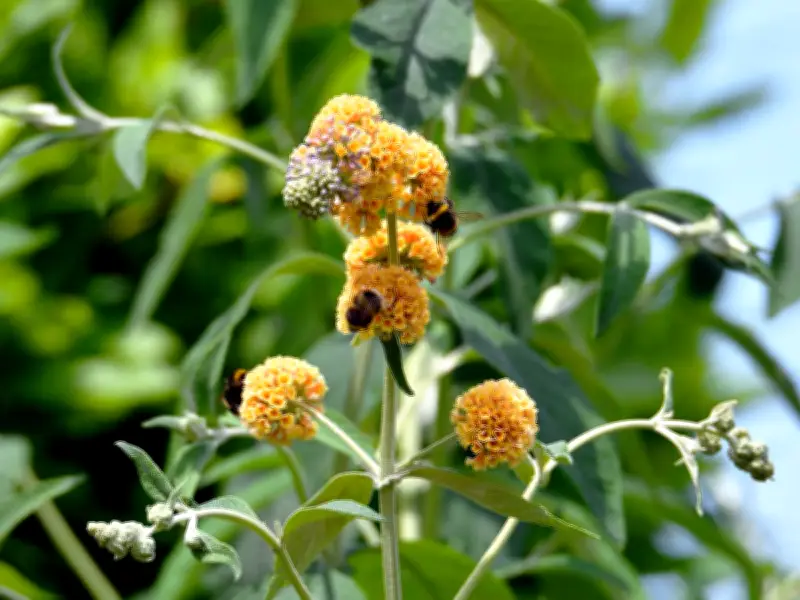
While wild buddleia can grow vigorously and become invasive, Buddleja globosa (also known as the ‘orange ball tree’) is generally easier to manage in a garden setting. True to its nickname, the ‘butterfly bush’, buddleia is well known for attracting butterflies. Thomas added: "During the day it also attracts bees, and moths by night. Cut all the stems back to 45-60cm tall in March to encourage vigorous growth and the best display of flowers. The orange variety is slightly slower growing than the purple, so ideally prune it after the flowers have finished while leaving some longer stems through the winter to protect bugs and wildlife."