
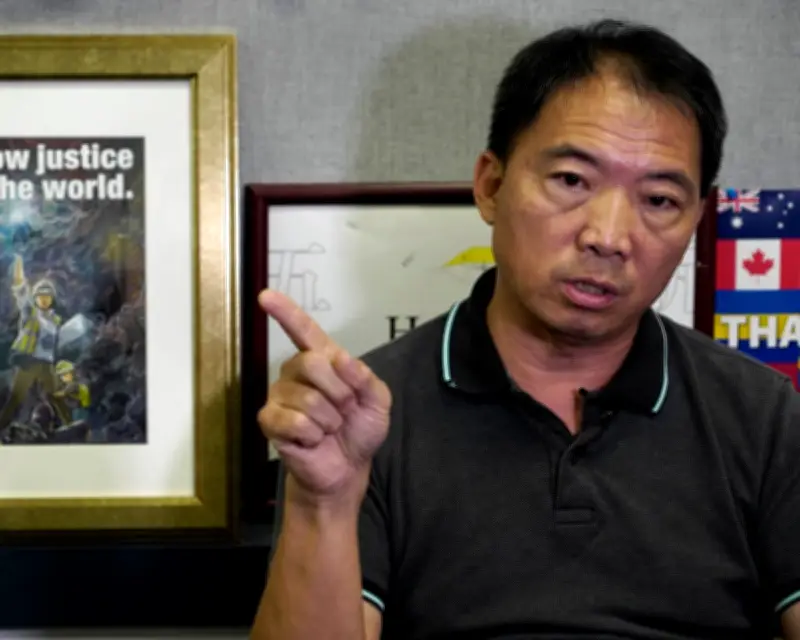
Pro-democracy activists from Hong Kong are facing unexpected obstacles in the UK immigration system, casting doubt on the government's commitment to protect them from Chinese repression. The latest case involves Wu Chi-wai, a former Hong Kong legislator and chair of the Democratic party, who was jailed for over five years for defending freedom and democracy. After his release, he flew to the UK to reunite with his family, but was refused entry at Heathrow, his passport confiscated, and told he would be removed to Hong Kong within seven days. He is now in the UK on temporary admission, with his stay extended to six months only after his case became public.
Wu Chi-wai's Ordeal at Heathrow
Wu, 63, had been told by the British consulate in Hong Kong that he could apply for a British National (Overseas) visa once inside the UK. However, upon arrival, the Home Office cited administrative issues with his paperwork and raised concerns that his visit was not personal but an attempt to claim asylum. "Where is the humanity here?" Nathan Law, a pro-democracy activist and former Hong Kong legislator now in the UK, wrote. "After years unable to hug his family or hold their hands, Wu’s reunion was halted almost before it began."
Previous Cases of Delays
In May, Chloe Cheung, who has a Hong Kong arrest warrant with a HK$1m (£100,000) bounty, applied for indefinite leave to remain. The Home Office withheld approval, asking her to explain her "criminality" – a term Law said echoes Beijing's characterisation of political dissent. After a public backlash and pressure from parliamentarians, her leave was granted. Similarly, Finn Lau, also with a bounty, applied for citizenship in June 2025. The Home Office spent over eight months assessing his "good character," exceeding its six-month target. His application was approved only after public campaigns.
Undermining Britain's Promise
Law, who wrote the article, argued that such hurdles undermine the humanitarian promise Britain made to Hongkongers. The BN(O) visa route, opened on 31 January 2021, has granted more than 230,000 visas and was seen as proof of the UK's commitment. But with high-profile critics facing difficulties, doubts are growing. "A sense of security is not achieved only by countering transnational repression," Law wrote. "It also comes from legitimately feeling that your host country is actively adopting measures that respect your choices and shield you from unjust political pressure."
Call for Reassessment
Law called on the UK government to remove all unjustifiable hurdles for persecuted Hongkongers, emphasising that Britain's promise should not be compromised for a warmer relationship with China. "Removing all unjustifiable hurdles posed to persecuted Hongkongers is the first step to steer back to the UK’s promise. Britain must take it," he concluded.




