
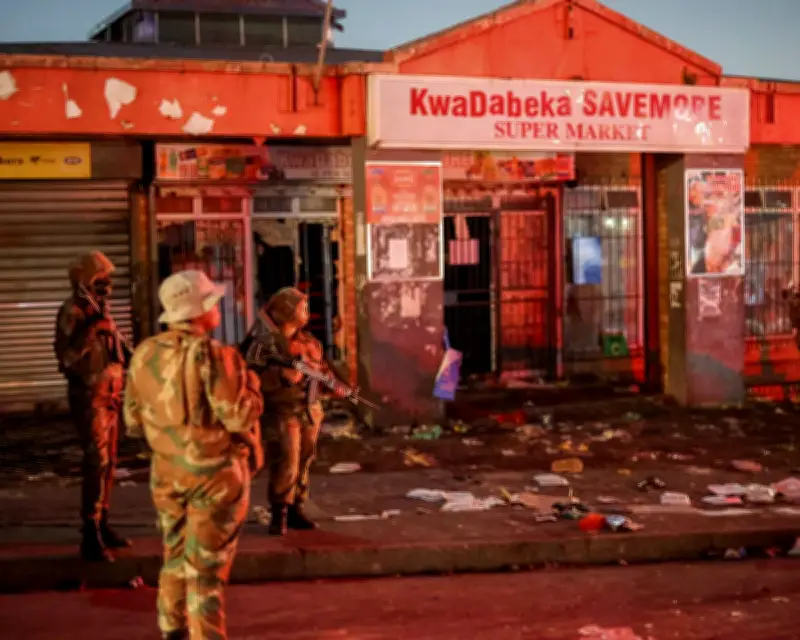
South Africa, long celebrated as a symbol of liberal progress and the triumph over apartheid, is confronting a wave of violent anti-immigrant protests that threaten to undermine its democratic ideals. The protests, which erupted in several cities including Johannesburg and Durban, have highlighted the country's deepening economic crisis and growing xenophobia.
Roots of the Unrest
The demonstrations, led by groups such as Operation Dudula, have targeted foreign-owned businesses, accusing immigrants of stealing jobs and exacerbating poverty. According to recent statistics, South Africa's unemployment rate stands at 32.9%, one of the highest in the world, with youth unemployment exceeding 60%. This economic strain has fueled resentment against the estimated 4 million immigrants, many from neighboring Zimbabwe, Mozambique, and Somalia.
President Cyril Ramaphosa condemned the violence, stating, "We cannot allow lawlessness and xenophobia to tear apart the fabric of our society. South Africa belongs to all who live in it, regardless of their origin." However, critics argue that the government's failure to address inequality and corruption has created a fertile ground for scapegoating.
Historical Context
South Africa's post-1994 constitution is hailed as one of the most progressive globally, enshrining rights for all. Yet, the dream of a "Rainbow Nation" has faded for many black South Africans who still face poverty and segregation. The anti-immigrant protests echo the country's apartheid-era divisions, now turned against foreign Africans.
Political analyst Mzukisi Qobo noted, "The protests are a symptom of a deeper malaise. The ruling African National Congress has failed to deliver economic justice, and immigrants have become convenient targets." The protests have also seen looting and destruction of property, with at least 10 deaths reported in the past month.
Regional and International Reactions
Neighboring countries have expressed concern, with Nigeria recalling its ambassador and condemning the attacks on its citizens. The African Union called for dialogue, urging South Africa to protect migrants' rights. Domestically, civil society groups have organized counter-protests, denouncing xenophobia as a betrayal of the anti-apartheid struggle.
Economic experts warn that the unrest could deter foreign investment, which is crucial for recovery. The South African rand has weakened, and the World Bank projects growth of only 1.5% for 2026.
The protests pose a critical test for South Africa's identity. As the country grapples with its legacy of liberation, the question remains whether it can uphold its values of inclusivity amid mounting pressures.




