
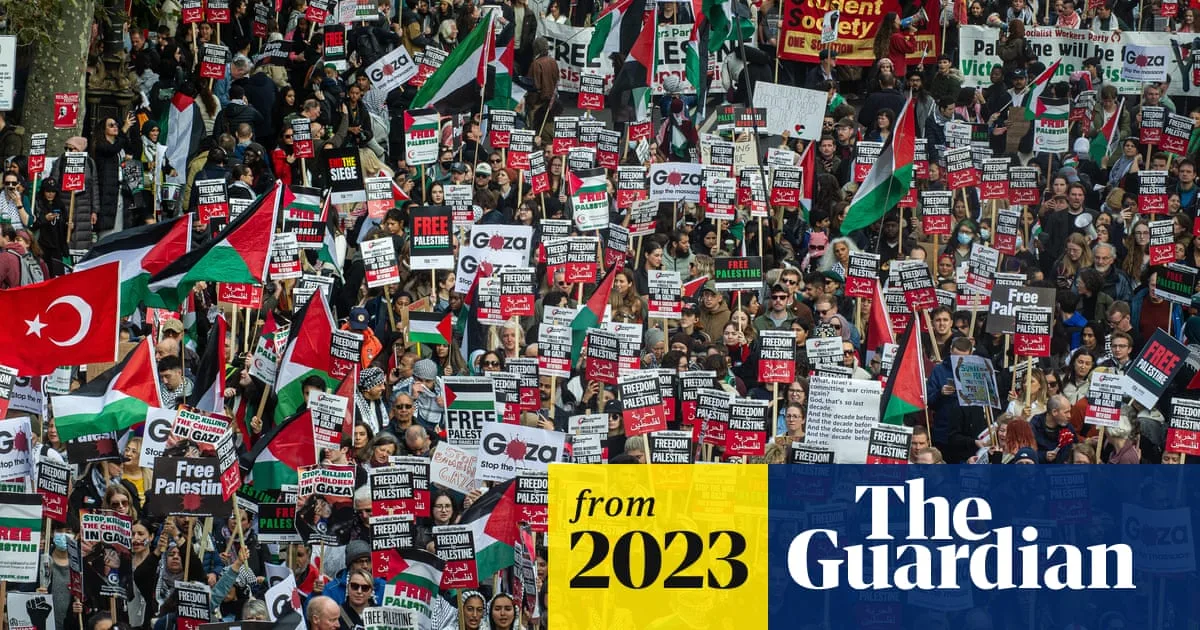
Organisers of a pro-Palestinian rally in London say the march on Armistice Day could be one of the largest political marches in British history, with hundreds of thousands expected to attend. The demonstration has become the backdrop to a political row over Home Secretary Suella Braverman's public criticism of the policing of protests.
On Saturday morning, hundreds of far-right activists, including former English Defence League founder Tommy Robinson, gathered by the Cenotaph on Whitehall. Some explicitly stated they had come because of Braverman's comments about pro-Palestinian 'hate marches', claiming police treated them unfavourably compared to 'politically correct minority groups'. In the buildup to the two-minute silence, elements of the crowd broke down metal gates to get closer to the Cenotaph. Later, dozens of those present, some holding Israeli flags, attempted to reach the pro-Palestinian march but were intercepted by the Met's territorial support group.
The Metropolitan Police said in a statement: 'A group of counter protesters who left Whitehall and moved into Chinatown confronted and threw missiles at officers who tried to engage with them. Additional officers have been deployed to the area to identify, locate and deal with those involved. Our priority is keeping the public safe. We will not tolerate disorder in central London today.' More than 2,000 police officers will be on duty for a 'significant' operation across remembrance weekend, with 1,000 officers called up from outside the capital.
The pro-Palestine march began assembling at about midday at Park Lane, before starting to march at 12.45pm. A spokesperson for the Palestine Solidarity Campaign said: 'We invite all people of conscience to join us in peacefully marching. More than 500,000 people are expected to converge in London, making it one of the largest political marches in British history.' The Met police commissioner, Mark Rowley, vowed 'at all costs' to stop any disruption linked to the march. Protesters who diverge from the agreed route face a fine of up to £2,500, and exclusion zones have been set up across the capital, including the Cenotaph, Whitehall, Horse Guards Parade and Westminster Abbey Field of Remembrance.
Protests planned at a number of London train stations have been banned, with orders in place prohibiting trespassory assembly at Waterloo, Victoria and Charing Cross between 10am and 11pm on Saturday. A Met spokesperson said: 'We'll be using an extensive set of powers to prevent any disruption whatsoever to Remembrance events.' Rowley has defied calls from politicians for a ban, insisting there was insufficient intelligence of a risk of serious public disorder. Public order units have had their leave cancelled as resources are redirected.
Conservative MP Theresa Villiers said she had hoped the march would be cancelled but now hoped it would proceed peacefully. Former Conservative minister Nicholas Soames expressed confidence in the police, stressing that those who died in the first world war died for freedoms such as the right to protest.




