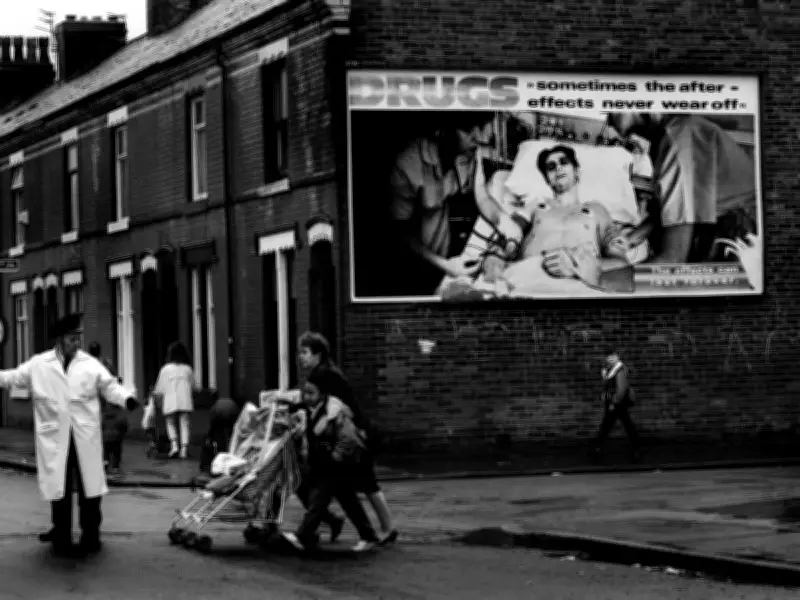
The Gooch and Doddington gangs terrorised Moss Side in the 1990s, with their drugs feud linked to the 1993 murder of 14-year-old Benji Stanley. Their names became bywords for bullets, bloodshed and barbarity in the deprived south Manchester district.
Victims of the feud
Claims surfaced that Benji Stanley died because he was mistaken for a Doddington member. He was not the only alleged victim of the feud. Carl Stapleton, just 17, was fatally attacked with a machete on Alexandra Park estate in April 1991, suffering 15 wounds. His crime was being friendly with members of the Gooch mob.
In the same year, 21-year-old Darren Samuels was shot dead. A trial of two suspects was scrubbed after an eyewitness refused to give evidence. Julian Stewart, also 21 and described as a prominent Doddington member, was shot in the head in January 1994.
Brazen gang culture
The roll call of tragedy continued: Orville Bell, 17, drive-by shooting; respected community worker Evon Berry, 37, gunned down while trying to prevent a robbery; Zeus King, 19, accidentally shot by a member of his own gang. The power the gangs wielded and their refusal to hide in the shadows still shocks three decades later.
Even politician Paddy Ashdown, then Liberal-Democrat leader, was threatened while visiting Moss Side in 1993. In his memoir, Beyond Westminster, Mr Ashdown recalled: "A youngster comes up to me and says, 'What the hell are you doing here? If you are not dealing, f* off!' As he does so he pulls his bomber jacket back to reveal the butt of a sub-machine gun."
From concrete utopia to nightmare
The spread of gang culture was fuelled by high unemployment, a chronic shortage of opportunities, addiction, poverty, and even architecture. The Moss Side District Centre, designed in the 1960s, was hailed as a state-of-the-art concrete utopia with a library, shopping precinct, education centre, swimming pools and squash courts. The dream quickly descended into a nightmare for those in nearby maisonette blocks, plagued by rodent and bug infestations from the start.
In 1978, the Manchester Evening News concluded 'acute social pressures and short-sighted planning' had nearly scuppered the grand project. The sports centre was trashed within a week of opening. Boots and Asda pulled out following assaults on staff. In 1993, the Sunday Telegraph reported: "The dreadful Moss Side shopping centre, soon to be closed, is virtually empty."
The rise of Gooch and Doddington
The Gooch Close Gang, aka The Gooch, gave rise to factions including the Pit Bull Crew, Longsight Street Soldiers, Rusholme Crew Gangsters, and Old Trafford Cripz. Doddington began as the Pepperhill Mob, named after a pub, but shifted base to Doddington Close and rebranded. Its support battalions included the Haydock Close Crew, Moss Side Bloods, and Portuguese Mafia.
In 1994, Doddington's reported leader Ian McLeod survived an assassination attempt while driving his car, despite the bullet lodging in his head. In 2007, the 42-year-old received a life sentence for a bungled hit on two men in a Salford pub. At Manchester Crown Court, Mr Justice Andrew Smith told McLeod: "Two men died, they were not innocents, but they were young, their lives were not expendable. You will always present a danger to the public."
Operation China and the fall
Greater Manchester Police launched Operation China in response to the 1990s shootouts. Benji Stanley's death also played a part in bringing peace, leading to enhanced police-community initiatives and ceasefires. In 1999 there were 81 shooting incidents across Greater Manchester, with 68 per cent in the city's south.
Doddington effectively destroyed themselves through internal power struggles. Gooch were delivered a crippling blow in 2009 when Colin Joyce, aged 29, Lee Amos, 33, and 10 other members were jailed for a total of over 200 years. Mr Justice Brian Langstaff described their reign as 'all too reminiscent of Al Capone and Chicago in the era of prohibition'. Det Chief Insp Stephen Eckersley said: "This is by far the biggest trial of gang members we have ever run and the implications for the city are immense."
Redevelopment and a resolve not to repeat history have made Moss Side a quieter, safer place.