
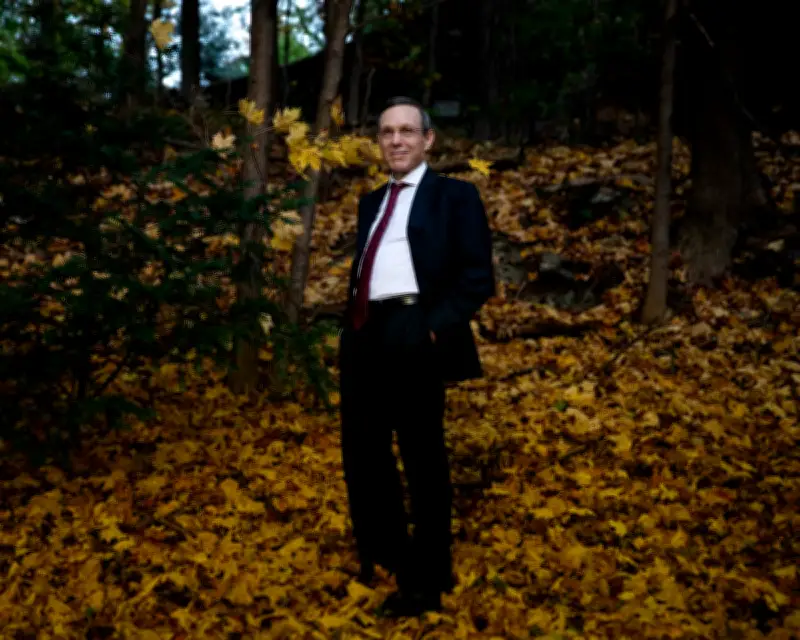
Harvard University cosmologist Avi Loeb, known for suggesting that alien life forms could enter the solar system disguised as meteors, is now leading the Trump administration's secretive scientific advisory panel on security risks posed by unidentified flying objects, now termed unidentified aerial phenomena (UAP).
Panel Begins Work with Pentagon Requests
Loeb and his hand-picked committee have already started investigating the origins of mysterious flying craft. Last month, they asked the Pentagon for dozens of videos, images, and documents of reported encounters and incidents, according to the Associated Press. The panel meets in private and will report its findings to the White House, which has already released three batches of previously classified UFO material to the public.
Loeb's Approach: Starting with Human-Made Assumption
Loeb, an Israeli American astrophysicist who formerly led Harvard's astronomy department, told the Associated Press that he views his appointment as an opportunity to educate a notoriously science-averse administration about logical explanations for UAP. “My impression is the government is baffled by not being able to infer the nature of some of these objects,” he said. “At a time when science is not so much celebrated, this is an opportunity to actually do good for all sides involved.” However, he emphasized that he starts with the assumption that UAP are human-made, approaching the task from a national security perspective.
Criticism from Scientific Community
Some analysts question Loeb's leadership due to his unconventional thinking about alien life, including a 2023 hypothesis that a comet passing close to Mars was a relic from another civilization. Steve Desch, professor of astrophysics at Arizona State University and a long-time Loeb critic, said, “I don’t know what’s going to come of this, but we’re not going to get any closer to answering these questions with him in charge.” In a 2023 Guardian interview, Loeb dismissed critics as jealous, stating, “Childlike bullying is more prevalent than childlike curiosity in academia. People just try to step on every flower that rises above the grass level. This negativity is very damaging because it suppresses innovation.”
Panel Members Include UAP Believers
Concerns extend beyond Loeb's presence. Like health secretary Robert F. Kennedy Jr.'s selection of vaccine skeptics for an immunization panel, Loeb has surrounded himself with like-minded individuals. One panel member is Timothy Gallaudet, a retired navy rear admiral who believes UFOs of alien origin have visited Earth. “The nonhuman intelligence that operates them or controls them are absolutely real,” he said in April. “We’ve recovered crashed craft. We don’t know if they’re extraterrestrial in origin.” In 2024, Gallaudet told a congressional oversight committee that UAPs were interacting with humanity almost at will during his 2015 command of navy meteorology and oceanography operations, and he claimed a government cover-up involving disinformation campaigns against whistleblowers.
Another panelist is Ben Lamm, a 44-year-old billionaire entrepreneur known for his genetics company's efforts to revive extinct animals like the dodo, Tasmanian tiger, and dire wolf. Lamm has also attempted to find UFOs using satellites pointed at Earth. His unconventional scientific thinking aligns with Loeb's decades-long quest for alien life, detailed in hundreds of papers and a bestselling book, Extraterrestrial: The First Sign of Intelligent Life Beyond Earth.
Controversial Expeditions and Scientific Scrutiny
Loeb's mission to Papua New Guinea, aimed at determining whether a 2014 meteor was part of an interstellar spaceship, exemplifies his approach. An object he theorized could be of “extraterrestrial technological origin” turned out not to be, and spherules (tiny glassy beads of metal and rock) recovered from the ocean floor were unconnected to the meteor, according to other scientists. Critics are particularly alarmed that Loeb and his team may access sensitive Pentagon materials. Sean Kirkpatrick, a physicist who previously investigated UAP at the Pentagon's All-domain Anomaly Resolution Office, said Loeb is “not viewed favorably” in the scientific community and lacks national security experience. He suggested the panel's makeup indicates the White House is more interested in fringe theories than hard science.
Public Interest Remains High
Despite criticism, the committee's success may hinge on presenting new information to a curious public. An October CBS News/YouGov poll found that 80% of respondents believe the government knows more than it reveals about extraterrestrial life, 63% believe life exists on other planets, and over one in five is convinced aliens have already visited Earth.




