
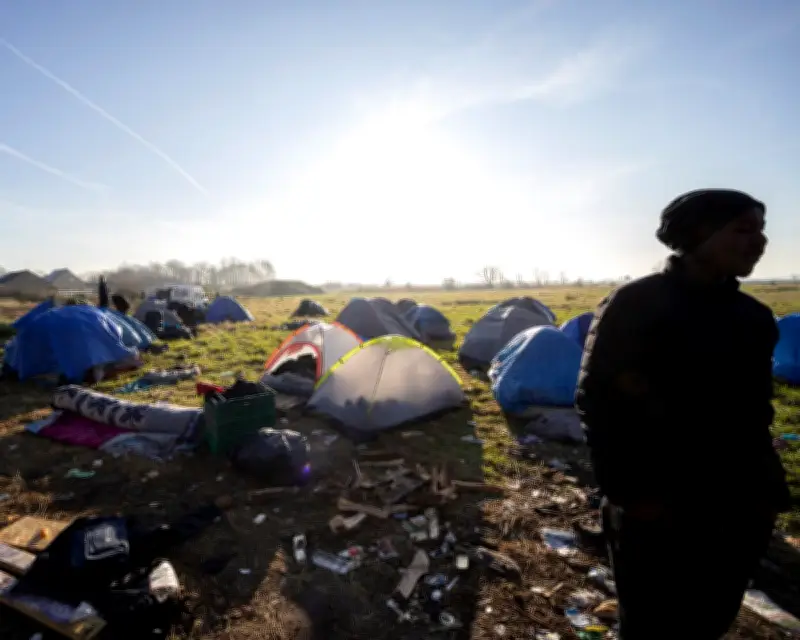
The far-right mayor of Castres, Florian Azéma, has cancelled a scheduled performance of Alexis Michalik's play Passeport, a drama about a migrant who loses his memory in the Calais 'Jungle' camp. The decision has ignited accusations of political censorship and drawn condemnation from France's culture minister.
Play's Cancellation Sparks Outrage
Azéma, elected in 2026, removed the play from the town's cultural programme just before its announcement, calling it 'political propaganda' that promoted illegal immigration and depicted police negatively. He told Agence France-Presse: 'Obviously this does not correspond to what I stood for during the election campaign.'
The cancellation prompted questions in parliament. Culture Minister Catherine Pégard stated: 'I would like to remind everyone that freedom of artistic expression is protected and enshrined at national level by the law.'
Michalik's Response
Michalik, a five-time Molière award winner, expressed dismay. 'Creative freedom and the independence of cultural programming are neither rightwing nor leftwing. They are one of the cornerstones of our democratic way of life,' he said. 'People have the right to like the play or not, but everyone should be able to see it.'
He compared the move to Donald Trump's approach, saying: 'It's a very Trumpish approach.' He warned that if the National Rally, leading polls for the 2027 presidential election, gains power, such censorship could become widespread.
Play's Themes
Passeport follows a man who wakes up in the Calais 'Jungle' with no memory and only a blue Eritrean passport. He and two others attempt to integrate into France rather than cross to the UK. Michalik said he wanted to tell 'the story from the migrant's perspective and not the usual story we hear in the media.'
Michalik, whose mother is British, grew up in multicultural north Paris. 'I know that different populations can live together and it works,' he said. He expressed sadness over rising hostility towards migrants, noting that throughout history, 'it's always the same people who label them as the problem.'




