
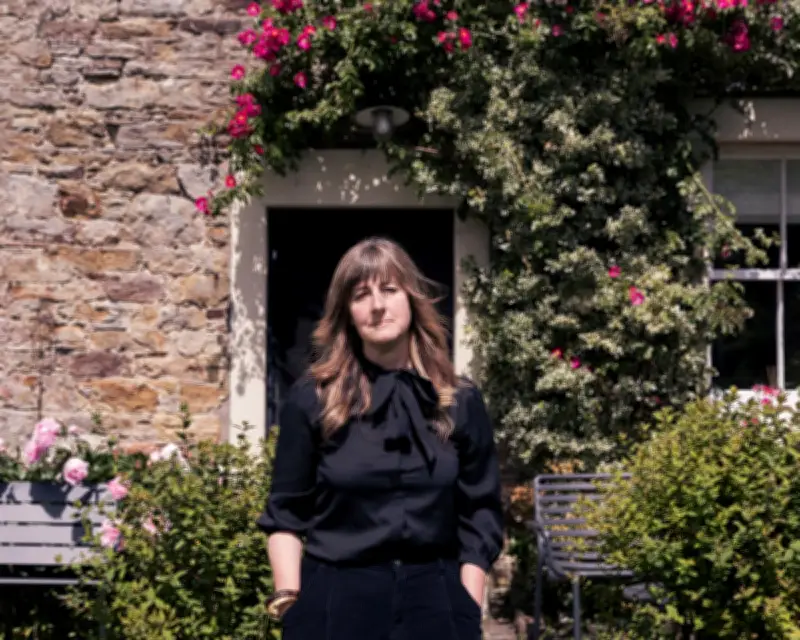
Nicola Wilding knew the letter was from her brother, Billy, as soon as she saw the line of tape on the envelope flap. His mail had to pass inspection: he was three months into a prison sentence for attempted carjacking with an imitation gun. “Have you spoken to Mum lately?” he wrote. “She’s turned into a fascist, lols.”
It was 2013 and their mother – a 59-year-old care worker, who for most of her life had voted Labour – had just attended her first march with the English Defence League. Wilding read her brother’s news while at the kitchen table in her flat in Glasgow. “Was I worried?” she says. “I was bemused. I thought: ‘Oh, Mum’s just being daft. She’s having an adventure. She’ll get over it.’” But instead, “the anger stayed”, more marches followed – and Wilding started to wonder what personal and political forces had led her family to this place.
A Family Memoir Spanning Three Generations
Thirteen years on, her family memoir, These Wild English, tells the story of three generations, from her grandparents’ farm in Cumbria to the scrapyards, banger race tracks and care homes of Kent. It is shot through with her family’s “bootstrap fatalism” – “this sort of hopefulness in the absence of hope” – and fizzes with all the family love, joy and “crazy energy” of a souped-up Darling Buds of May. But there is violence too, less cash and a lot more alcohol.
Wilding, 52, is a television producer who has worked on documentaries covering social issues from adoption to the housing crisis, as well as shows including Dragons’ Den and Bargain Holiday Secrets. But she has never turned her focus on her family, or herself, until now. Ten years on from the Brexit vote, could she, by exploring their stories – “lives that are neither deserving nor undeserving but simply unheard” – unravel bigger truths about why so many working-class people feel unseen and unserved by traditional mainstream politics?
Confronting Her Mother’s Politics
At times, Wilding sounds like an anxious parent trying to explain or excuse the acts of a wayward teen: her mum had “fallen in with” the EDL; it “might be a phase”; she had always been “feisty” and impulsive. But when her mother changed her Facebook profile banner to a photo of Lee Rigby, the soldier murdered by Islamist extremists in 2013, and words such as “patriot”, “infidel” and “no surrender” flooded her posts, Wilding tried to speak to her.
“I did say: ‘I’m not sure this is the best use of your time, Mum. Are you sure this is right?’ And: ‘Do you look at everything you’re posting? Do you think some of it’s racist?’”
There is a lot of equivocating, and you can almost hear Wilding squirm, more than 10 years later, as she tries to broach the big questions and fathom her own responsibilities within the complex dynamic of their relationship. “I sort of held my counsel and showed my disapproval, but I wasn’t absolutely condemning her because she’s Mum,” she says.
The problem is not only personal, but societal. “I don’t think we know how to have these conversations,” Wilding says. “We don’t know how to frame things without being scared. I felt scared writing this book.”
Understanding, Not Condemning
“I’m far right if you say I am,” her mother replied when Wilding eventually asked her. This sounds less like a self-description than an assertion that her daughter, as a media professional, held the power to categorise, and judge. So what does Wilding think?
“No, she’s never … I mean, I can’t, and I don’t, and I can’t, and I won’t see my mum as racist,” she says. “Misguided, possibly.” For 40 years, her mother “was a brilliant care worker for people from all creeds and colours, all walks of life. She cared for people without fear or favour.” In later years, she specialised in caring for people with Korsakoff syndrome, a chronic memory disorder.
Her mum liked “a spark of notoriety”, Wilding says. But she “never joined the EDL. She went on the marches because she … was scared.”
The Personal Becomes Political
Her mother’s third husband, whom Wilding steadfastly calls “the soldier”, was a corporal in the British army. Sandra and Wilding’s three siblings had followed him from Kent to Cyprus, Colchester and County Tyrone in Northern Ireland. The murder of Rigby felt personal.
“For the last 10 years, she had been living in barracks … This idea that you could be hated and murdered in your own country, it really triggered her.” She went on her first march a few weeks later.
“We live in a multicultural society.” Wilding says that when her mother was born, that wasn’t so much the case. “If a lot of people are reacting with fear, we have to acknowledge that, not dismiss it, or flatten it down to prejudice, bigotry and racism. Because if we want to get along in this multicultural society, we have to put in the work and make sure we’re bringing everybody. I don’t think we know how to do that yet.”
Broader Implications for Working-Class Britain
Wilding’s three siblings joined their mother on a hard-right demo in Dover – her twin sisters took the day off work; one brought her boyfriend. The way Wilding tells it, it was a “day out”, perhaps not unlike the outings her uncles and aunts had at the county fair back in Cumbria. At the time of Sandra’s death, Nigel Farage was one of seven people she followed on Instagram. She thought him “a splendid chap”, Wilding says. “She liked Trump, too” and if she were alive, would “probably vote Reform. I think most of my aunts and uncles would vote Reform.”
But how far can any one family be representative of a bigger picture? And were the challenges they faced – to find work, stay afloat, be healthy, reliable – consequences of their own poor choices or of governmental choices, and broader economic, state and political shifts?
“There’s a comfort in blaming systems and external factors in how the working class live their lives,” Wilding says. Initially, she thought it patronising. But the more she wrote, “the more I started to see context” – local, national and global.
The roads get busier. Divorce is simplified. The farm the family rented is sold, and turned into a crematorium. And Margaret Thatcher introduces the right to buy, which in 1985 allowed Wilding’s mother and stepfather to buy their council house with a 100% mortgage.
“We think about the 1950s, 60s and 70s and all these great institutions: the NHS and hundreds of thousands of council houses built for the working class by the working class – and all that’s been stripped away,” Wilding says. “Now we have a globalised economy.”
A Personal Escape and Lingering Guilt
Wilding doesn’t have children – she had looked after her younger siblings so much in childhood that “for a long time, I didn’t want to go there. I felt by the time I was 20, I’d done that.” She is an aunt “to five or six nephews, maybe more” – an interesting imprecision from the family chronicler.
As Wilding finished writing, her mother was diagnosed with cancer, and the book is not only a journalistic search for understanding, but a daughterly one, carried forward through the lens of grief. In her loss, Wilding started drawing again, immersive, intricate black-and-white line drawings – “for therapy, because it calms me down”.
She frequently slips into the present tense while speaking about her mother. “Maybe on the face of it, it looks like we’re not close, but that’s because we know each other too well,” she says. In adulthood, they were polite. “We knew each other’s vulnerabilities and weaknesses. We circled each other carefully, because we knew exactly who the other person was.”
So what would her mother think were Wilding’s weaknesses? “Mum saw me as very, very sensitive, full of a brittle pride and a worrier,” she says. “She was brilliant at being supportive and never judged me. I just hope I’ve done her justice, for the complexity that is my mum.”




