
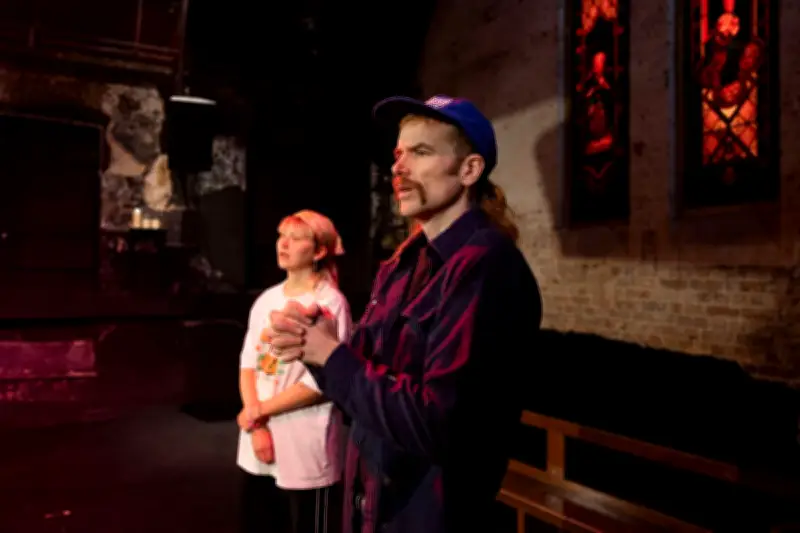
It took months for an LGBTQ+ arts pop-up to resurrect an old church in Sydney, but just three days to shut it down. The group behind Divine Playhouse is considering a legal challenge and discrimination complaint after religious protests turned the venue into a culture war.
Eviction and Legal Response
Heaps Gay Events, the promoter, had until 5pm on Friday to vacate the premises, giving them three days to clear a space that had been months in the making. Their lawyers are exploring whether they can sue for damages and make a sex discrimination claim.
“It’s not just about Divine any more, it’s about censorship,” said Kat Dopper, promoter and founder of Heaps Gay. “If we were to walk away, these groups will just get stronger and more powerful and louder. We can’t allow that to happen.”
Background and Protests
After sitting empty for a year, Sydney’s St John the Evangelist church – deconsecrated in the 1930s – was resurrected as an LGBTQ+ inclusive arts space, opening on 8 July with a year-long permit. For just three days, Divine Playhouse hosted an opening night party, a queer comedy night and a disco. A day after religious groups gathered outside to protest its opening and called on the New South Wales government to withdraw its $100,000 arts grant, the landlord ordered Heaps Gay to cease “engaging in offensive trade” or risk eviction, before terminating the lease.
Christian groups, including Fit for the Kingdom and the Prodigal Sons, took issue with what a spokesperson from Fit for the Kingdom described as “hateful blasphemy that mocks what we hold most sacred”. They pointed to social media images from the opening night featuring drag queens dressed as nuns, an attender wearing a corpus from a crucifix on a leather choker, and a performer in a pig costume offering french fries as holy communion.
Legal Arguments
The law firm representing Heaps Gay, Marque Lawyers, argues the landlord did not have a proper basis for termination. The notion of “offensive trade” in the Conveyancing Act 1919 (NSW) finds its roots in 1840s English law and was historically used to regulate things like noxious smells, said managing partner Michael Bradley. “It’s never been applied to moral offensiveness in the way the landlord is seeking to do.”
Cathy Sherry, a Macquarie University professor and land law expert, said there was a “very strong possibility” that the definition referred to things that were physically offensive. “If one landlord can evict a tenant because they claim what they’re doing on the premises is offensive, then every landlord can.”
Impact and Future
Before eviction, Divine Playhouse had made hundreds of bookings and was set to support more than 1500 artists, producers, performers, technicians, small creative businesses and staff during its year-long lease. Lawyers are also examining whether the venue can make a complaint to the Australian Human Rights Commission. More than 18,000 people have signed a petition to back the venue and $41,000 has been raised to help cover artist fees, pay for lawyers and fund its move.
“I’m so sad that no one’s going to get to see the space,” Dopper said. “It was such a nugget: it could have a stage in the round for bands, it could be a cabaret with the long catwalks and theatre … It was literally perfect.”
Dopper is organising a fundraiser show for cancelled artists and a protest, which will be held on Saturday.




