
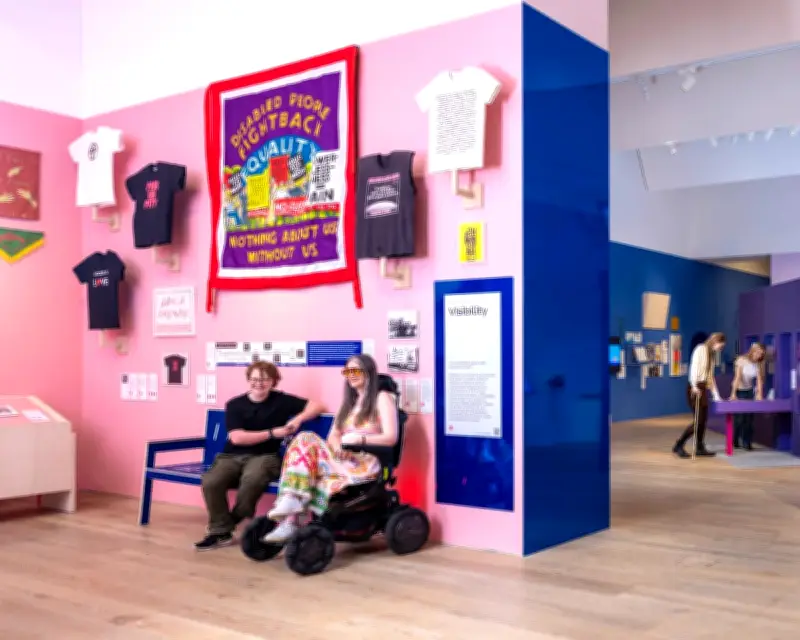
At the V&A Dundee's Design and Disability exhibition, slogan T-shirts declare messages like "Access is love" and "Piss on pity," the latter referencing the 1990 Block Telethon campaign when disability activists protested their portrayal as tragic victims.
Exhibition Highlights
The show celebrates contributions of disabled, deaf, and neurodivergent people to design and culture, featuring pieces like Jamie O'Donnell's airline seats for neurodivergent and low vision travellers, a harness for hearing-impaired gig-goers, and adaptive bras by Slick Chicks.
Frances Ryan, Guardian columnist and author of Who wants normal?, noted: "As someone born with a disability that means I use a wheelchair, I soon realised it was completely normal for me to be blocked off from every day parts of life... But that isn't 'normal,' of course. It's a choice society makes and can address if there is the political will."
Slow Pace of Change
The McGonagle Reader, an audio-assisted tactile voting device for blind people, was only released in some parts of the UK for the 2024 general election. Colin Hughes, a former BBC producer with progressive muscular dystrophy, said smart glasses are "transformative" but noted many disabled people are priced out of tech.
Ryan added: "It recently cost me £20k to build an accessible bathroom and I was just quoted £1.8k for a smart curtain rod." Research by the Disability Poverty Campaign Group found nearly three-quarters of respondents said their income does not consistently cover food costs.
Protest and Policy
The exhibition documents historic protests like the 80s and 90s Campaign for Accessible Transport and recent demonstrations against proposed cuts to disability benefits. Disability minister Stephen Timms has been tasked with reforming the benefits system.
Ryan called for a progressive alternative to Personal Independence Payments (Pip), which were brought in in 2013, and the return of indefinite awards for people with permanent conditions. She cited research showing over half a million pointless reassessments last year.
Radical Acts
Curator Natalie Kane said the exhibition was "an act of joy and resistance," adding that daily disabled living demanded "one radical act at a time." Ryan echoed this: "I never underestimate the power of every day protest... In a world that still too often says disability is miserable and shameful, living a life of freedom and joy is a radical act."




