
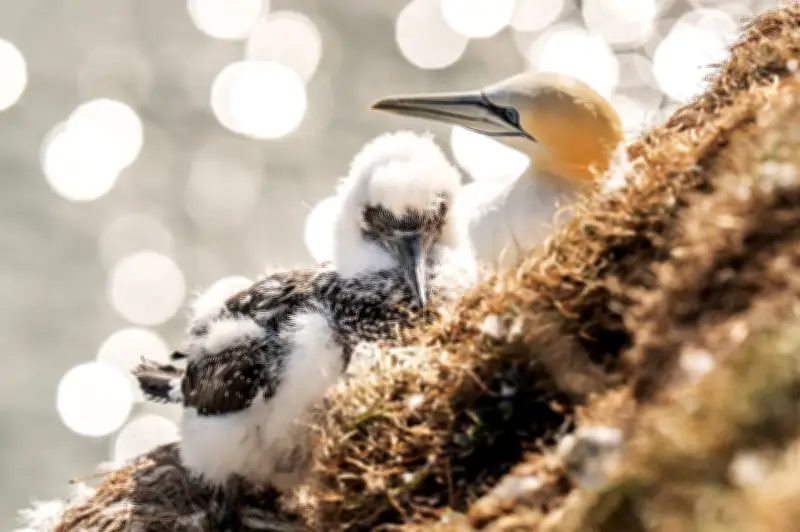
Animal welfare charities have welcomed NatureScot's recommendation that a licence not be granted for this year's guga hunt on the remote Scottish island of Sula Sgeir, but they are calling on the Scottish Government to make the ban permanent.
The hunt, which has been an annual tradition in Ness, north Lewis, since the 15th century, involves 10 men setting out for the rocky island 40 miles away. Young gannets – guga – are taken from open cliffs using a pole and noose, before being gutted, salted and preserved in brine.
Conservation grounds for recommendation
Papers released ahead of a NatureScot board meeting next week revealed the organisation has recommended the hunt does not go ahead based on conservation grounds to allow the population to recover following bird flu. The paper published by NatureScot said the organisation “recognises the strength of feeling expressed by a wide range of stakeholders on animal welfare aspects. In assessing the 2026 application, we have considered whether the proposed activity is likely to constitute any offences under relevant legislation”.
OneKind chief executive Jason Rose said: “Since the licensing of the hunt resumed last summer, OneKind has calmly and clearly made the case for this grisly piece of history to be retired, as no animal should ever have to suffer in the name of human tradition. The recommendation to the NatureScot board is clear and shows what is possible when constructive engagement is sought and considered evidence is presented – a way of making progress for animals that has seen OneKind lead the way over many years.”
Call for permanent ban
OneKind is calling for the Scottish Government to make the ban on the guga hunt permanent. Mr Rose continued: “OneKind held early discussions last year with NatureScot and we shared our report with community leaders in the Western Isles. We hope today’s paper is acted on by the board, but even so it is only the first step. NatureScot has not ruled out allowing the guga hunt in future years. We still need the Scottish Government to act, to close the legal loophole that allows this hunt in the first place.”
Last year NatureScot granted a licence allowing up to 500 birds to be killed, with a total of 485 culled at the 2025 hunt. Traditionally, the birds formed an essential part of the winter diet for the people of Ness, but guga is now regarded as a delicacy by some.
Robbie Marsland, director of the League Against Cruel Sports Scotland and Northern Ireland, welcomed the recommendations but also called for a permanent ban. He said: “This is great news for the gannets of Sula Sgeir and we welcome NatureScot’s recommendation not to license the hunt this year. But it’s a stay of execution, not a reprieve. The decision has been made on conservation grounds, which means that once the population recovers, there’s every likelihood that the killing starts again. We’re calling on the Scottish Government to close the loophole that lets up to 2,000 young birds on this tiny island be killed. This hunt belongs to another century. Understanding of animal welfare has changed and no animal should die like this for food in Scotland in the 21st century.”
Activism and legal context
In March, activists protested outside the Scottish Parliament as a petition to end the guga hunt passed 100,000 signatures. The protesters had tape over their mouths and held signs reading “Don’t silence us” as they raised concerns the petition would be delayed by the Holyrood election in May. The Public Petitions Committee is considering the petition.
The killing of wild birds in Scotland is illegal. However, the guga hunt falls into a legal exemption in Section 16 of the Wildlife and Countryside Act (1981), specifically allowing gannets to be taken from the island of Sula Sgeir for the purpose of human consumption, as per historical tradition.




