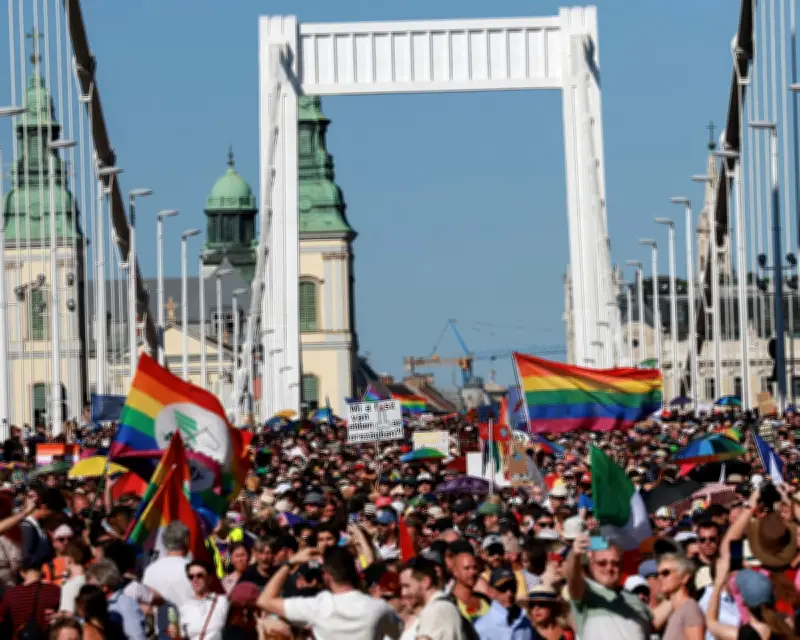
Budapest Pride returns on Saturday for its first march since the ouster of Viktor Orbán's government, with organisers expressing both hope and caution over the future of LGBTQ+ rights in Hungary. The event, which police have authorised, is expected to draw large crowds after last year's record turnout of more than 200,000 people.
Organiser Highlights Mixed Emotions
Petra Buzás, part of the organising team, said: "This year's Budapest Pride March is particularly important because it is about hope, caution and perseverance all at once. Budapest Pride's hope is that LGBTQ people in Hungary will finally be seen not as political targets, but as whole citizens."
The comments reflect the lingering turmoil after 16 years of Orbán's nationalist rule, during which his government led a crackdown on LGBTQ+ rights, culminating in a law that sought to ban Pride events—the first such law in the EU's recent history.

Last Year's Defiance and Political Shift
Last year, bolstered by civil society groups and Budapest's mayor, Pride went ahead despite the ban, with over 200,000 attendees turning it into a show of force for freedom and equality. That defiance foreshadowed Orbán's Fidesz party being ousted about 10 months later, when Péter Magyar's Tisza party won a landslide victory in parliamentary elections.
Nearly two months after Magyar took power promising "regime change", Buzás said many in the LGBTQ+ community continue to reel from the stigma spread by Orbán's government. "We cannot yet speak of a meaningful, widely perceptible change in the everyday lives of LGBTQ people," she said. "Many people are still afraid to be open about who they are, about their families, or their relationships, and social stigma remains strong."
Cautiously Encouraging Shifts
Despite the challenges, Buzás noted "cautiously encouraging" shifts. "Compared with the openly hostile government communication of previous years, there have now been several signs suggesting at least a more open attitude towards the LGBTQ community," she said. "This gives us reason to hope, but our trust is tied not to words or gestures but to concrete legislative and institutional steps."
On the night of his election victory, Magyar called for a Hungary where "no one is stigmatised for thinking differently than the majority, or loving differently than the majority." He also urged Orbán's Fidesz party to "get out of the bedrooms of the Hungarian people as soon as possible." However, Magyar has not mentioned Pride events, and his government has not moved to reverse Orbán's legislation barring such events.
Civil Society Calls for Repeal
This month, a coalition of civil society groups called on the government to repeal the legislation, stating it had "no place in a democratic state governed by the rule of law." Other anti-LGBTQ+ laws introduced by Orbán's government, including restrictions on LGBTQ+ topics in schools, media and bookstores, curtailment of adoptions by same-sex couples, and denial of legal gender recognition for transgender and intersex people, remain in place.
"The most important obstacles still remain," said Buzás. "Our greatest concern is that change will remain at the level of symbolic gestures, while the everyday safety, dignity and legal equality of community members remain fragile."
Broader European Context
The changing fortunes of Budapest Pride come as campaigners say far-right politicians in Europe and beyond are weaponising LGBTQ+ rights, sowing divisions that are sending hate crimes soaring. Budapest Pride, which launched in 1997 as the first march of its kind in central and eastern Europe, has become a potent symbol after the community stood up against Orbán, one of the world's most successful populist leaders.
"The story of the Hungarian LGBTQ community in recent years has also shown that repression does not always achieve its goal," Buzás said. "Those in power may try to create fear, restrict a community through laws and stigmatise it through propaganda, but this can also backfire: for many people, it makes clear that standing up for the rights of the community is in fact about the freedom of all of us."