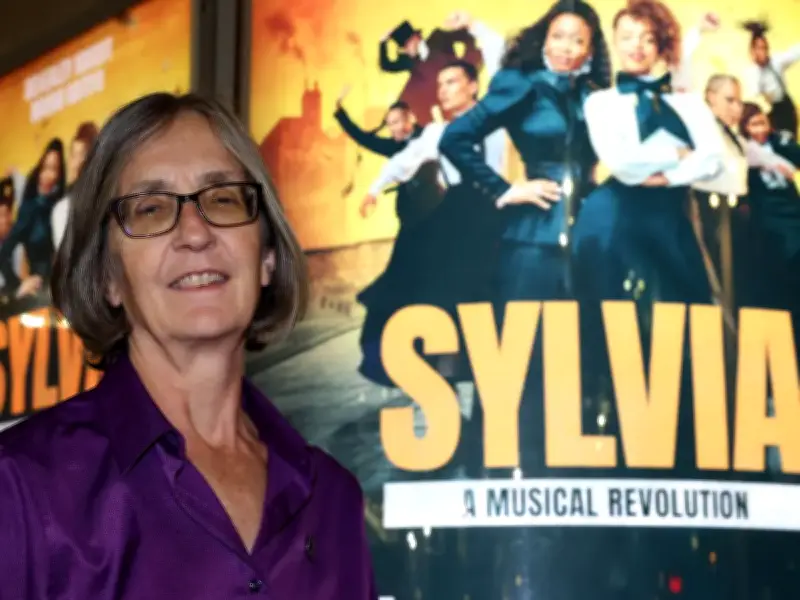
Dr Helen Pankhurst, the great-granddaughter of Emmeline Pankhurst and granddaughter of Sylvia Pankhurst, has said Manchester should do more to honour the wider story of the Suffragette movement. Her comments came as the musical Sylvia, which tells the family's complicated history, arrived at The Lowry in Salford.
Manchester has long been associated with the Suffragette movement and the fight for women's right to vote, with Emmeline Pankhurst immortalised in a statue in St Peter's Square and the Pankhurst Centre preserving the family's history. For Dr Pankhurst, there is a much bigger story to tell in properly recognising the women who helped shape the battle for equality and true democracy.
Musical highlights family divisions
Helen was speaking as she prepared to watch Sylvia, the hip-hop and funk musical, at The Lowry. Beverley Knight, who plays Emmeline in the production, earlier called for a statue to honour Sylvia in Manchester. Beverley previously questioned why the city had a statue of Emmeline but not her daughter, whose socialist beliefs and campaigning for working-class women often put her at odds with her mother and sister Christabel.
Helen is firmly behind the idea. "I think that would be wonderful," she said. "We've got one of Emmeline so it would be useful to have one of Sylvia. The importance really is not of one or the other, it's the questions that it raises about the differences that they have."
For Helen, recognising Sylvia's legacy is about more than adding another statue to Manchester's streets. It is an opportunity to tell a broader story about the Suffragette movement and the political divisions that shaped the fight for women's right to vote. Those differences lie at the heart of Sylvia, which explores the political and personal divisions between Emmeline and her daughter Sylvia, whose socialist beliefs led her to fight for a more inclusive democracy.
Relevant questions today
While Emmeline and her eldest daughter Christabel focused their campaign on securing the vote for certain women, Sylvia argued that working-class women should not be left behind. Helen believes the disagreements between the women raise questions that remain relevant today.
"They disagreed on whether to focus on working class women who needed to vote the most or on whether starting with those women who had power and that was wealthier women," she added. "So these are important questions even going forward. How much militancy? What's appropriate? Do you just focus on women or do you look at the relationship with other minoritised issues? So I'm hoping that the musical makes people think about some of the issues that are played out there but are still relevant today."
The production comes to Salford with a story that began in neighbouring Manchester, where the Pankhursts helped establish the political movement that would change the course of British history. For Helen, seeing that history brought to life on stage is both a source of pride and a deeply personal experience.
Broader recognition sought
Helen also believes the musical format is an important way of introducing the Suffragette story to people who might not otherwise engage with it through traditional history books. "Because it brings it alive. It's so powerful that music is powerful inherently. A show is, a dance is, the voices, all of that," she said. "And it's a new generation that will be exposed to these issues so that's also really, really powerful."
Sylvia's story has often been overshadowed by the legacy of her mother, Emmeline, who became one of the most recognisable figures in the campaign for women's suffrage. Helen is keen to stress that recognising Sylvia's independent contribution does not mean diminishing her great-grandmother's achievements. "Yes, absolutely. I think that Emmeline is a hero and we mustn't forget that and she was really important as the mother, as the leader of the movement," she said. "But the questions that Sylvia raises, her approach, I think are also really, really important."
Sylvia's legacy also extends far beyond Britain. Her work in Ethiopia, where she became a respected figure, is another part of her life that demonstrates the breadth of her campaigning. For Helen, however, the question of how Manchester remembers the Pankhursts should not be limited to a debate over whether Sylvia deserves a statue alongside Emmeline.
Instead, she wants the city to recognise the wider network of people who helped shape the movement, including other members of the family whose contributions have received less attention. "I would like Manchester to honour the wider story of both the Suffragette movement," she said. "There were so many incredible women, beyond the Pankhurst, but even within the Pankhurst, there was not just Emmeline, but Christabel, Sylvia, Adela. There's also Richard Pankhurst, Emmeline's husband, who was an amazing man. All of his campaigning for married women's property rights and all of it."
She added: "So if this widens the conversation and people say, 'I didn't know that there were others involved', I think that's really important as well. And you know, behind every history that highlights a particular man, my guess is that there are a lot of other people around that single man that we don't know about. And in this case, we're rectifying a history that's just focused on one woman, Emmeline, telling a broader story and I think that's really powerful as well."
The musical's arrival at The Lowry offers an opportunity to revisit the history of a movement that helped secure voting rights for women, while examining the divisions and difficult decisions behind that achievement. It also raises questions about whose voices are remembered, whose stories are told and how the fight for equality should continue. For Helen, the most important message audiences should take away is the importance of democracy itself, and the responsibility to protect it.
"I think the most important one is democracy is incredibly important," she said. "It was hard won, it was fought for here. You know, the fight started here and that's really important. That sense of ownership of democracy and its importance and that it actually lies in all of us to continue to do that and not to take any of it for granted."
Sylvia is at The Lowry from October 19 to October 24. Tickets are available from £21 at thelowry.com.