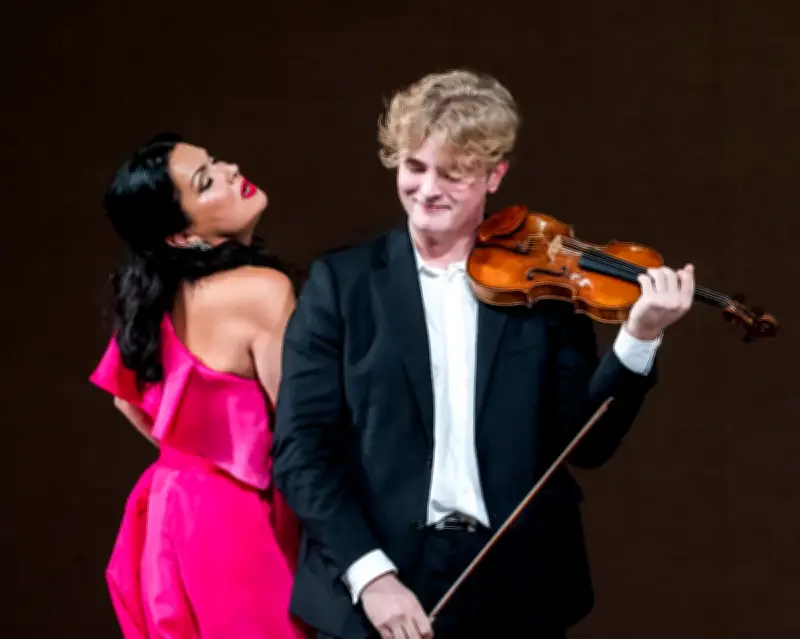
Anna Netrebko returned to the Royal Opera House in London for a recital that demonstrated why she remains one of the most celebrated sopranos of her generation. Performing to a sold-out house of over 2,000 fans, the Russian soprano presented a programme that ranged from Rachmaninov to Mozart, Strauss to Charpentier, showcasing her voice's full range of plush, dark beauty and endless legato.
Controversy and Cheers
While Netrebko's return to the Royal Opera in Tosca last autumn was met with protests, this recital saw quiet streets and only cheers from the audience. No programme was announced in advance, yet the house was full, a testament to her star power. The set, toured in various versions over the past five years, was divided into two halves loosely themed around day and night.
Daytime Ardour and Spring Abundance
The first half, themed around day, featured trembling girlish ardour and spring abundance. Pianist Pavel Nebolsin anchored the performance, while Netrebko roamed the stage, interacting with violinist Kurt Mitterfellner during his obbligato solo and shielding her face from the sun in the Melting Scene from Rimsky-Korsakov's The Snow Maiden. She also wandered in imagined meadows with mezzo Elena Maximova, whose voice was described as grainy and strained, in Lakmé's Flower Duet.
The Voice: Still the Real Deal
Despite the melodrama, high camp, and occasional lapses of taste—such as Strauss's Ständchen, which lurched and swayed—Netrebko's voice remains the real deal. In Rachmaninov and Tchaikovsky songs, its plush, dark beauty and endless legato swell irresistibly. Moments later, that darkness is forgotten, swapped for silvery bel canto brilliance in Bellini, or fired up to blazing full-power in Gounod and Charpentier.
Fun and Permission to Enjoy
Above all, Netrebko has fun, and she gives the audience permission to as well. Kicking off her shoes, she scampered on for an encore of the closet scene from Figaro, bundling Maximova's Cherubino out of the window with gleeful, giggling urgency. The performance was perhaps too much, but the audience would gladly return the next day.