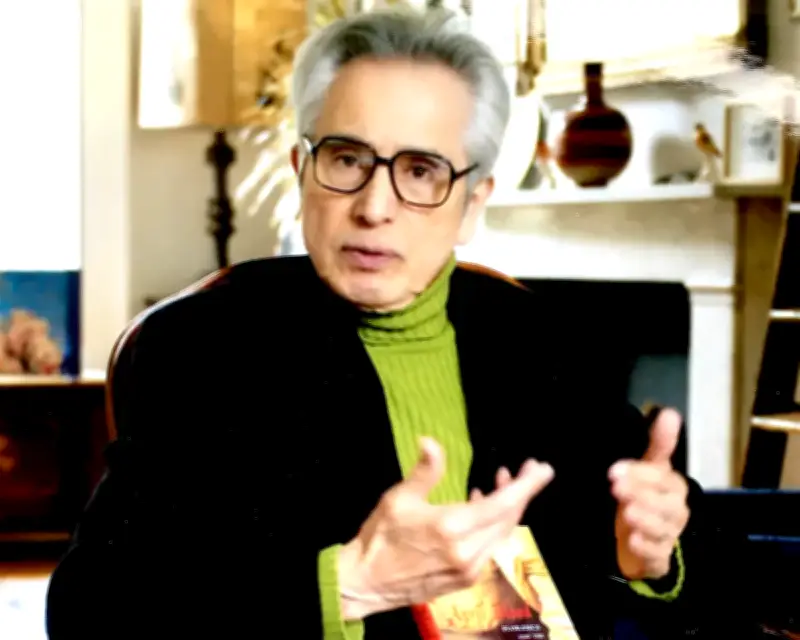
Lauro Martines, an outstanding and original historian of Renaissance Florence and Italy, has died aged 98. His friend and colleague remembers a scholar who brought a politically committed progressive sense of justice to all his work.
Groundbreaking early works
In his first book, The Social World of the Florentine Humanists, 1390-1460 (1963), Martines went beyond the traditional history of ideas to study humanists in the historical context of Florentine elites and politics. His second work, Lawyers and Statecraft in Renaissance Florence (1968), highlighted the role of lawyers in the development of state power, revealing fresh aspects of Florentine politics.
Revisionist histories and novels
Martines wrote nine non-fiction books, including the much-praised April Blood: Florence and the Plot Against the Medici (2003) and Scourge and Fire: Savonarola and Renaissance Italy (2006). April Blood narrates the Pazzi family's failed plot to displace the Medici as rulers of Florence. Martines revised the popular perception of the Medici, particularly Lorenzo il Magnifico, as promoters of the arts, depicting him also as violent and an unscrupulous embezzler of public money.

In Scourge and Fire, he took a similarly revisionist position on the puritanical preacher Girolamo Savonarola (1452-98), usually portrayed as a fanatical demagogue. His Savonarola emerges instead as a complex character committed to republican ideals. Martines's last book was Furies: War in Europe, 1450–1700 (2013), highlighting the atrocious brutality of early modern warfare.
A regular reviewer for the Times Literary Supplement, Martines also wrote two novels: Loredana: A Venetian Tale (2004) and Chronicle of a Good-Looking Family (2022), set in modern Florence and Chicago.
Life and legacy
Born in Chicago to Joseph and Amparo Martines, he served in the US army after leaving school. Thanks to the GI Bill, he went to Drake University to study English, but changed to history, then earned a history PhD at Harvard. From 1966 until his retirement in 1992, he taught history at the University of California, Los Angeles. Moving to London in the early 1990s, he became a true Londoner, spending the rest of his life in a beautiful house in Camden, in an enclave for writers and intellectuals.
In 1957 he married the Irish novelist Julia O'Faolain, with whom he edited Not in God's Image: Women in History from the Greeks to the Victorians (1973). Martines enjoyed playing tennis and loved poetry, which he also wrote. Julia died in 2020. Lauro is survived by their son, Lucien.