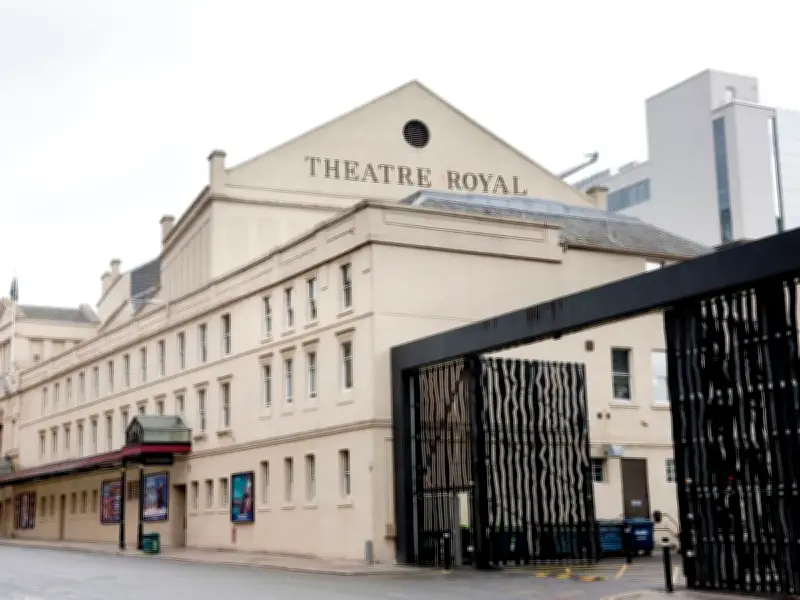
Glasgow's Theatre Royal, one of Scotland's oldest theatres, is the subject of ghost stories centred on a woman named Nora, whose tragic legend has become tied to the building. Reports claim her ghost haunts the upper circle of the venue on Hope Street, which has been entertaining audiences since 1867.
A historic venue with a chilling reputation
The Theatre Royal first opened on Hope Street in 1867, originally operating as the Royal Colosseum and Opera House before adopting its current name. Over the years, the building has played an important role in Scotland's cultural scene, with connections to Scottish Television, Scottish Opera and Scottish Ballet.
A fire in 1895 destroyed much of the original structure, leading to its rebuilding. Its distinctive Victorian appearance and ornate interiors remain a defining feature of the venue today.
Glasgow's reputation as a tough city for performers has also been part of its history. Victorian audiences were famously difficult to please, and actors who failed to impress could face heckling and immense ridicule. Stories of Glasgow audiences throwing objects at performers have long formed part of the city's theatrical folklore.
The tragic tale of Nora
According to local legend, Nora worked as a cleaner at the Theatre Royal, spending her days looking after the building while various actors took centre stage. She reportedly had ambitions of her own and dreamed of becoming a performer.
After asking the theatre's management for a chance, it is reported that Nora was eventually granted an audition. Things are said to have gone badly, with the audience laughing at her and mocking her performance, leaving her humiliated. The legend claims she later took her own life due to the ridicule.
Since then, it is said that her ghost haunts the upper circle of the theatre. Staff and visitors report strange noises coming from this area, including moaning, doors banging and the sound of fold-down seats moving up and down when nobody is sitting in them. Some accounts also describe an eerie feeling in parts of the upper circle, even when there appears to be no obvious reason for it.
Paranormal investigations and a possible origin
The theatre's alleged paranormal activity has caught the attention of investigators. Peter Underwood, a well-known researcher of haunted buildings, reported experiencing what he described as poltergeist activity at the venue during the 1970s, when it was being used by Scottish Television. He was reportedly at the building to take part in an interview rather than to investigate a haunting, making the experience an unexpected one.
Folklorist Geoff Holder has explored whether Nora's tale could have roots in a play performed at the Theatre Royal more than a century ago. In 1894, a production called A Life of Pleasure moved from London to Glasgow. It featured a character named Norah Hanlan, whose life takes a tragic turn after she experiences seduction, abandonment and prostitution before eventually dying by suicide.
Holder has suggested that the character may have helped shape the ghost story now associated with the theatre. The theory is that details from the play, including Norah's name and tragic ending, became mixed with local stories over time, eventually evolving into the familiar account of a cleaner who longed to become an actress.
There is no confirmed evidence proving that Nora was a real person who worked at the theatre or that her death happened as the legend describes. The theory also doesn't explain the mysterious noises reported by some people who have visited the building. However, it offers a possible explanation for how one of Glasgow's best-known theatre ghost stories came about. Whether Nora was a real woman, a character from a Victorian play or a mixture of stories passed down generations, the legend remains part of the Theatre Royal's history.