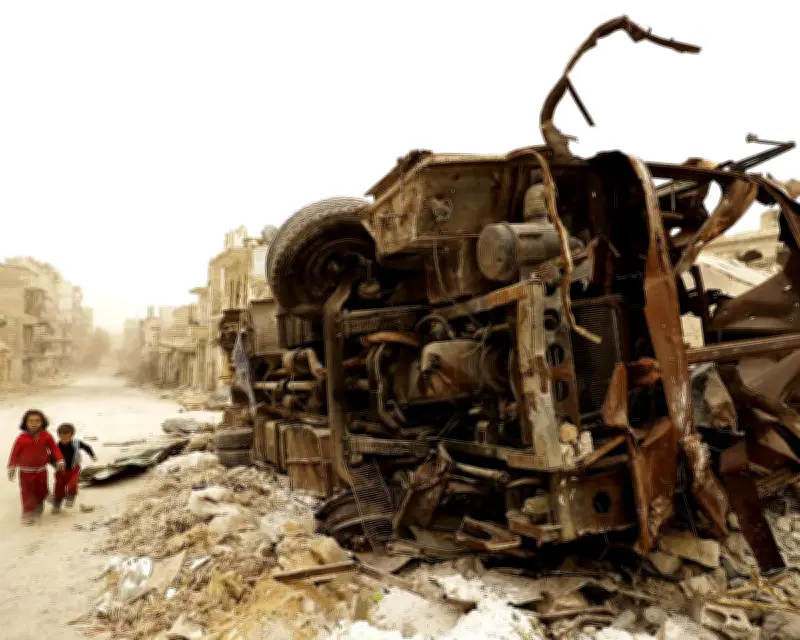
The award-winning docudrama Birds of War, released this week in the UK, chronicles the love story between Lebanese journalist Janay Boulos and Syrian activist Abd Alkader Habak against the backdrop of Syria's civil war. The film, which won the special jury award for journalistic impact at Sundance, uses 13 years of archive footage, voice notes, selfies, video calls, and text messages to tell their story.
How the Relationship Began
In 2017, after a bombing of an evacuee convoy in Aleppo, Habak rushed to help the injured. Boulos, then a BBC journalist, sent a voice note: “My bird are you OK? Get away from there, run.” This moment marked the shift from colleagues to something more. “I don’t want footage,” Boulos said. “I don’t want anything, just please take care. I am here whenever you want to talk.”
“Originally I wanted to make a documentary about Lebanon and the war,” said Boulos, who co-directed the film with Habak. “But the more we thought about it, taking in a lot of very complicated history and politics and current events, to make it understandable, we should tell the story how we saw it.”
A Portrait Beyond War
Despite its title, Birds of War is not solely about conflict. It explores what it means to be Syrian or Lebanese at a precarious time for the Middle East, delving into belonging—to each other, to a cause, to an ethnic group, to a city, to a nation—and the hopes and fears accompanying these bonds. The film won prizes at Thessaloniki, Seattle, and Visions du Réel film festivals.
Shortly after the convoy bombing, Habak fled Syria with the help of smugglers, crossing into Turkey. Boulos visited him, and within months they married—a decision she kept from her disapproving parents until the film premiered.
Building Trust Across Borders
“It was unbelievable for me,” said Habak. “That this person would come from London to see me, a man from a war zone with nothing to offer.” He left Syria with only his camera, hard drives, and clothes. “I don’t know who I’ll be, without Aleppo to fight for,” he told Boulos at the time. Boulos called the trip a “no-brainer.” “It was harmless chatting online—but it shifted to something real. I really cared about him and his safety and felt a lot of guilt.”
The film captures the disconcerting element of modern conflict journalism. In their first exchange, Habak asked Boulos, “Who are you?” Trust grew over weeks and months. “She talks to me like she sees me. Not as news, not as a story,” Habak muses. Boulos left a voice note: “You are more than a story to me.” They used pet names like “bird” and “my bird,” symbolizing freedom from frontlines and borders.
Healing Through Filmmaking
After Habak joined Boulos in London, she quit the BBC, and they founded Habak Films, an independent production company focusing on stories from Lebanon, Syria, and the region. “It is a struggle when people back home are being killed daily,” Boulos said, referring to the Israel-Hezbollah war. “I have the privilege of London, so let’s be this company that bridges local voices to western audiences.”
The film deliberately avoids graphic violence. Psychotherapist Rebecca Day, who has a background in documentary work, helped with the editorial process. Habak developed a “traffic light system”: green for usable footage, orange for potentially distressing, red for graphic material not needed. “Making this film has been healing,” Habak said. Day added, “It’s important to keep in mind the film-maker’s perspective. It can be a huge burden, but they don’t have to carry that all alone.”
Uncertain Future
The film ends after Habak returns home for the first time in years, following the Syrian opposition’s offensive that drove Assad from power in late 2024. Yet the future remains uncertain. “How long can we keep doing this?” Boulos asks in a message from Beirut. “Just until the wars finish,” Habak replies. Birds of War is in UK cinemas from 3 July.