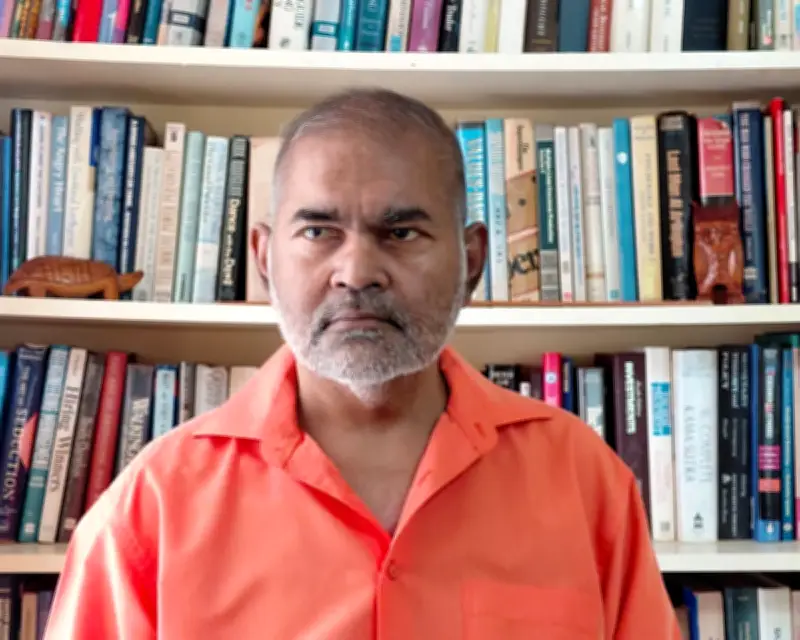
Jamir Nazir's short story 'The Serpent in the Grove,' which faced widespread allegations of being generated by artificial intelligence, has won the overall Commonwealth short story prize. The story had gone viral after being named a regional winner in mid-May, with critics on X and Bluesky claiming it displayed 'obvious markers' of AI use. The literary magazine Granta subsequently ended its long-standing agreement to publish the Commonwealth winners.
In response to the controversy, the Commonwealth Foundation conducted a review of the regional winners, examining drafts, time-stamped documents, and notes. 'We are satisfied with the testimonies of our writers and their confirmation that AI was not used in their writing,' said foundation director-general Razmi Farook. Nazir will receive an additional £2,500 on top of the £2,500 he won as the Caribbean winner. Judging chair Louise Doughty described the piece as 'an original, poetic and deeply moving story.'
Critics Cite 'Not X, But Y' Constructions
The story includes multiple 'not x, but y' constructions and lists of three, which some consider signs of AI use. Critics also highlighted specific lines, such as 'Sun on galvanise is a cruel instrument,' 'She had the kind of walking that made benches become men,' and 'Marsha lived two bends down … [she was] big in the way of women who never apologise to furniture.'
In a film released by the Commonwealth Foundation, Nazir cited VS Naipaul and Derek Walcott as significant influences. He said he wrote six or seven drafts and used speech-to-text software, explaining that he could only see three or four lines on his phone screen at a time, perfecting each line before moving on, which resulted in a 'highly polished' story. 'This story began in my childhood in rural Trinidad,' he said. 'Each day, I walked to school past rum shops where cane workers and labourers gathered. I remember the voices, the laughter, the arguments and conversations that shaped village life.'
Social Media Reaction and AI Detection Software
Initial social media reactions to the announcement were negative. One X user wrote: 'immensely disappointing and disheartening. it feels like they wanted to stick to their guns after the entire GenAI uproar. I might think twice now before submitting my stories here.' After Nazir was named regional winner, some users ran his story through AI-detection software. Wharton professor Ethan Mollick said, 'Pangram flags at 100% but also, come on, if you know you know.' However, the reliability of such software has been questioned.
Farook told the Guardian: 'Rather than surrender our judgment to AI-detection software, we asked our winners to show their working drafts, outlines, the evidence of an artistic journey. That software, it must be said, is not infallible: it returns inconsistent verdicts and, in doing so, corrodes the very trust on which a prize depends.' She added: 'When the machine's default voice is the metropolitan one, the writer who does not fit the expected mould is the first to fall under suspicion. The more startling her gift, the more her unfamiliar brilliance unsettles, the more readily she is accused of being a machine. A young writer in Kingston or Kolkata, in Kuala Lumpur or Kigali, must now prove not only her talent but her very humanity.' Nazir did not provide a comment in response to a Guardian request.