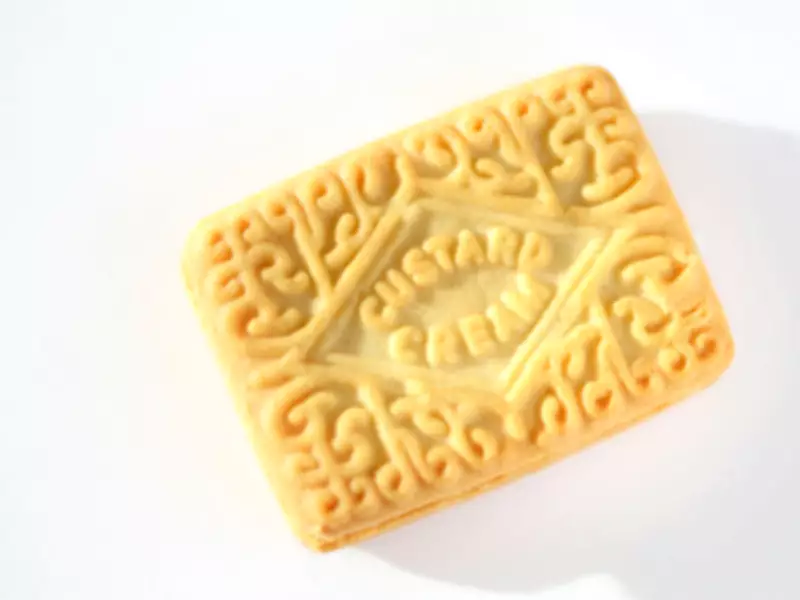
One of Britain's most classic creations, sold for less than £1 in most supermarkets, has kept a unique piece of history to this day. Few actually realise why the popular Custard Cream stands out with such an "ornate" design compared to other baked goods.
The Victorian Fern Obsession
Radio host Annabel Port, on Instagram (@Theotherbritishmusuem), explores obscure aspects of British heritage that make for fun 'did you know' trivia. In a viral video watched by more than 612,000 people, she looked into the reason why one of Britain's most iconic biscuits has its "over the top" pattern.
She said: "You will not believe what the swirls on a custard cream are supposed to be. These are one of the UK's favourite biscuits and also one of the cheapest. It's a very bog standard food with an incredibly over-the-top, ornate decoration - like a semi in Swindon with a recreation of the Sistine Chapel inside."

Custard cream biscuits have been enjoyed in Britain by the Victorians since 1908, Annabel said, and they were responsible for the biscuit's "ornate" look. She added: "[The Victorians] were mad for ferns. They were so obsessed that they held fern-hunting parties and collected them to the point that some species became extinct."
The Fern Craze and Its Marketing Genius
The reason ferns got so massive was because of George Loddiges. He built the largest greenhouse in the world in Hackney, East London, and it was really expensive - so he needed people to visit. More effective than any traditional advertising, Loddiges spread a rumour that an interest in ferns was a sign of intelligence. "Somehow, this actually worked," Annabel joked.
She continued: "There was such a craze for them that they put a fern-like decoration on this biscuit. That's what those swirls are supposed to be. Not sure they did the greatest job. At least now I can think 'Oh this makes me look more intelligent' - even though they are a little bit boring."
To this day, Custard Creams remain a British staple that millions of people eat across the country every day. Shops sell these baked treats for as little as 45p per pack.
More Victorian-Era Influences
Previously, Annabel shared the "rule" that led almost all UK washing-up liquids to pick the exact same colour - green - despite only one having a logical reason. People were interested to learn that another piece of Victorian-era history has influenced major brands to this day, including Asda, Tesco, Morrisons, Sainsbury's, Aldi and Lidl.
Annabel said: "Back in 1898, Fairy Soap was launched and was used for everything - clothes, dishes, skin, whatever. It was made in Newcastle by Thomas Hedley and Co, and early ads show that the soap was also green, olive green, and for a reason, it contained olive oil." The olive oil is gone now, probably as it's more expensive than gold or printer ink. This was their brand colour and they stuck with it, even if it got more lurid over the years and other companies blindly followed.