In the three decades separating Margaret Atwood's seminal 1985 novel The Handmaid's Tale from its long-awaited sequel, The Testaments, the original work evolved into a global phenomenon. Adapted across film and television, it became a classroom staple worldwide. Consequently, anticipation for this belated continuation carried significant weight. Concerns lingered: was this merely a commercial endeavor, a forced attempt at relevance, or something that might tarnish its predecessor's legacy? Yet upon release, The Testaments proved not only good but exceptional, securing the Booker Prize. Now, Disney+'s new adaptation captures that essence, delivering a narrative that feels both refreshingly new and profoundly compelling.
A Fresh Perspective on Gilead's Elite
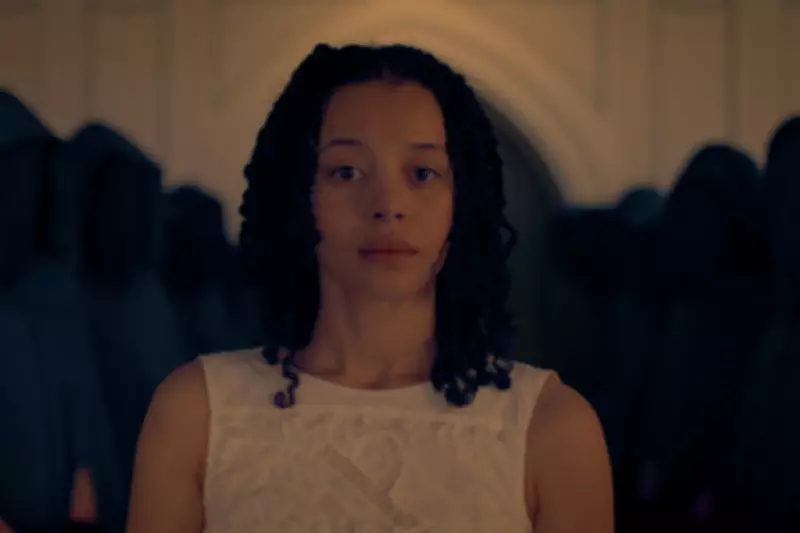
The series shifts focus to Agnes Mackenzie, portrayed with nuance by Chase Infiniti. As the daughter of a Commander in the theocratic, patriarchal regime of Gilead, Agnes attends an elite finishing school overseen by the formidable Aunt Lydia, played by Ann Dowd. Here, she is meticulously groomed to lead a household and, ideally, become a mother. "I was a precious flower," Agnes reflects. "Then why did I sometimes feel like a prized pig?" Her journey toward an arranged marriage is disrupted by the arrival of Daisy, brought to life by Lucy Halliday. Daisy appears as a convert from Canada but conceals crucial truths about her lineage and mission within Gilead. In this school, which ostensibly supports the regime, nearly every character harbors dangerous secrets.
Resetting the Narrative Clock
By the conclusion of The Handmaid's Tale television series last year, the storyline had expanded far beyond Atwood's original universe, evolving into a gritty civil war drama blending dystopian fiction with spy thriller elements. The Testaments effectively resets this narrative clock. Instead of focusing on the weary, downtrodden servants like June, played by Elisabeth Moss, the spotlight turns to Gilead's wide-eyed debutantes. These young women remain largely unaware of their society's oppressive structures, concentrating instead on currying favor with the Aunts who arrange their marriages. "Always be extra nice to the frigid sadists who are arranging your marriage," Daisy remarks with dark irony. This fusion creates a unique atmosphere reminiscent of Bridgerton meeting Lord of the Flies, crafting a young adult epic for contemporary audiences.

Vibrant Aesthetics and Standout Performances
The young adult ethos extends to the show's visual style. While showrunner Bruce Miller's The Handmaid's Tale adopted a murky, frenetic aesthetic, The Testaments bursts forth in technicolor. The girls' uniforms—plum, green, or pearl, denoting status—pop against the backdrop, and the camera glides smoothly through the vivid iconography of this fascist state. Chase Infiniti, impressive in the Oscar-winning One Battle After Another, delivers a convincingly conflicted performance as a woman grappling with her constrained future. However, it is Lucy Halliday who truly steals the show as the cuckoo in this nest of misogyny. Daisy emerges as a natural successor to June: strong yet flawed, brave but reluctant, embodying the complex heroism required in such a world.
Adaptive Changes and Political Resonance
Miller's adaptation introduces several key changes from Atwood's novel. Agnes and Daisy are now contemporaries, allowing the series to foreground its young cast more effectively. This adjustment also means the show functions less as an origin story for Aunt Lydia than the book did, suggesting Disney's confidence in the property's potential for multiple seasons. Crucially, the adaptation retains the novel's palpable anger and urgency. "Even though [Gilead] seemed like it happened overnight," Daisy observes, "there were signs it was coming." The rhetoric surrounding women's roles and declining birth rates—foundational to Gilead's authoritarian regime—echoes contemporary voices in both the "manosphere" and government spheres. For instance, Vice-President JD Vance, a self-described "pronatalist," stated in his first address, "I want more babies in the United States of America." While Disney may not be overtly political, The Testaments, shrouded in allegory, offers pointed commentary on modern societal trends.

A Testament to Enduring Relevance
"I'm ashamed to say that I believed in Gilead once," Agnes confesses in her opening testament. "I guess it's easier to accept a story, even a childish one, rather than accept that the people around you are monsters." Some viewers may find current news cycles sufficiently monstrous without needing fiction to mirror society. Yet for others, The Testaments stands as an impressive follow-up to The Handmaid's Tale. It lightens the tonal weight, accelerates the pacing, and maintains a careful, chilling depiction of how societies can backslide into regression and repression. This adaptation not only honors Atwood's legacy but also reinvigorates it for a new generation, proving that dystopian narratives remain as vital as ever.