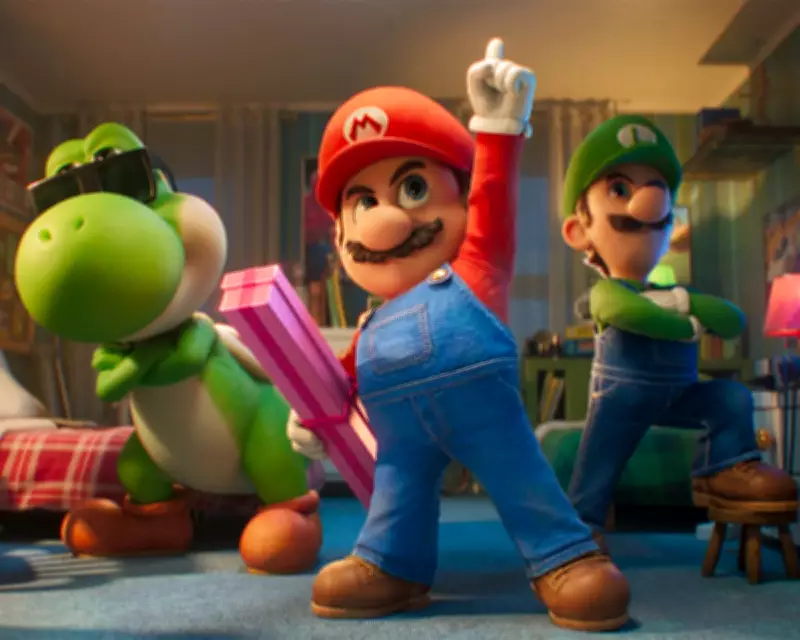
The Super Mario Galaxy Movie Review: A Bland, AI-Like Animated Sequel
At this point, it has become a cliché to describe a poorly made film as feeling AI-generated, but The Super Mario Galaxy Movie takes this criticism to a new level. This simplistic animated sequel, serving as a follow-up to The Super Mario Bros Movie, is nothing more than a cash grab aimed at families during the Easter holidays. Based on the classic video game featuring the wacky Italian-Brooklyn plumbers Mario and Luigi, voiced by Chris Pratt and Charlie Day, the film relies on stereotypes that remain surprisingly unchallenged in mainstream entertainment.
A Visually Dull and Uninspired Narrative
The plot centers on Mario, Luigi, and Princess Peach, voiced by Anya Taylor-Joy, as they embark on a mission to rescue Rosalina, played by Brie Larson, the adoptive mother of the Lumas—creatures reminiscent of Minions. Rosalina has been abducted by Bowser Jr, voiced by Benny Safdie, the son of the villainous turtle Bowser, reprised by Jack Black, who performed a similar role in the previous film. While the movie is clearly intended for young children, it fails to justify its visually dull screensaver-like appearance, which echoes the cheesy, Euro-knockoff aesthetic of its predecessor.
One of the film's most puzzling aspects is the scarcity of humorous dialogue. The original movie attempted to spoof the game's 2D graphics and left-to-right gameplay, turning the absurd running and jumping into a comic virtue. In contrast, this sequel offers little innovation, presenting a generic quest adventure with an uninspired variation of the first storyline. A subplot involving Mario's supposed crush on Princess Peach generates no interest whatsoever, further highlighting the lack of creativity.

Criticism of AI-Like Blandness and Cash-Grab Tactics
It is now commonplace to compare formulaic films to AI-generated content, but The Super Mario Galaxy Movie represents a second evolutionary step downwards. The production appears as if humans, using AI tools, have attempted to replicate something originally created by AI, resulting in a bland and simplistic template. This approach seems designed for easy global distribution, allowing for dubbing by local voice talent to maximize profits across international markets.
Ultimately, the film serves primarily as a means to extract money from families during the Easter break, with its release scheduled for 1 April in Australia, the UK, and the US. Despite its star-studded cast and beloved source material, The Super Mario Galaxy Movie fails to deliver engaging entertainment, leaving audiences with a forgettable and lackluster experience.