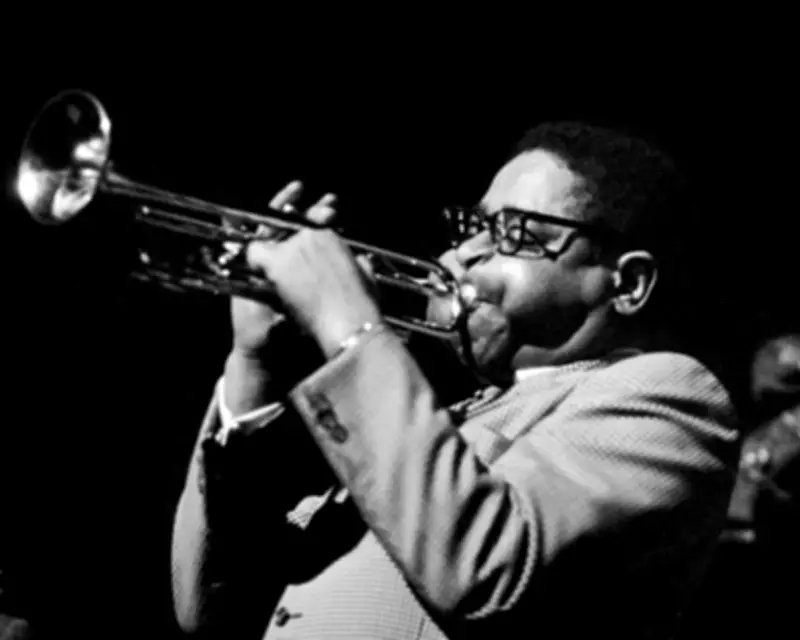
A remarkable new collection of photographs captures the golden age of jazz in New York, featuring iconic images of legends such as Dizzy Gillespie, Bill Evans, and Elvin Jones. The book, titled Jazz: Best of the Apollo, Village Vanguard, and Riverside Sessions, includes a foreword by the late saxophone icon Sonny Rollins and showcases the work of photographer Steve Schapiro.
A Masterful Eye for Jazz
Steve Schapiro, known for his powerful social documentary images of figures like Muhammad Ali and Martin Luther King Jr., turned his lens to the vibrant jazz scene of early 1960s New York. These largely unseen photographs reveal his deep empathy and mastery in capturing the essence of jazz musicians both on and off stage. Schapiro passed away in 2022 at age 87, leaving behind a vast archive of 20,000 images, from which his wife and son selected the finest 300 for this volume.
Sonny Rollins Reflects on a Lost Era
In his foreword, Sonny Rollins expresses deep emotion: “These pictures are very emotional for me. They take me back to a time when everything was, you could say, ‘copasetic.’ Elvin Jones is smiling. All these guys: Ron Carter, Miles, Red Garland. These pictures take me back into a time which will never be like that again.” Rollins recalls that everyone was working, contributing, and appreciated. “Jazz was appreciated. Of course, many of these guys aren’t here any more, and that’s emotional for me, too.”

Rollins also shares personal memories: “The photos that Schapiro took of me at the Apollo have special meaning for me. The Apollo was like my high school, I was there every week.” He attributes his longevity to healthy habits established during that period.
Behind the Images: Stories of Jazz Greats
US jazz journalist Richard Scheinin provides commentary for the images, offering insights into each musician’s life and art. Of Bobby Timmons, captured during a 1961 Riverside session, Scheinin writes: “Head cocked, leaning away from the piano with a quietly ecstatic look on his face… Schapiro has captured this moment in the interior life of an artist.”
Ron Carter, at 6ft 4in, is shown wheeling his double-bass along a sidewalk. Scheinin notes, “The forward motion of Carter’s bass lines and his uncanny way of re-harmonising tunes in a flash have made him, in the opinion of many, the foremost jazz bassist of the past 60 years.”
Rollins’ Disappearance and Return
One image shows Rollins at the Apollo in 1962, a homecoming after a two-year absence. Scheinin explains that Rollins had stopped performing in 1959 to focus on spiritual improvement, practising alone for up to 16 hours a day on the Williamsburg Bridge walkway. He returned in November 1961, driven by the belief that “you have to prove yourself every minute.”
Elvin Jones and Dizzy Gillespie
Elvin Jones, with his “beautiful smile and forbidding glare,” revolutionised swing. His work with John Coltrane produced classics like A Love Supreme. Dizzy Gillespie, photographed at the Apollo in 1962, represents an era when jazz was both sophisticated and the people’s music. Scheinin writes, “In the 1940s and 1950s, Black neighbourhoods in US cities were hotbeds for jazz. Clubs were on every corner.”
Dorothy Ashby: Breaking Barriers
Detroit-born Dorothy Ashby began as a jazz pianist but took up the harp, facing scepticism. “The audiences I was trying to reach were not interested in harp, period… and they were certainly not interested in seeing a Black woman playing the harp,” she said. Her singular career pushed through the harp’s perceived limitations into jazz and experimental music.
The book is a tribute to a bygone era, preserving the spirit of jazz through Schapiro’s lens. As Rollins concludes, “All these guys represent a family that’s special to me.”