Romeo + Juliet at 30: How Luhrmann's Cult Classic Defied Critics and Changed Cinema
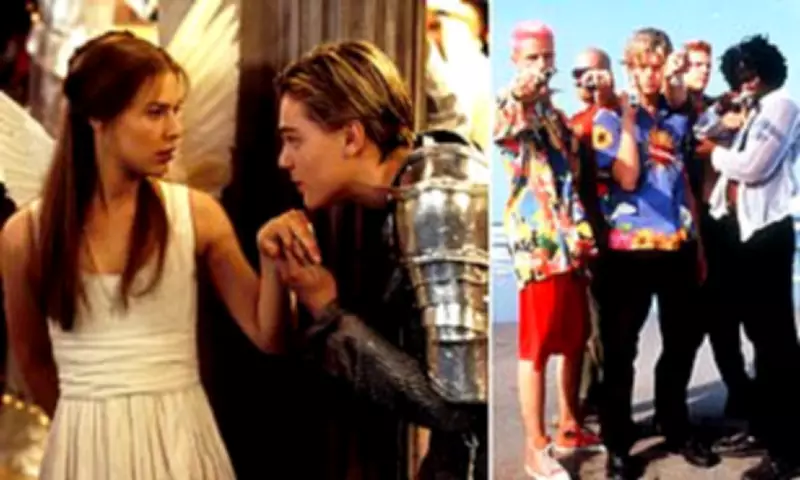
It has been exactly thirty years since Leonardo DiCaprio first gazed at Claire Danes through the iconic fish tank in Baz Luhrmann's audacious nineties reimagining of Shakespeare's timeless romance. This week marks the three-decade anniversary of Romeo + Juliet, a film that initially faced harsh criticism but has since ascended to cult status, reshaping perceptions of Shakespearean adaptations for a modern audience.
Upon its release in 1996, the movie grossed an impressive $147 million globally, yet critics were far from kind. One notorious review dismissed it as 'destined for the trash heap of Shakespeare adaptations'. However, over the past thirty years, the film has undergone a remarkable reappraisal, winning over many of its original detractors and prompting cinemas worldwide to host celebratory screenings this month.
The Tumultuous Production: Real-Life Drama Mirrors Shakespearean Tragedy
The making of Romeo + Juliet was as dramatic as the play itself, featuring an on-set kidnapping, feuding leads, and casting controversies that could have been penned by the Bard. Here is an in-depth look at the untold stories behind this cinematic landmark.

Casting Conundrums: From Natalie Portman to Claire Danes
Claire Danes secured her first leading film role as Juliet, but the part was notoriously difficult to cast. In Shakespeare's original text, Juliet is just thirteen years old, leading Luhrmann and his team to initially consider Natalie Portman, who was thirteen at the time. Portman was even hired and filmed scenes with DiCaprio, who had been attached to the project from the outset.
However, concerns arose about the age gap between Portman and the twenty-one-year-old DiCaprio. In a 1996 interview, Portman explained, 'It was a complicated situation... it wasn't appropriate in the eyes of the film company or the director Baz.' She added to the New York Times, 'Fox said it looked like Leonardo DiCaprio was molesting me when we kissed.' Ultimately, it was director Jane Campion who suggested seventeen-year-old Claire Danes after being impressed by her performance in the cult TV show My So-Called Life.
Discovering DiCaprio: A Paparazzi Picture Sparks Inspiration
Luhrmann's search for Romeo was equally meticulous. Legend has it that the director decided to cast DiCaprio after seeing a paparazzi photo of him, exclaiming, 'Now that's what Romeo should look like,' though he initially mistook him for a musician. Once Luhrmann discovered DiCaprio's acting prowess, he was captivated, praising his ability to 'take the language, stay within the iambic but also embrace it and make it his own.'
Star-Studded Almost-Castings and On-Set Tensions
To bolster the film's star power, Luhrmann approached Marlon Brando for the role of Father Laurence. Unfortunately, Brando withdrew due to personal family tragedies, including his son's manslaughter conviction and his daughter's suicide. The role eventually went to Pete Postlethwaite.
Despite their sizzling on-screen chemistry, rumours persisted that DiCaprio and Danes were distant off-camera, often ignoring each other between takes. Danes later admitted to having a 'big crush' on her older co-star, saying, 'There was definitely a spark, but I don't think either of us knew how to handle it.' Miriam Margolyes, who played The Nurse, claimed in her 2021 memoir that Danes was 'infatuated' with DiCaprio, but he was 'dismissive' and 'quite nasty' in response.
Production Perils: Kidnappings, Hurricanes, and Freezing Pools
Filming in Mexico City and Veracruz presented numerous challenges. A hurricane damaged parts of the set, the cast fell ill, and in a shocking incident, the lead hair stylist, Aldo Signoretti, was kidnapped. The kidnappers demanded a $300 ransom, which was paid, but Signoretti was thrown from their car, breaking his leg. Undeterred, he later collaborated with Luhrmann on Moulin Rouge, earning an Oscar.

One of the most gruelling scenes to shoot was the reimagined balcony sequence, set in a swimming pool filled with unheated water to prevent the actors' skin from turning red. Luhrmann recalled, 'It was quite the nightmare of getting in and out... a whole lot of crazy, mechanical work to create a moment that seems intimate and beautiful and romantic.' The logistics were further complicated by Danes wearing a wig.
Legacy and Hidden Details: From Titanic to Shakespearean Easter Eggs
The film's impact extended beyond its release. Paul Rudd, who appeared in the movie, reportedly encouraged DiCaprio to accept the role in Titanic during a cast night out, a decision that cemented DiCaprio's status as a global heartthrob.
Luhrmann meticulously crafted the film to honour Shakespeare's original work. The edit runs exactly two hours, aligning with the prologue's mention of 'the two hours' traffic of our stage'. Swords were replaced with guns, but each firearm was named after traditional weapons, such as the 'Dagger' 9mm or 'Rapier'. Additionally, every sign in the movie contains a subtle Shakespeare reference, like 'add more fuel to your fire' from Henry VI, Part 3.
Three decades on, Romeo + Juliet stands as a testament to Luhrmann's visionary direction, overcoming initial criticism to become a beloved classic that continues to inspire and captivate audiences around the world.