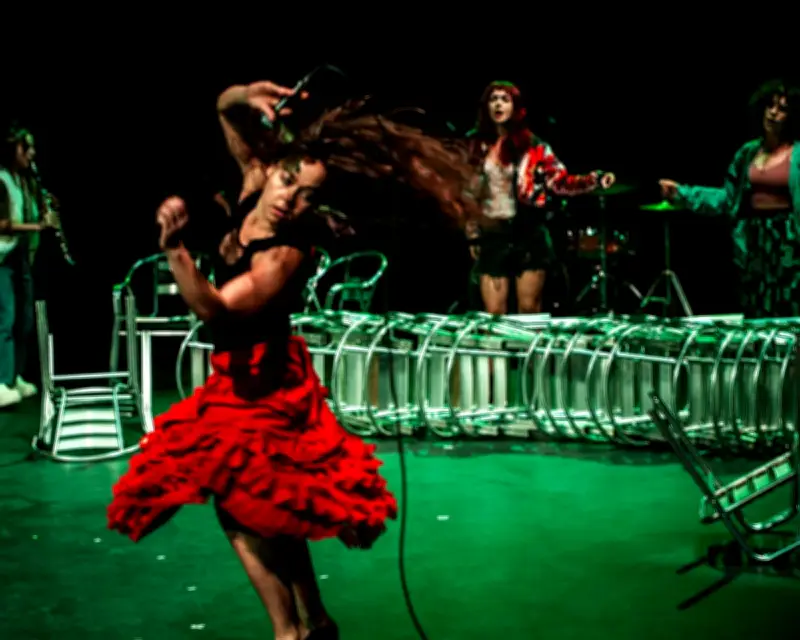
Rocío Molina's Calentamiento at Sadler's Wells is a breathtaking reimagining of flamenco that pushes the art form into bold new territory. The Spanish dancer and choreographer delivers a performance that is both fiercely traditional and radically contemporary, earning a five-star review from The Guardian.
What Happened: A Fusion of Tradition and Avant-Garde
Molina, known for her innovative approach, presents Calentamiento as a solo piece that deconstructs flamenco's classic elements. The show, which premiered on 25 June 2026, features her dancing to a live score that blends traditional flamenco guitar and palmas with electronic beats and ambient sounds. The stage design is minimalist, with a single spotlight and a floor covered in salt, which Molina kicks and scatters as she moves.
According to The Guardian's critic, the performance is "a masterclass in controlled chaos," with Molina's footwork ranging from precise, staccato rhythms to fluid, almost balletic movements. She incorporates elements of contemporary dance, butoh, and even martial arts, creating a unique vocabulary that challenges conventional flamenco.

Details: The Choreography and Music
The piece is structured around the concept of 'calentamiento' (warming up), but Molina subverts expectations by starting with intense, full-throttle dancing before gradually slowing down. The music, composed by Molina and guitarist Rafael Rodríguez, shifts from fiery bulerías to meditative, minimalist passages. At one point, Molina dances in silence, her breath and the rustle of her dress becoming the only sounds.
Molina's costume, a simple black dress that she later removes to reveal a nude bodysuit, symbolizes the stripping away of flamenco's theatricality. The salt on stage is used to create visual patterns and to emphasize the percussive quality of her footwork. The performance lasts 75 minutes without an intermission.
Impact: Critical Acclaim and Significance
Calentamiento has been hailed as a landmark in flamenco's evolution. The critic writes: "Molina is not just a dancer; she is a force of nature, redefining what flamenco can be in the 21st century." The show has sold out its run at Sadler's Wells and is expected to tour internationally.
The performance challenges traditional gender roles in flamenco, with Molina's assertive, athletic style contrasting with the more feminine archetype. It also addresses themes of identity, heritage, and artistic freedom. As the critic notes, "Molina's work is a reminder that flamenco is not a museum piece but a living, breathing art form."
Audience Reaction and Broader Context
The audience responded with a standing ovation, with many visibly moved by the emotional intensity of the piece. Social media buzz has been overwhelmingly positive, with dance enthusiasts and critics alike praising Molina's audacity.
This production is part of a broader trend of flamenco artists experimenting with contemporary forms, alongside figures like Israel Galván and María Pagés. Molina's work, however, stands out for its raw physicality and willingness to dismantle and rebuild flamenco from the ground up.