
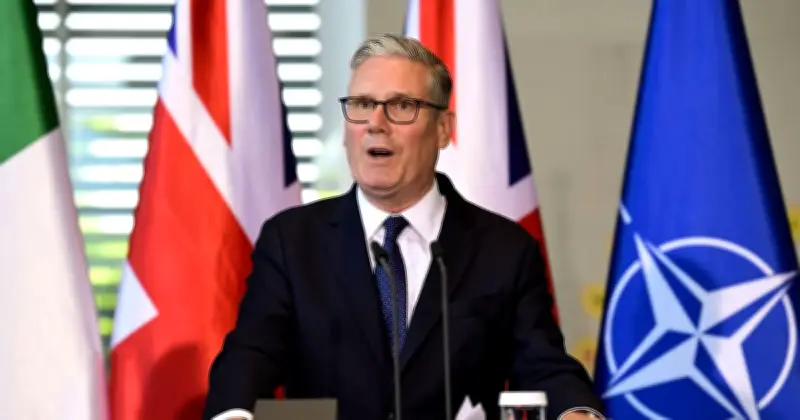
Britain risks losing its most senior NATO post if it continues to lag behind allies on defence spending, a former holder of the role has warned. Admiral Sir Keith Blount, who until March served as Supreme Allied Commander Europe—the second most senior position in NATO and the most senior British post—told The Times that pledges to hit defence spending targets of 3% in the next parliament are "too late." He cautioned that continued delays in defence investment leave the country at risk of becoming a "following nation" rather than a leading one.
NATO's Transactional Nature
Blount emphasized that NATO is "quite transactional," meaning nations that contribute more to the alliance tend to gain more influence. "The UK is a nuclear power. The UK still has this bulwark of reputation and influence that is clear for all the alliance to see," he said. "But if the other larger nations of the alliance outperform us in terms of meeting their capability targets, meeting the defence investment pledge, it is only natural the allies, as a completely rational body of nations, see those nations as the ones who deserve greater influence."
Countries across NATO have made tangible efforts to increase defence spending and kickstart sovereign defence industries. However, similar plans in the UK have been consistently delayed amid disagreement between the Treasury and the Ministry of Defence (MOD).
Urgent Need for Investment
Blount warned that the UK must begin work now to ensure it can call upon capability in future conflicts. "You can't magic capability from nothing. It will be brought to bear by investment and that investment is needed right now. There is no doubt about that," he added.
Britain is understood to rank 31st out of NATO's 32 members for progress towards meeting the alliance's rearmament and military capability targets, ahead only of Iceland, which has no standing army. The UK has held the deputy supreme allied commander Europe post since 1951, when Field Marshal Bernard Montgomery became its first British holder. Losing it to France or Germany would underline the decline in the UK's standing within the alliance and the wider world.
Political Fallout
Investment delays led to the resignation of Defence Secretary John Healey earlier this month. Sir Keir Starmer has committed to publishing the Defence Investment Plan (DiP) ahead of the NATO leaders summit on July 7, despite the recent resignation. The plan was originally due in autumn 2025, but constant delays and wrangling have caused frustration.
Shadow Defence Secretary James Cartlidge told the Daily Express that Labour's continued "dithering" over defence spending is having a serious impact on the UK's defence industry. "The dire impact Labour's dither and delay is having on our Defence Industry is plain to see. The Defence Investment Plan, promised for autumn 2025, has still not been published, leaving procurement in the MOD effectively on hold. With war in Europe and the Middle East, Labour need to show that the UK can still be a serious fighting power," he said.
Starmer's Commitment
The decision to push ahead with publication has set up a row with Healey's likely successor, who may want to revise military spending. Speaking during a visit to Milton Keynes on Thursday, Sir Keir was resolute that moving ahead is the right move. He told broadcasters: "Everybody understands why it's important that we spend the money that we must spend on our armed forces, and so it's my intention to publish that ahead of the NATO summit. That's the right time to publish it, when we will be coming together as NATO countries – the single most effective military alliance the world has ever seen – to share our capabilities, and to make sure we emerge from that summit stronger as a military force."
An MOD spokesman said: "The Deputy Supreme Allied Commander Europe is a permanent position and there have been no discussions about changing this role. Our leading role in NATO will also see us take charge of Joint Force Command Norfolk, also retaining a rotation of the deputy commander role at Marcom."




