Original Doctor Who Star Declares Modern Series Inferior to Classic Era
Doctor Who actor Peter Purves has expressed his delight that fans will finally witness two long-lost Dalek-themed episodes from the 1960s broadcast this Easter, while simultaneously criticising the modern incarnation of the iconic science fiction programme.
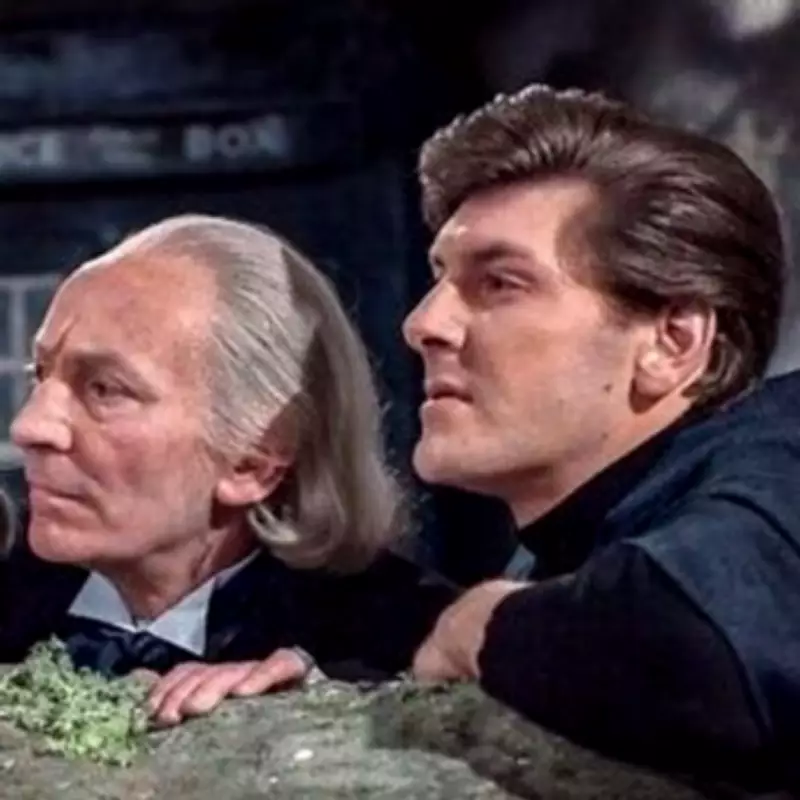
The veteran performer, who portrayed the Doctor's companion Steven Taylor during William Hartnell's tenure as the Time Lord, firmly believes the original black and white series represents the show's golden era. Purves stated unequivocally that the contemporary version fails to match the quality of its predecessor.
Rediscovered Episodes to Air After Six Decades
The BBC is preparing to broadcast two episodes from the twelve-part 1965 storyline The Daleks' Master Plan, featuring the late William Hartnell as the Doctor, during the upcoming Easter holidays. These instalments, originally watched by over nine million viewers, were presumed lost after the corporation wiped the tapes, assuming audiences had lost interest in monochrome programming.

Remarkably, episodes one and three were recently discovered within a cardboard box containing vintage film reels. After sixty-one years, these missing chapters will finally become available to viewers through BBC iPlayer, completing a story that has remained incomplete since its original transmission.
Purves Praises Intelligent Scripts Over Technical Spectacle
Now eighty-seven years old, Purves maintains that the early Doctor Who stories possessed greater intelligence than the twenty-first century reboot, which has featured actors including David Tennant, Jodie Whittaker, and Ncuti Gatwa. He acknowledges the technological limitations of the 1960s production, with its wobbly sets and basic special effects, but argues this forced greater creative focus on storytelling.
"It was the golden era," Purves declared. "I don't think the show is a patch on what it was. The whole thing has become so technical, and I don't think it's a patch on what it was."
He elaborated that episodes were recorded almost as live broadcasts, without stopping for mistakes, and special effects were minimal. Despite these constraints, Purves believes the programme thrived through "extremely good scripts" that worked on multiple intellectual levels.
From Television to Audio Adventures
Although Purves left Doctor Who in 1966 after appearing in ten stories across one year, he revived his character Steven Taylor in 2014 for a long-running series of audio adventures produced by Big Finish. This company began creating Who-themed stories when the television series was cancelled in 1989, subsequently attracting a substantial fanbase by featuring numerous classic series actors.
Purves surprisingly revealed that he finds many Big Finish audio dramas more impressive than recent television episodes. "I think there's some great stories there," he commented. "To my mind, better than much of what's gone on television. Television's got consumed by the ability of technology to do wonderful things - but the substance is not there."
Unique Distinction in Doctor Who History
Purves initially appeared on Doctor Who in 1965 as a character named Morton Dill in the six-part story The Chase, which also featured the Daleks. Just three weeks later, he returned in the same narrative as astronaut Steven Taylor, who ultimately became the Doctor's new companion. This unusual casting gives Purves a unique distinction within the programme's history.
He humorously noted: "I think I am the only person to have insulted The Daleks on screen and not been exterminated."
The upcoming Easter broadcast represents not only a significant moment for Doctor Who archivists and enthusiasts but also reinforces Purves' conviction that the classic series' emphasis on intelligent storytelling over technical spectacle created television magic that modern productions struggle to replicate.