Holy Pop: Celebrating Extreme Fandom and the Sacred Objects of Devotion
Holy Pop: Extreme Fandom and Sacred Objects

Alice Hawkins has a unique way of dealing with the unwanted attentions of Jehovah’s Witnesses seeking out converts door to door. “They come around here every Thursday,” says the photographer. “So I get my Dolly Parton book out and explain to them that Dolly is where I find my belonging, Dolly is where I find my belief.”

One presumes that does the trick, but it’s worth noting that Hawkins isn’t joking. Parton was always her favourite singer, but her obsession flowered in the wake of a friend’s suicide, which left Hawkins “a mess”. In an attempt to cheer her up, her husband suggested visiting Dollywood, the singer’s 150-acre theme park in Pigeon Forge, Tennessee. “I just felt like I’d found some kind of spiritual home, like my mecca,” says the photographer. “I found some solace. When we drove home, I said to my husband, ‘I’m going to go back there and start making work. I’m going to do a project.’ It just made me feel really alive.”

She did indeed return, with a stylist, a hairdresser and “clothes I’d been buying for years that were quite Dollified, that I’d never been brave enough to wear, making self-portraits and films of me everywhere I felt Dolly’s presence”. She also travelled to Nashville and to Parton’s home to take photographs, still dressed as her idol. “I did pick some leaves from her front garden and kept them. They’re dry and disintegrating now, but they’re in my shrine.”

Wide Pickt banner — collaborative shopping lists app for Telegram, phone mockup with grocery list

Said shrine – not just the leaves but photographs, memorabilia and a surprising amount of human hair (“You can’t really talk about Dolly Parton and forget hair. I’ve kept all the hair extensions I’ve worn when I’ve dressed as Dolly”) – is about to go on display as part of an exhibition at London’s Somerset House called Holy Pop. It will share gallery space with other shrines: a cabinet of stuff related to Prince; the work of a Spice Girls collector who was diligent enough to keep not just magazines and photos but the cans of soft drinks the girl band endorsed; a George Michael collection that features a religious icon with the singer’s face imposed where the saint’s should be, and a photograph of his old cruising ground in the woodlands of Hampstead Heath captioned: “TAKE ME TO THE FUCK TREE.”

There are films and photos of fans visiting stars’ graves, as well as impromptu memorial sites devoted to everyone from Nelson Mandela to former One Direction singer Liam Payne. Visual art – a resin reproduction by Graham Dolphin of the graffiti-covered headstone from Doors frontman Jim Morrison’s grave; a collection of personal artefacts from graffiti artist Tox26 – jostles for space with the hoards of collectors, including a Marc Bolan fan so devoted to the singer’s memory that they own a branch from the sycamore tree into which Bolan’s car crashed in 1977, killing him instantly.

Walking around the exhibition is funny, moving and occasionally disconcerting. It’s also a mood-boost for anyone who has had their obsessive interest in an artist mocked as childish or sad, or – to strike a personal note – been forced into protracted discussion with their partner as to whether the weight of their record collection might cause structural damage to their home, and whether said collection should therefore proceed on a one-in-one-out basis in future.

That, according to curator Tory Turk, is part of the point. Holy Pop was spurred by her work on other pop cultural exhibitions. “Because of things like David Bowie Is [the blockbusting 2013 exhibition that became the most-visited event in the V&A’s history], the canon has tipped into feeling more pop-cultural friendly,” she says. “But museums haven’t collected this stuff. The curators are no longer experts: the fans are citizen curators. They’ve done us a service by keeping things and being encyclopaedic.”

Holy Pop is also an attempt to rescue the reputation of fandom. Long dismissed as the province of nerdy losers, it’s had an even worse press in recent years: we live in an era of toxic online fans, who have shown a worrying tendency to express their devotion not by collecting ephemera or following artists on tour but by cyberbullying or stalking.

Pickt after-article banner — collaborative shopping lists app with family illustration

“I’ve been thinking that reframing the idea of the collector, the fan, is really required,” says Turk. “Just to disrupt the narrative that the collector and the fan are crazy people. Actually, being a fan – and collecting objects that for someone else may have no real value – serves a real emotional purpose. Sometimes these things are positioned in a way that suggests they don’t mean anything, but actually it means a lot to love. That’s what makes us human.”

It’s a sentiment echoed by Athen Kardashian, one half of the artist duo Athen and Nina, whose work is packed with nods to pop culture and fandom, including pieces named after Cure lyrics, installations featuring CD collections, or references to High School Musical. Their Dreamgirl 2 is the first thing visitors to Holy Pop see: a mass of old videos, makeup, Indian religious icons and Bollywood imagery that’s “a real mishmash of everything we were into and grew up around, inspired by that crazy teenage bedroom where there were all these conflicting identities and objects”.

Kardashian adds: “Fandom is innate to working out who you are and what you believe in – seeing someone who represents something about yourself and maybe unveils it. That dedication is quite beautiful.”

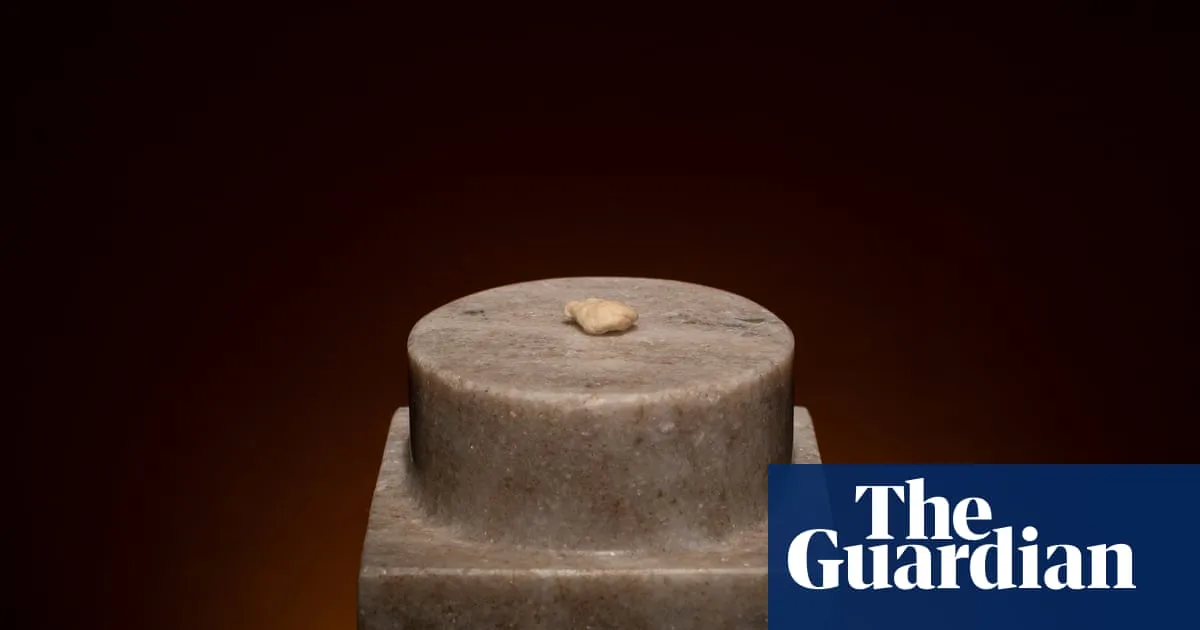
From the title down, it’s hard to escape the way the exhibition conflates fandom and religiosity: the collections denoted as “shrines”; the sense that visiting artists’ graves or a mural of David Bowie is a form of pilgrimage. One room is devoted to a piece of gum chewed by Nina Simone and rescued from the stage of the Royal Festival Hall by Warren Ellis, of Nick Cave’s Bad Seeds. It has already been cast in silver, turned into both a sculpture and a piece of jewellery, and been the subject of Ellis’s 2021 book Nina Simone’s Gum.

Here it’s presented like a holy relic in a glass case, illuminated in an otherwise darkened space. On one level, it’s preposterous and tongue in cheek; on another, there is a serious point: that fandom fills a gap in an increasingly secular society “for devotion and faith in something kind of bigger and better”, as Kardashian puts it.

Certainly, it’s striking how much of the fandom on display is rooted in coping with loss. Artist Dandy Day’s exhibit is a cookie jar in the shape of the Beatles’ Yellow Submarine: it used to contain the ashes of their mother, who died when Day was 19. “She brainwashed me with the Beatles in the best possible way,” says Day. “They were always on in the car and the house. Her brother passed away when she was a teenager – and he had introduced her to them. Subconsciously or not, I feel like playing their music was her way of allowing me to understand grief. I grew up knowing that her love of the Beatles came from this place of loss. I guess I just transferred that to her when she passed. I think that was like her parting gift to me: I put them on and I can hear her doing her little harmonies.”

Perhaps a sense of loss infuses the whole exhibition: as Turk points out, the kind of collecting shown in Holy Pop may well be dying out in a world in which fandom increasingly exists online, without physical objects. “When you own something,” says Turk, “you absorb it more. You build an archive of objects and it’s like a memoir. When you’re online, you don’t absorb. But if we don’t do that, maybe we won’t feel as full in terms of our soul.”

Nina Mhach Durban of Athen and Nina agrees. “You used to cover your wall in concert tickets, and now you have none of that ephemera. Maybe our artistic practice is trying to cling on to that. There’s something about seeking these things out, like a treasure hunt. Athen and I really enjoy eBay-hunting for these objects we use, finding old Britney Spears tapes and VHS videos, because they aren’t readily available any more. It’s like fandom is dying out in many ways, but then it’s also allowing us to have this practice, to do the hunt. And there’s something sacred in that act itself, hunting things down.”

Holy Pop is at Somerset House, London, from 21 May to 9 August.