Ghostwatch, the BBC pseudo-documentary that generated 30,000 complaints and was banned for 10 years after its 1992 broadcast, remains a gripping watch on Amazon Prime in 2026. The film, which aired on October 31, 1992, convinced many viewers it was a real live investigation into a haunted house, causing mass hysteria and leaving a generation traumatised.
A Pioneering Mock-Documentary
Found-footage horror is a well-worn subgenre, with early examples including 1980's Cannibal Holocaust and 1984's Manson Family Movies, followed later by The Blair Witch Project. In October 1992, Ghostwatch pushed the format to new extremes, blending the style with a mock-documentary approach.
The programme featured Michael Parkinson as the main host, alongside Blue Peter star Sarah Greene and Red Dwarf's Craig Charles. With such a wholesome line-up, many Brits believed it was family-friendly, despite its post-watershed slot. Families across the country tuned in for what was advertised to be a live, real-life investigation into a haunted home.
Chilling Details and Unsettling Moments
The story unfolds in a studio and at a property on the fictional Foxhill Drive in Northolt, Greater London. The sinister presence, dubbed "Pipes," is believed to inhabit the space beneath the stairs, banging and rapping, throwing crockery, and scratching the face of Suzanne, one of the occupants. Viewers had no idea at the time that the whole thing was fabricated, and many were utterly convinced it was genuine, including Parkinson's own mother.
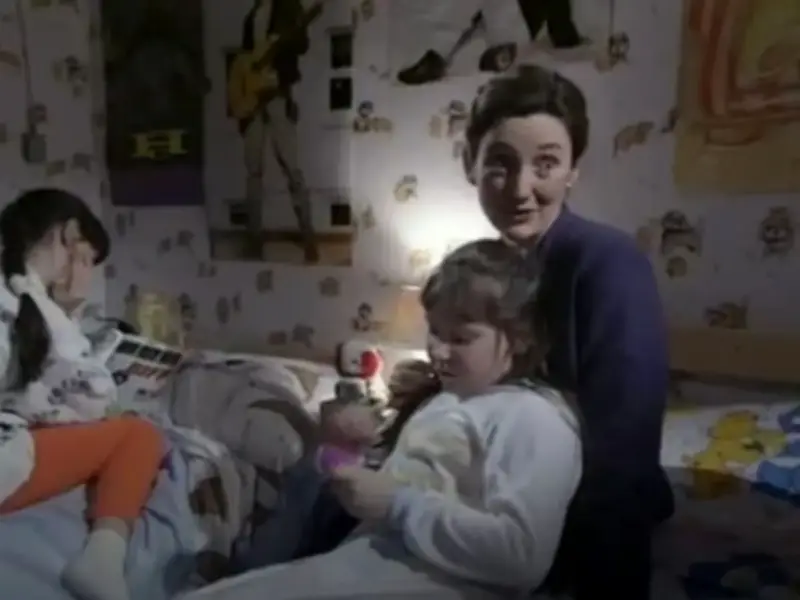
One of the most chilling moments arrives when a panning shot seemingly catches Pipes skulking beside the curtains in the girls' room. Tellingly, this goes completely unacknowledged, further enhancing the film's "live broadcast" illusion. Other details push the boundaries when a neighbour recounts finding a butchered Labrador, and it emerges that a paedophile once resided in the house and had taken his own life beneath the staircase.
A Technical Accomplishment
As a modern viewer, I was unexpectedly gripped by the story and stunned that some of its bleaker, unsettling moments made it into a BBC production in the early 1990s. It's undoubtedly a touch dated in parts, but it stands as a technical accomplishment and quite the pioneer for found-footage. Writer Stephen Volk's attempts to challenge assumptions are remarkable, and the film is more The Exorcist than Scooby-Doo, with a bleaker, more unsettling quality that appears to take cues from the infamous real-life Enfield poltergeist case.
It's impossible not to admire the commitment Volk invested into crafting such a project, a genuine one-off that couldn't be replicated with the same effect in 2026. Admittedly, it's a bit hokey in places, and the finale descends into something too outlandish to be credible, but from a filmmaking standpoint, it's still a success.
For me, it's more gripping than truly terrifying, and I suspect younger viewers today wouldn't be persuaded in the slightest. It's a distinctive, ingenious piece of television, suspenseful, thrilling and essential viewing for horror enthusiasts. Ultimately, I'm not shocked that it sparked such a furore upon release; it draws you in and won't let go until the very end.