Broadway's Dog Day Afternoon Revival Struggles to Capture Pacino's Magic
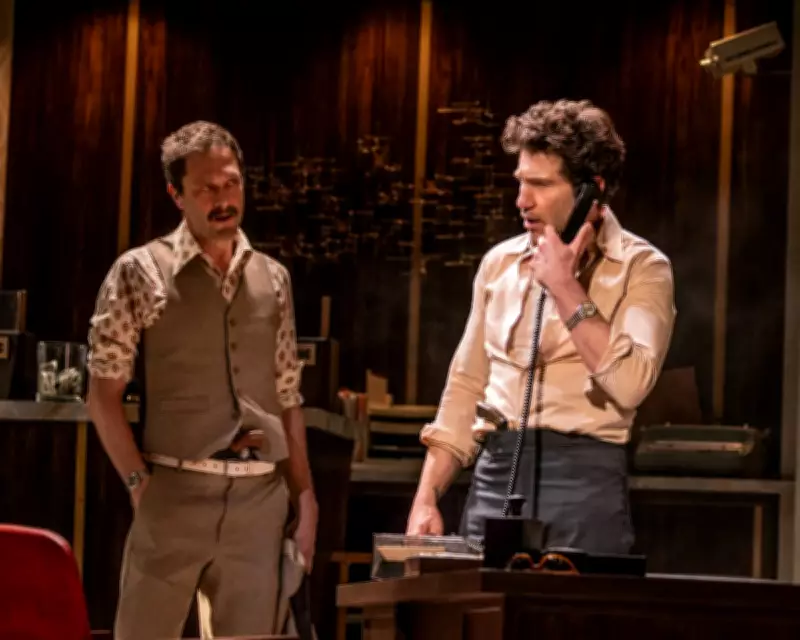
A splashy new Broadway production of Dog Day Afternoon, inspired by the real-life 1970s bank robbery, stars Jon Bernthal and Ebon Moss-Bachrach at the August Wilson Theatre in New York. The story, familiar to many from the 1975 film starring Al Pacino, originated from a 1972 incident in Brooklyn where two robbers attempted a heist, only to find most cash already removed, leading to a hostage situation. One robber sought funds for his lover's gender-affirming surgery, adding a headline-grabbing twist. The film won an Academy Award for best original screenplay and has endured as a classic, blending timeless themes with a specific New York City historical moment.
Hindsight Hinders the Stage Adaptation
However, the stage version, written by Stephen Adly Guirgis, runs into the unintended speed bump of hindsight. Details that felt like authentic snapshots of the 1970s in the film now come across as self-conscious and even cutesy. The production attempts to recreate famous scenes with greater retrospective context, including eye-rolling historical references like characters mentioning the film Deep Throat. At times, it evokes Wes Anderson's Rushmore, where a theatrical version of another Pacino true-life thriller, Serpico, is staged with a precocious flair.
Guirgis avoids slavishly recreating the film's dynamics, notably beefing up female bank-teller characters, such as the newly created Colleen, played by Jessica Hecht. She evolves from tart assessments to increasing sympathy for lead robber Sonny, portrayed by Jon Bernthal. Bernthal wisely doesn't try to compete with a young Pacino, instead playing Sonny as a man whose speech outpaces his thoughts, less overtly desperate but still in over his head.

Lost Urgency and Over-Explained Action
With this change, some urgency leaks from the story, revealing instructive architecture that over-explains the action and limits spontaneity. In a famous scene, Sonny chants "Attica!" to whip up a crowd, referencing a recent prison riot. The play introduces Attica earlier in a more cogent, preachy manner, making the chant feel like a weak payoff rather than an authentic outburst. Live-show elements, like cops in theater aisles and piped-in crowd noises, add electricity, but an impressive rotating set becomes a hindrance, requiring excessive shuffling between locations and characters.
Characters Get Lost in Elaborate Staging
On stage, characters often get lost in the elaborate staging. Ebon Moss-Bachrach as Sal, Sonny's violent accomplice, is menacing and unpredictable, but his primary function seems to make Sonny appear more likable. Similarly, FBI agent Sheldon, played by Spencer Garrett, exists largely to make local cop Detective Fucco, portrayed by John Ortiz, seem friendlier, aided by a running gag about mispronouncing Fucco's name. The character of Leon, Sonny's lover, played by Esteban Andres Cruz, feels muddled; while they share a touching phone-call scene, the writing simplifies Sonny's sexuality, confusing given the 1972 setting. Sonny's contradictions, like maintaining a traditional family while besotted with Leon, are downplayed, leaving characters feeling less lived-in.
Awkward Negotiation Between Eras
Perhaps an updated version set in 2026 would have better utilized this cast, rather than awkwardly negotiating between 1970s period details and 2020s sensibilities. As is, the production is encapsulated by its use of David Bowie songs, including some postdating 1972, which provide initial pleasure but seem to serve the audience rather than enhance the on-stage action. Dog Day Afternoon runs at the August Wilson Theatre until 12 July, offering a glimpse into a classic story that struggles to find its footing on Broadway.