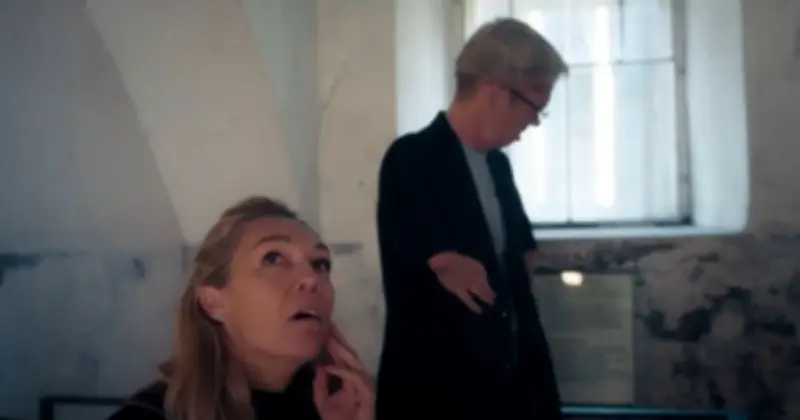
Channel 4's new documentary, The Experiment, has been described in a review as "easily the most disturbing thing on TV", a verdict presenter Sophie Morgan shares. The programme, fronted by Morgan and Mat Fraser, uses a "meticulously constructed experiment to ask a disturbing question: would you recognise cruelty if it was dressed up as care? Could members of the British public be persuaded by ideas drawn from Nazi ideology if they were presented as progressive solutions to a modern social 'problem'?"
At the centre of the experiment is SegriLife House, a fictional residential facility presented as a compassionate, cost-effective model of supported living for disabled adults. Disabled and neurodivergent actors portray residents, while members of the public tour the facility unaware that the ideas behind it are based on the Nazi regime's segregation, dehumanisation and systematic extermination of disabled people.
Presenter's Shock at Killing Centre
Morgan described the programme as a blend of historical documentary and social experiment, acknowledging the shocking impact it is likely to have on viewers. "The film is like a hybrid of a history documentary and a social experiment, and both parts come with a lot of shock. I'm not surprised at what The Guardian called it. It's 100% disturbing," she told the Daily Express.
She singled out the killing centre as the part that shook her most: "In the history section, I think the part that really shook me was the killing centre, which is a place where they mass-murdered disabled people in the years preceding the Holocaust, as most people know it. People refer to this part of history as the hidden Holocaust."
Photographs of Perpetrators
One particularly shocking discovery for Morgan was seeing photographs of the people who ran the killing centre, including a picture of a newly married couple who worked there and were responsible for murdering disabled men, women and children. The photo showed the couple celebrating their marriage, with Morgan questioning how people could so easily dehumanise others.
"We were in this killing centre where thousands of disabled people are being mass-murdered and it's been memorialised now, but you can go into where the gas chambers are, and you can see all these pictures of people all over the walls," she recalled. "There's a picture of a couple who've just got married and they've got married whilst also running the killing centre. In their day-to-day work life, they are murdering disabled men, women and children and then on their weekends, at the same place, getting married." She stated it looked as though the couple were running a summer camp.
"The pictures of the people that ran the killing centres really stuck with me, because I remember thinking, how could you dehumanise people so easily, so willingly? How could this happen? And that was really the question that led to the social experiment that we then conduct," she asked.
Public Reactions and Bystander Effect
Morgan argued that while some people in the documentary express openly ableist and harmful views, others remain neutral or uncertain. She suggested that people easily swayed by propaganda may be less likely to question harmful attitudes, stressing this was not their fault, describing it as "human nature" as she drew comparisons with Nazi Germany.
The Loose Women star explained: "The people that come through the experiment, some of them express really ableist and problematic and harmful attitudes. But the ones that were sitting in the middle of the fence and had no real strong opinion, they sort of fall into this bystander category." She added: "But the types of people that we are worried about, they are the types of people that are easily influenced and swayed by propaganda. It's not their fault, it's human nature and that's what happened in Nazi Germany, and that's what happens so often in this world. It was the reactions of non-disabled people, towards these ideals, that shocked me the most."
Mixed Viewer Response
Morgan admitted The Experiment has received a mixed response from viewers. "It's been called compelling, disturbing. I think it's been uncomfortable for a lot of people. I think also it's important to really stress that the disabled community don't find a programme like this necessarily anything new."
"Some might be made more aware of our history, certainly like I was. I've confessed my ignorance around understanding what happened in Nazi Germany to disabled people. But for many disabled people, this is not new to us. Ableism is alive and well and thriving in all parts of life. I think whilst there's some that are really happy that we've done this and exposed that, there are some that want more. They've said we need more than this. We need action. We don't need experiments. We need a change. And they're not wrong."