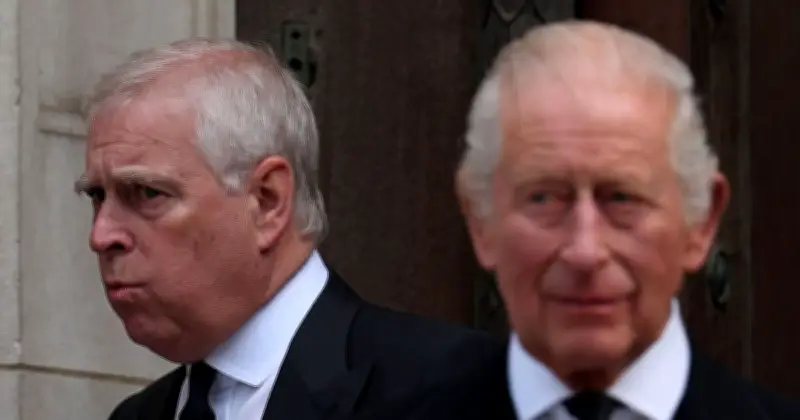
King Charles has made clear that Prince Andrew cannot use private royal money to fund his legal challenge against police search warrants, according to reports from inside the Palace.
The private allowance provided to Andrew must not be used to finance his judicial review against Thames Valley Police and the Central Criminal Court over warrants executed ahead of his arrest in February. The funds come from King Charles's personal revenues, including income from the Duchy of Lancaster, private estates and personal investments, and are not drawn from taxpayers or the £138million Sovereign Grant.
King's firm stance
Out of brotherly loyalty, the King had chosen to support Andrew privately and accommodate him on the Sandringham estate after his departure from Royal Lodge, his home of over 20 years. However, the stern warning that not a single penny of these private funds can go toward the legal challenges has delivered a long-overdue reality check.
Following Andrew's arrest on suspicion of misconduct in public office, Charles made his stance clear: "The law must take its course." The Palace has distanced itself from the former prince, leaving him to navigate his legal situation alone.
Andrew's legal battle
Andrew's willingness to challenge the police force investigating his connections to Epstein shows a stubborn refusal to accept his reality, according to the commentary. For decades, the Royal Family offered Andrew protection, status and luxury, but his actions have dragged the monarchy's name through endless scandal and attempted to leverage royal resources for personal legal battles.
The commentary raises the question of why the King is giving him a private allowance at all, arguing it is time for Charles to pull the plug on the private allowance entirely and strip away every remaining financial cushion.
King Charles was right to put his foot down over his private money, the piece concludes, and it is now time to turn off the private financial tap for good and make Andrew face the real world entirely on his own.