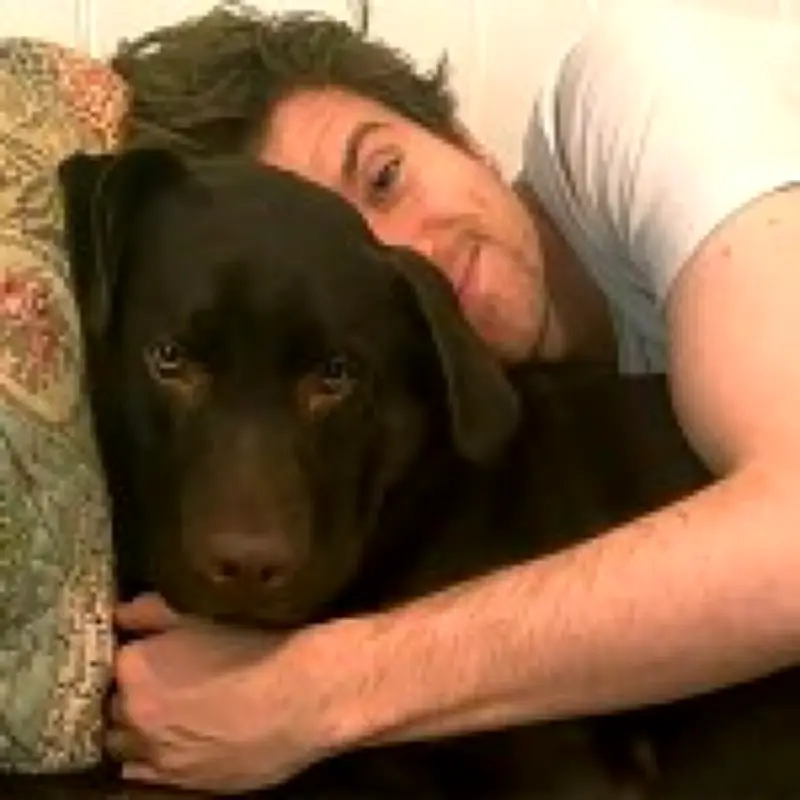
Radio 1 Breakfast DJ Greg James missed his morning show to process the 'horrible' news that his beloved dog, Barney, has died. Known affectionately as Barn, Greg often shared pictures of his chocolate labrador online, gathering a devoted following.
In an Instagram post, Greg wrote: 'I'm sorry to bring such horrible news, but we had to put our lovely Barn to sleep earlier today. I can't really get my head around it. But he was peaceful, we were with him at home in the garden in the sunshine, and I can't stop crying.'
Grief is grief
Greg asked his followers not to 'pile in' with DMs to him and his wife Bella, describing them as 'completely floored' by the loss. He added: 'We're completely floored by it, and I can't believe our little mate has gone, and it's very real and very raw and just so f***ing sad. He was the best.'
He confirmed he wouldn't be on air this morning, sending love to followers and asking for space for the family to process.
Eleanor Noyce, a journalist who experienced a similar loss, argues that compassionate leave for pet death should be normalised. She recalls losing her Jack Russell, Peppa, in 2021 while working as a junior journalist, feeling unable to mention it to colleagues. 'Grief is grief,' she writes, 'and while undoubtedly some forms are more heartbreaking than others, you're still reckoning with a form of loss.'
No statutory right
A 2018 study found two-thirds of pet owners felt uncomfortable asking for time off when their pets died. Beth Hope, a coach and leadership specialist, says there's no statutory right to leave for losing a pet, nor a general right to paid bereavement leave for most losses. 'The one real exception is parental bereavement leave for a parent who loses a child,' she tells Metro. 'Everything else comes down to your employer's goodwill.'
Hope adds: 'For millions of people, a pet is family, the constant in their day. When that bond breaks, the brain doesn't file it under just a dog. It processes it as real loss, with the same fog, exhaustion and inability to concentrate that any bereavement brings. Expecting someone on a work call an hour after their dog has died isn't professional; it's just cruel.'
She emphasises that a workplace's 'real character' shows in what it does beyond the minimum. 'If your policy lets someone grieve but your culture makes them feel guilty for taking the time, that's not a compassionate workplace; it's a compliant one,' she says.