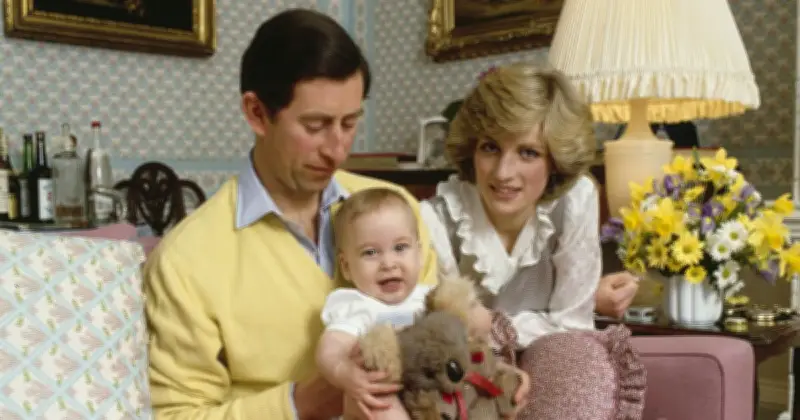
Royal births are governed by centuries of strict protocol, formal declarations and eccentric historic customs designed to safeguard the succession and inform the nation. While foundational customs such as gun salutes, palace easel notices and formal named tributes remain intact, several of the most archaic rules have been modernised or abandoned altogether.
Today's royal parents enjoy far greater privacy and autonomy, breaking free from compulsory rules and rigid domestic expectations. The birth of the late Queen's youngest great-grandchild, Adelaide Elizabeth Annina Brooksbank, in August, was worlds away from that of her firstborn, the now King Charles, in November 1948.
Delivery Room Witnesses and Fathers' Ban
In centuries past, high-ranking political officials were legally required to attend the birth. The Home Secretary had to be present in the delivery room to confirm the baby was indeed a royal heir and not an "imposter" - a mandate sparked by 17th-century rumours surrounding King James II's son. When Queen Elizabeth II was born in 1926, the Home Secretary was present, though the requirement was scrapped prior to King Charles III's birth in 1948.
For generations, fathers were completely barred from entering the birthing room. When Queen Elizabeth II went into a lengthy 30-hour labour with her firstborn, Prince Philip was notably absent, passing the hours playing squash and swimming instead. Modern royal fathers have abandoned this rule, with Prince William present for the arrivals of Prince George, Princess Charlotte, and Prince Louis.
Princess Anne Breaks the Home Birth Tradition
Historically, royal babies were born exclusively at home or inside royal palaces. Queen Elizabeth II gave birth to the then Prince Charles, Andrew Mountbatten-Windsor and Prince Edward, now Duke of Edinburgh, at Buckingham Palace, while Princess Anne was born at Clarence House.
However, Princess Anne famously broke this centuries-old tradition when she chose to give birth to her children, Peter and Zara, at the private Lindo Wing at St Mary's Hospital in Paddington. Diana, Princess of Wales, and Catherine, then Duchess of Cambridge, later followed in her footsteps.
A Refusal to Breastfeed
Despite having a staggering nine children with her husband, Prince Albert, Queen Victoria famously despised pregnancy and flatly refused to nurse any of them, branding the practice "repellent" and the "ruin of intellectual and refined young ladies". Historically, royal mothers typically relied on wet nurses instead, though nursing is now entirely a matter of personal choice.