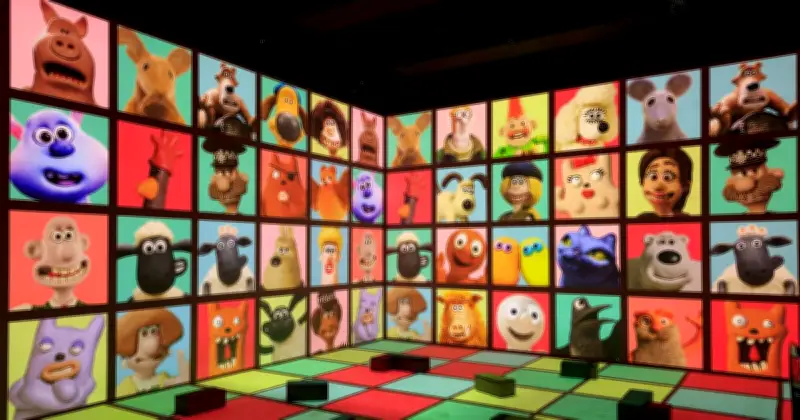
The founders of Aardman Animations have revealed the secrets behind their iconic clay characters at the launch of a new exhibition in London celebrating the studio's 50th anniversary.
Wallace and Gromit creator Nick Park, 67, said the exhibition, titled Aardman: Larger Than Life, is "absolutely jam-packed with stuff" and offers a unique presentation of the history of the studio's work.
Behind the scenes of Aardman's history
The 50-minute show at Lightroom in King's Cross features 360-degree projections of Wallace and Gromit, Shaun the Sheep, and Morph across 11-metre walls. It takes visitors through the journey of Aardman's productions, including behind-the-scenes footage explaining stop-motion animation and how each story was made.
Park said he was "laughing at jokes I hadn't seen in years" while watching the show. The exhibition also revisits favourites such as Chicken Run, The Wrong Trousers and The Curse of the Were-Rabbit.
British humour and early beginnings
Co-founder Sir David Sproxton said being funny is "a very big part of what we do, more so than for many other people in our business." He and co-founder Sir Peter Lord grew up watching Monty Python in the 1960s, and their early work caught the attention of the BBC, which bought one of their animations for the children's programme Vision On.
By 1976, the pair had established Aardman Animations, which made Bristol its home. Early success came with Morph, who appeared alongside Tony Hart on Take Hart in 1977. Nick Park joined the studio in 1985 while working on his student film A Grand Day Out, which introduced Wallace and Gromit to audiences in 1989.
The charm of clay and the rise of AI
Park said the use of clay is why children adore his characters, adding: "Clay brings with it, well, a charm and a humour that you don't get in other mediums." He explained that Gromit's character only came about after he struggled to make him a mouth and experimented with subtle eyebrow movements instead.
On the rise of artificial intelligence, Sproxton said: "I think we'd be foolish if we didn't allow for it in some way," acknowledging the technology could bring new opportunities as well as challenges. All three founders said they are committed to continuing handmade stop-motion animation, with Lord adding: "There's such a love for the handmade, more so now, I think."
The exhibition runs until January 4, 2027 at Lightroom in King's Cross, London.