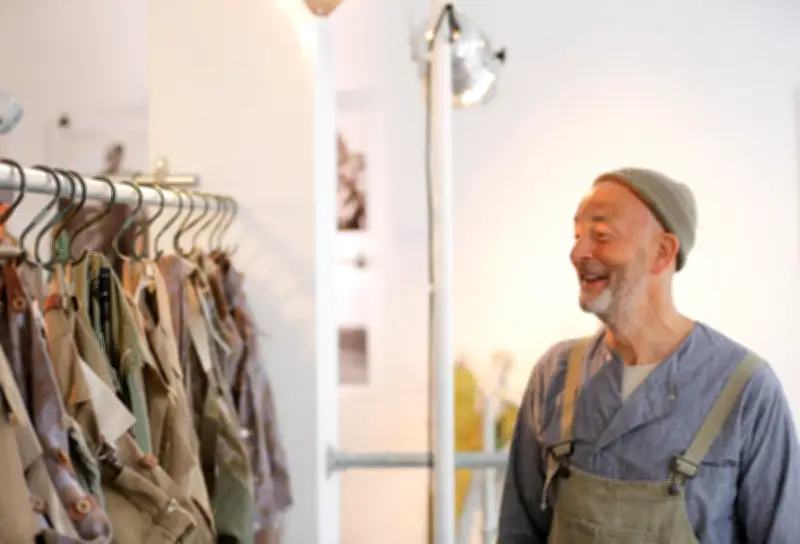
Nigel Cabourn, the influential British menswear designer who drew inspiration from military, workwear and expeditionary gear, has died aged 76. His career spanned more than 50 years, during which he built a global brand with a £10m annual turnover and a loyal following in Japan and beyond.
Early life and career beginnings
Cabourn was born on 7 October 1949 just outside Scunthorpe, where both his parents, John and Edith, worked for the General Post Office. The family later moved to the new town of Peterlee in County Durham when his father became postmaster there. At age 17, he enrolled at Newcastle College of Art and Industrial Design to study fashion, joking that he chose the course because of its high ratio of female to male students, though the real appeal was mastering technical skills.
In 1969, while still a student, Cabourn started a company called Cricket, producing youthful menswear such as soft zip-up jackets and wide loon pants. He made the first Cricket-label jacket by hand from his mother's curtains due to a lack of other material. The quality of his work attracted Paul Smith, who stocked Cricket in his Nottingham store in 1973 and helped the label gain entry to London shops.
Inspiration from military and expeditionary gear
Cabourn described himself as "a big giant sieve of history" whose designs were influenced by his grandfather's memories of World War I trenches, his father's stories of Burma in World War II, and the US M65 field jacket from the Vietnam war. He was also passionate about mountaineering and exploration, particularly Edmund Hillary's conquest of Everest and the Antarctic expeditions of Shackleton and Scott. A football fan, he was sartorially thrilled by the dark-clad figure of Lev Yashin, the Soviet Union goalkeeper in the 1958 World Cup.
Cabourn understood that the details of clothes for such events were purposeful rather than decorative. For example, the pleated bellows pockets favoured on US jackets in Vietnam could expand to hold ammunition or a day's rations. He loved bellows pockets for both their martial origins and their usefulness to male civilians. Sometimes teased about his "trainspotter chic," especially parkas and anoraks adapted from south polar expeditions, he remained ahead of fashion's long-term direction, which moved towards the romance of extreme practicality in the late 20th and early 21st centuries.
Building the archive and brand
In 1978, Paul Smith gave Cabourn an old RAF jacket with a complex button placket, telling him, "Nige, you should make army jackets like this," introducing him to buying vintage. Over the rest of his life, Cabourn amassed an archive of 4,000 clothing items with practical origins and 3,000 books on military, expeditionary and work wear. He spent up to four months a year searching the world for rare garments, from a World War I leather coat to a smock from Hillary's 1958 polar expedition.
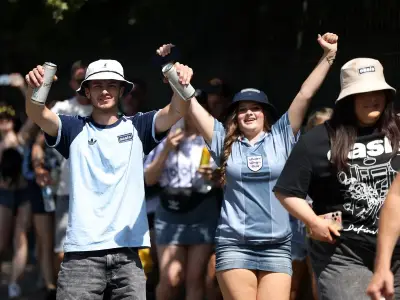
The knowledge he accrued transformed his creations. He reworked a 1950s USAF flight jacket into the SV4, a bright, zipped blouson manufactured in Newcastle and first worn by local football fans, which became an international sensation. After his label was declared bankrupt in 1984 due to cashflow problems, Japanese customers supported his sensibility, allowing him to launch a store in Japan. He eventually had 16 outlets there. His first London store, styled like his HQ in an old drill hall in Jesmond, Newcastle upon Tyne, opened in Covent Garden in 2014.
Textile expertise and collaborations
Cabourn became a textile connoisseur of both traditional fabrics—Harris Tweed, Japanese selvedge denim, cashmere for featherweight warmth at high altitude—and technical fabrics such as naturally waterproof Ventile cotton, developed for downed RAF aircrew in World War II. After 1984, he advertised minimally and the business grew as much as he wanted, with a £10m annual turnover from Japanese licences, his Authentic label, workwear brand Lybro, and Army Gym sportswear.
He collaborated with more than 30 major companies, a favourite being Fred Perry, where the theme was tennis champion Perry's less well-known supremacy at ping pong, a sport Cabourn enjoyed along with boxing and climbing. Women also bought into his practicality, and he recruited the Franco-Japanese designer and fellow collector Emilie Casiez to create a range just for them. Together they scavenged flea markets and researched in the Polish Army Museum in Warsaw and the Airborne Assault Museum in Cambridge.
Personal life and legacy
Cabourn married Janet Bell in 1987; she was the firm's PR. She and their children, Sophie, Ben and Lucy, survive him. Sophie works for the company; a few years ago, she bought online for £20 the first jacket her father sewed from curtains. It has now joined the vintage archive. Cabourn died on 11 June 2026.