The Unlikely Friendship Forged in Titanic's Lifeboat 8
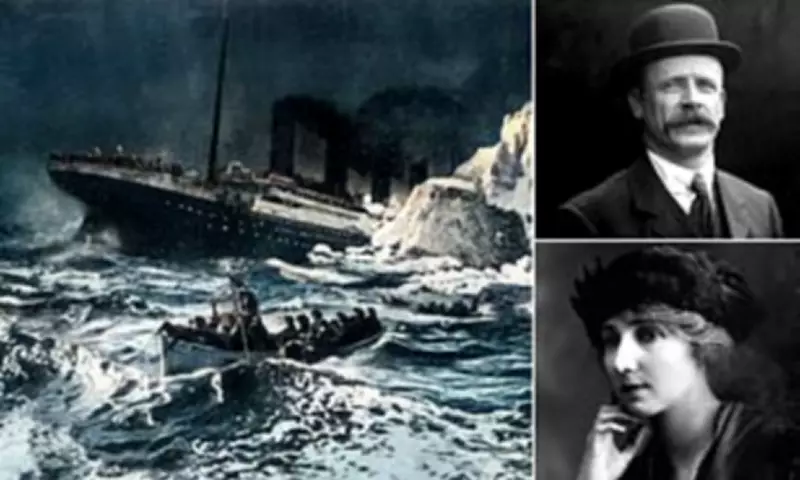
When the RMS Titanic embarked from Southampton on April 10, 1912, two passengers boarded with vastly different backgrounds. Noel, Countess of Rothes, ascended to the luxurious first-class accommodations, while Able Seaman Thomas Jones headed toward the spartan crew quarters. In ordinary Edwardian society, their paths would never have crossed. However, four nights later, when the "unsinkable" liner struck an iceberg and began to list, they found themselves united in Lifeboat No. 8, working together to save their own lives and those of twenty-five others.
A Bond Formed in Darkness
The mutual respect that blossomed that harrowing night never faded. For the remainder of their lives, they exchanged heartfelt letters and sent each other meaningful gifts. Noel praised Jones's "noble" work amid the panic and chaos of the lifeboat, while he recalled her "courage under so heartrending circumstances." Survivors of the Titanic disaster rarely spoke of the events of that night, which claimed 1,496 lives. Many suffered from shock, what we would now recognize as post-traumatic stress disorder (PTSD). Others felt the tragedy was overshadowed by the First World War, which erupted just two years after the sinking.
Noel—born Lucy Noel Martha Leslie on Christmas Day, hence her nickname—was no exception. She would only occasionally remark, "Do remember that whatever you hear about the Titanic is not true." What she would have thought of James Cameron's 1997 film, in which she was portrayed by British actress Rochelle Rose, remains unknown.

Rediscovered Memories
After her death in 1956, her son and granddaughter discovered a box of Titanic-related papers they had never seen before. Inside were newspaper cuttings from 1912 and a copy of the sworn statement she made in Los Angeles a month after the disaster. There were letters from the niece of the Spanish Prime Minister, the youngest passenger in Lifeboat No. 8, who was just twenty-two years old and on her honeymoon when she had to leave her husband behind on the ship, never to see him again. Among these treasured items were letters from Thomas Jones himself.
The New York Herald described the Countess as "full of joyful expectation" as the Titanic left dock. Her husband, Norman Evelyn Leslie, 19th Earl of Rothes, had traveled ahead, planning to purchase a fruit farm in California. Contrary to her alarmed portrayal in the film—where she asks a steward, "Excuse me, why have the engines stopped? I felt a shudder"—the real Countess hardly noticed the moment the vast ship was cut open. "A slight jar and then a grating noise" were all she was aware of. "I turned on the light and noticed it was 11:46 p.m. and I wondered at the sudden quiet," she recalled.
The Lifeboat Departure
Able Seaman Jones, a Welshman standing just five feet one inch tall, was ordered by Captain Edward Smith to command Lifeboat No. 8, the fourth lifeboat to leave at 1:00 a.m. It could accommodate sixty-five passengers but departed with only twenty-seven on board: twenty-three women, plus another able seaman, Charles Pascoe, and two stewards. If all sixteen lifeboats and four collapsibles had been filled, 1,178 passengers and crew could have been saved. In reality, only 712 survived.
When asked why more people hadn't come forward to board the lifeboat, Jones replied, "The night was so fine and the Titanic so large that they did not think it possible she could go down. Time and time again I heard Captain Smith appealing to them to board the lifeboats, but they did not, and the boats, in many cases, left half-full." Even-numbered lifeboats were stored on the port side, while uneven numbers were on the starboard side. Fewer passengers left from the port side, as the officer in charge seemed to interpret "women and children first" as "women and children only."

Rowing Toward Hope
Noel recalled, "We were lowered quietly to the water, and when we had pushed off from the Titanic's side, I asked the seaman [Jones] if he would care to have me take the tiller, as I knew something about boats. We had no officer to take command of our boat, and the little seaman had to assume all the responsibility. He did it nobly, alternately cheering us with words of encouragement, then rowing doggedly." Jones later told The Daily Telegraph, "There was a woman on my boat. When I saw the way she was carrying herself... I knew she was more of a man than any we had on board and I put her at the tiller."
Captain Smith instructed Jones to row toward the lights of a nearby ship, let the passengers board, then return. "I was sure," Jones said, "that the ship, whose lights we could plainly see, would pick us up and that our lifeboats would be able to do double duty in ferrying passengers to the help that gleamed so near." Those lights came from the steamship SS Californian, about twelve miles north-north-west of the Titanic: by far the closest ship. For three hours, they pulled steadily toward the two masthead lights that shone brilliantly in the darkness.
The Californian's Fatal Mistake
Despite their efforts, they could not reach the Californian. "I pulled for the light," said Jones, "and I found I could not get near the light." Noel recalled, "For a few minutes we saw the ship's port light, then it vanished, and the masthead lights got dimmer on the horizon until they, too, disappeared." The reason they couldn't "get near" the lights was due to a fatal mistake by the Californian's captain, Stanley Lord. His apprentice officer reported seeing white rockets fired to the south, but Captain Lord gave no instructions. According to the British Board of Trade rulebook, if there was any doubt about a rocket's meaning, it had to be taken as a distress signal—a rule ignored by the Californian's captain. Additionally, the Marconi wireless operator was off shift when the Titanic began sending SOS messages, as the wireless room was closed between 11:00 p.m. and 8:00 a.m.
Haunting Memories
Jones heard Noel comforting the women on board, at least four of whom had left their husbands behind on the ship. She reassured them that their men would find places in later lifeboats, unaware that there weren't enough. At 2:20 a.m., the Titanic sank, pitching those still on board into the icy water with only their lifebelts for protection. Noel wrote to her parents, "The horror of it all can never be told... those fearful cries when she sank will never go out of my head."
As they boarded Lifeboat No. 8, the newlywed husband of young Spanish woman Maria-Josefa asked Noel to take care of her. "It was awful making her leave him, but one's only feeling was to prevent any panic or scene and obey the Captain's orders," Noel recalled. Maria-Josefa then began screaming for him. "It was too horrible," Noel said. "I slipped down beside her to be of what comfort I could. Poor woman! Her sobs tore our hearts out and her moans were unspeakable in their sadness."
The Decision Not to Return
Jones wanted to turn back to search for survivors in the water, as the boat could easily take more passengers. Noel also advocated returning. "But the other people in the boat were very strongly against it," she recalled, "saying that the suction wave [caused by the Titanic's sinking] would take us down and we would be swamped. I spoke to one of the other passengers and said I thought we ought to return. She demurred ... and asked me not to say anything more about it, as it might result in a panic in our boat if the others heard that I advocated returning." The fear was that desperate people in the water might overturn the boat, endangering all twenty-seven on board. Both the Countess and Jones struggled with this decision.
In a letter to Jones, Noel later wrote, "The dreadful regret I shall always have, and I know you share with me, is that we ought to have gone back to see whom we could pick up." When the terrible sounds of people dying behind them ceased, the absolute silence seemed worse. To distract those in the boat, someone suggested they sing. They sang through the rest of the night—every ballad, nursery rhyme, folk song, and hymn they could think of. "It kept up our spirits," Jones recalled. "We sang as we rowed, starting out with Pull For The Shore."
Rescue and Aftermath
The Carpathia, bound from New York to Gibraltar and some fifty-eight miles away, received the Titanic's distress message and arrived at the scene at 4:00 a.m., an hour and forty minutes after the Titanic sank—too late to save anyone who hadn't found a place on a lifeboat. Noel fainted as she was taken on board. "I remember nothing after I was put into the swing and hauled up until I found myself on the dining-room sofa with the doctor pouring hot stuff down my throat," she said.
Noel and Jones exchanged Christmas cards every year until her death. Among the treasured items found in her Titanic box was a wooden roundel with a bronze number "8" embedded in the middle—a gift Jones had made for her. After the ordeal, he removed the bronze "8" from the prow of the lifeboat and mounted it on wood. "My lady," he wrote, "I beg to ask your acceptance of the number of my boat from which you were taken on board S/S Carpathia. In asking you to accept the same, I do so in respect of your courage under so terrifying circumstances." She sent him a silver fob watch engraved with the simple words "April 15th 1912. From the Countess of Rothes."
Legacy of a Friendship
At Christmas, Noel would enclose £1 with her letter—worth around £400 today—which, according to the family, "did Christmas" by covering all expenses. Nell, Jones's daughter, remembered the letters he wrote to Noel and the replies he received, as he used to read them to her. When she told her school friends her father was writing to a Countess, they didn't believe her. With a smile, she recalled thinking, "everybody knew a Countess."
For her part, Noel was haunted for the rest of her life by a particular piece of music: the Barcarolle from The Tales of Hoffmann—the last piece she heard the orchestra play on deck before retiring to her cabin the night the ship went down. This extraordinary friendship, forged in unimaginable disaster, stands as a testament to human resilience and connection across social divides.