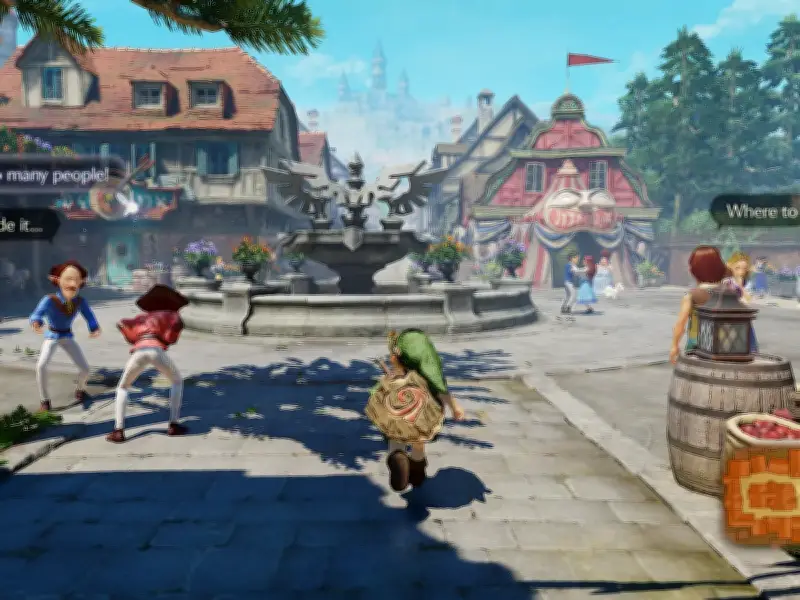
After playing just over two hours of The Legend of Zelda: Ocarina of Time remake on Nintendo Switch 2, the core feeling of the original is still there, despite the visual makeover. The preview session included time in Kokiri Forest, Hyrule Field, Hyrule Castle Town, and the Forest Temple, and the remake impressed with its blend of nostalgia and modernisation.
Kokiri Forest: A Vast Visual Upgrade
The preview began in Kokiri Forest, where Link wakes up. Gone are the top-down, fixed camera scenes; players can now walk around in Link's room from his perspective and move the camera. A new short cutscene showcases the area's visual overhaul, with trees and foliage sprouting high into the sky, making the original look empty and flat by comparison. Saria is introduced in a cutscene similar to the original but styled more like those in Breath of the Wild and Tears of the Kingdom.
Exploring Kokiri Village, every character, building, and point of interest is generally in the same place as the original, but there is much more detail and many additional assets. Little graphical details impressed, such as water dripping off Link's clothes after getting out of water, and a new animation for walking through long grass. The soundtrack remains nostalgic yet feels new and fresh, with updated audio for collecting rupees, cutting grass, and opening chests.
New Features and Quality-of-Life Improvements
The control scheme is more intuitive than in the Nintendo 64 version. The jump button is set to X by default, but can be swapped to B in settings. Jumping is now a manual button press, similar to the animation in Breath of the Wild and Tears of the Kingdom, and a new 'Dash' or 'Run' ability is triggered by holding A. Dialogue with characters has been extended significantly, offering more detailed insights into characters and their motivations. For example, a new line mentions Mido wanting Saria to like him, which was only implied in the original.
Link's movement retains the weighty feel of the original, which helps the remake keep its magic. In Hyrule Field, the area feels much bigger, more populated, and denser, with more detail everywhere. Hyrule Castle Town has more new dialogue, a bigger back alley section, and new houses to enter. The camera can now be moved around, making the area feel more immersive.
Forest Temple and Phantom Ganon
In the Forest Temple, as Adult Link, the quick-switch weapon and item system (like in Breath of the Wild and Tears of the Kingdom) made combat flow better. Changes have been made to make the game less annoying and unforgiving; for example, a lift now takes players to room 3F, avoiding the tedious block-jumping route from the original. Phantom Ganon looks more menacing, with a more atmospheric boss area full of mist. The 'magical/electrical tennis' battle is more accessible and intuitive, thanks to much better input delay on Switch 2 compared to the N64.
This remake is clearly designed with new players in mind, being significantly more accessible and intuitive than ever. It is not necessarily easier than the original, but it is easier to get to grips with. Nintendo has brought Ocarina of Time into the modern day with a stunning visual overhaul, plus new features and dialogue, while retaining the feeling of the original and what made it so special. Even as an Ocarina of Time purist, the two hours spent with the remake were loved, and there is anticipation for what other surprises the new game has in store.