Indigo Jones, a Welsh learner, visited the 850th National Eisteddfod in Llantwd, near Cardigan, and found it to be the most inclusive event yet, with highlights including meeting American Welsh speakers, an LGBTQ+ venue, and the announcement that Star Wars will be dubbed in Welsh for the first time.
A Personal Journey
Although I grew up a Welsh speaker in Wales, the festival hasn't always been a part of my life. I attended Welsh language schools and spoke Welsh daily, but my parents aren't Welsh speakers, so I switched back to English at home. I often lacked confidence in speaking Welsh and worried about being judged. However, attending the Eisteddfod in adulthood has completely changed my outlook.
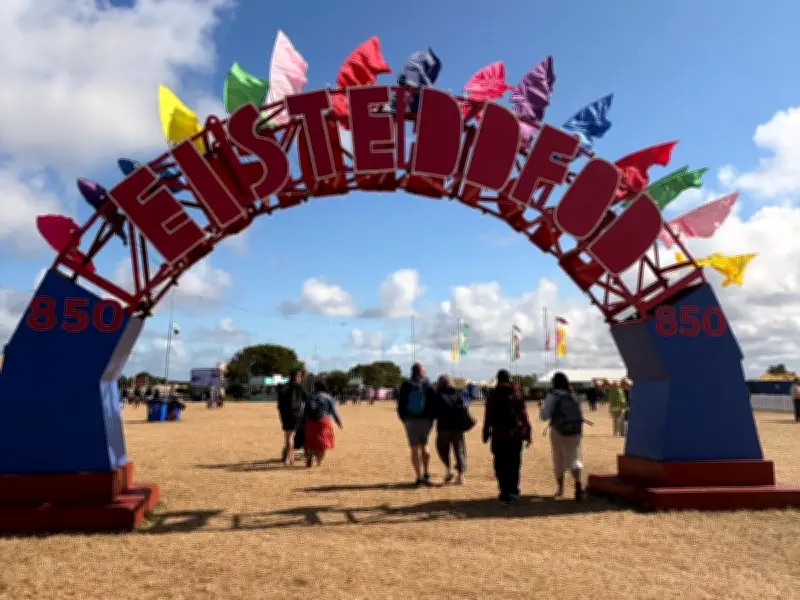
This year's event, called Y Garreg Las after the striking local bluestone, celebrated 850 years since the first recorded Eisteddfod hosted by Lord Rhys in 1176 at Cardigan Castle.
Meeting American Welsh Speakers
This year's event felt like the most inclusive yet, encouraging people from all backgrounds. I didn't feel pressure to have perfect Welsh, which meant I could speak confidently without hesitation. During my visit, I met several Welsh-speaking Americans who had learnt Welsh overseas, and a Dutch couple who flew over especially after seeing it on BBC's Our Welsh Chapel Dream. It was also great to see many Welsh learners competing, with Jonathan Davies from Swansea winning The Welsh Learner of the Year award.
Mas ar y Maes
The Eisteddfod also had an on-site venue for the LGBTQ+ community called Mas ar y Maes, with a packed line-up of events and musical guests, as well as books and items from LGBTQ+ small businesses. Some may think that because it's a festival deep rooted in tradition, it wouldn't be inclusive, but that couldn't feel further from the truth. Mas ar y Maes showed just how progressive the Eisteddfod can be, hosting drag queens, queer artists, and even a high camp podcast.
Sali Mali Meets Darth Vader
The Eisteddfod always has plenty of big announcements that make you proud to be Welsh. This year S4C revealed three big things: the return of my favourite childhood character Sali Mali, the launch of Can i Gymru 2027, and the biggest news that Star Wars is being dubbed in Welsh for the first time ever. It's great to see that the Eisteddfod can be a platform to share news that everyone in Wales can get excited about.
The Super Furry Animals at Maes B
Much like every Eisteddfod, there was plenty of live music on offer throughout the day and the night. The Maes B music festival attracts young people from across Wales to listen to Welsh language musicians. This year it was a huge occasion as the Super Furry Animals took to the main stage for the first time in 30 years. They last performed at the festival in Llandeilo in 1996, where they brought their iconic purple tank on stage. The gig also marked their first all-Welsh language performance.
Huge Media Huddle
Unfortunately I was not just at the Eisteddfod for a jolly, I was also there to work and talk to people about the hottest topics on the maes. I had the chance to meet many different journalists, TV crews, and aspiring reporters. In a time when there is such uncertainty around jobs in the media, it was amazing to see such a big presence at a Welsh language festival in the middle of West Wales.
I also met a group of aspiring journalists working in conjunction with Cardiff University, under the name Llais y Maes. The project allows students to gain on the ground journalistic skills at the Eisteddfod, whilst interviewing important Welsh faces and finding the best current affairs lines. When shadowing me at the event, they asked if I was confident that there would be jobs for them in the future. Whilst standing there in the Eisteddfod, I was able to say I was.
Just earlier I sat in the audience of a live taping of S4C's Pawb A'i Farn, where audiences put questions to a VIP panel. This included Plaid Cymru MS Dafydd Trystan Davies, former First Minister Carwyn Jones, journalist Bethan Kilfoil, and the chief executive officer of the Bevan Foundation, Steffan Evans. The audience asked questions about the reality of life in rural West Wales, from the increase of second home owners and the closures of schools, to local health care and arts funding. The debate, which was led by ITV Cymru Wales journalist Sion Jenkins, was fascinating.
As a teenager, my impression was that the eisteddfod was all around competitions and perfect Welsh speakers. I'd never imagined I would enjoy it as much as I did this week. The traditions are still very much alive from the chair and the crown ceremonies, to the Gorsedd walking through the maes in their ceremonial gowns. But it's also now very much a celebration of a modern-day, inclusive Wales, that I felt very comfortable being a part of.