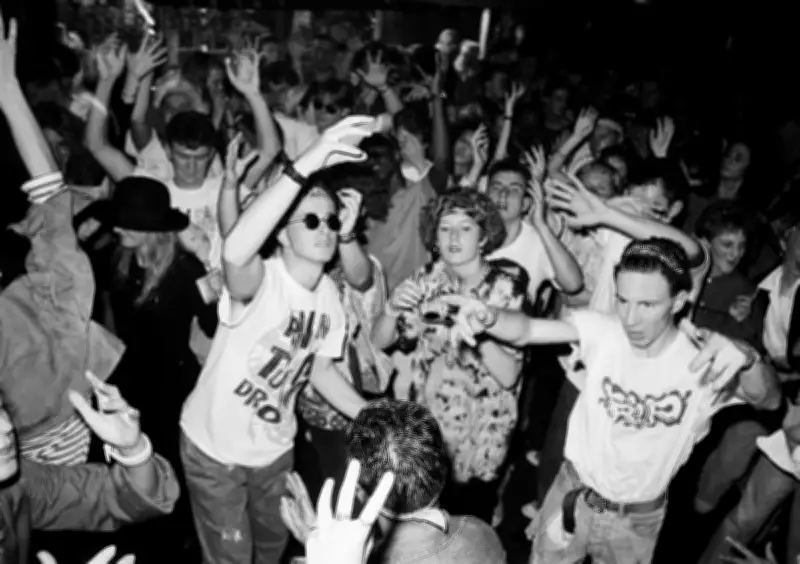
In the 1990s, a typical 20-year-old's schedule revolved around visiting a different club every night of the week. Sundays were not so much sacrosanct as a thrillingly vacant possibility, meaning a sudden secret pop-up would send clubbers running. This routine continued despite holding a regular job, such as working on the dealing floor of a Japanese investment bank in the City with a daily 7.30am start.
Clubbers of that era did not think of themselves as such—it was simply part of the collective tapestry that dictated their lives. The idea of sitting at home watching hours of TV was hilariously puzzling and not even a consideration. To understand this lifestyle, one must see it in the context of 1990s London: a magnetic cauldron of energy and experimentation, of label-free individualism and freedom, imbued with the thrill of never knowing where or with whom you might end up.
A weekly club diary
The weekly club diary read: Mondays at 151; Tuesdays at Crazy Larry's or the Ministry of Sound; Wednesdays at Café de Paris or Subterania; Thursdays at Tramp, only Tramp; Fridays at L'Equipe Anglaise, Iceni or Titanic; Saturdays at Browns or Chinawhite. Where an "or" is mentioned, attendance at all listed venues was expected.
By today's standards, clubbers were en route to armageddon: gorging on Big Macs and KFC dippers, hydrating with vodka, chain-smoking Marlboro Reds, occasionally taking Scarface-amounts of drugs, hardly sleeping, and never exercising—except for dancing every night. They were ecstatically happy, injected with something more elemental than narcotics: a lust for life, an enjoyment of the moment, of the possibilities, of the encounters.
No distractions, only encounters
The point is there were no distractions, no hours spent lying forlornly in bed scrolling through a phone. Curiosity—not dictated or tainted by social media algorithms but born from instinct, word of mouth and happenstance—drove the era's clubbers. Encounters included artists, designers, footballers, musicians, princes, actors, chefs, drug dealers, seedy club promoters, sons of multi-millionaire Greek shipping magnates, pompous Italian, French and German aristocrats, flower stall sellers, It Girls like the late Tara Palmer-Tomkinson, and nepo babies before they had a name.
Memorable moments include the night INXS frontman Michael Hutchence pushed a friend and the author to the floor as he dived to punch a Danish man he thought was flirting with his on-off girlfriend Helena Christensen. He later sent the Dane flowers to apologise. On another night at Iceni off Piccadilly, a friend and the author caught sight of Brad Pitt, his long blond hair cascading over his shoulders while filming Interview with the Vampire, leaning against a wall observing the crowd. They invited him to a pretend party, and a friend who worked at Vogue handed him her business card with her address. He replied that of course he would come, but he never showed up—though they were out clubbing, so who knows.
Committed to the moment
Mostly, the author met people who became friends. Today, there is endless discussion about feeling sorry for children living in this strange world, while sentimentally regaling them with stories minus the Scarface moments. Their friend and romantic-possibility pool feels much more restricted, the most glaring reason being the lack of random but nearly always joyful encounters that clubs afforded back then. The author bores her daughter rigid about how all it took was picking up landlines, ringing friends, making plans and sticking to them—committed to the moment, not lost in it, though occasionally they were.