The Spectacle of Style: How Men's Eyewear Became a Fashion Power Move
In the world of men's fashion, a quiet revolution is unfolding right before our eyes—literally. What was once a purely functional necessity has transformed into one of the most significant style statements of our time. The humble pair of spectacles has evolved from medical device to must-have accessory, reshaping how men present themselves to the world.
The Viral Spark That Ignited a Trend
Last spring, eyewear brand Cubitts found itself at the centre of an unexpected phenomenon. Founder Tom Broughton recalls being asked to comment on a viral meme featuring their 'Plimsoll' frames—small, delicate, slightly round unisex glasses worn by British actor Jonathan Bailey in leaked stills from the 2025 film Jurassic World Rebirth. The internet had dubbed them 'slutty little glasses', and suddenly everyone wanted a pair.
"It all just blew up," remembers Broughton, describing how the brand struggled to cope with sudden demand for what had become the sexiest specs on the market. A subsequent capsule collection made in partnership with Bailey's LGBTQ+ charity, the Shameless Fund, sold out almost instantly. Thousands of pairs disappeared in minutes, and after multiple restocks, "we're maybe down to our last 15 pairs," adds Broughton. Remarkably, nearly the entire run was purchased by men.

From Pop Culture Phenomenon to Mainstream Movement
What might have been dismissed as a fleeting internet moment has proven to be something far more significant. Those viral glasses weren't a phenomenon but a harbinger of a new era in men's eyewear. Across pop culture, delicate, performatively bookish frames are becoming the standard for stylish men.
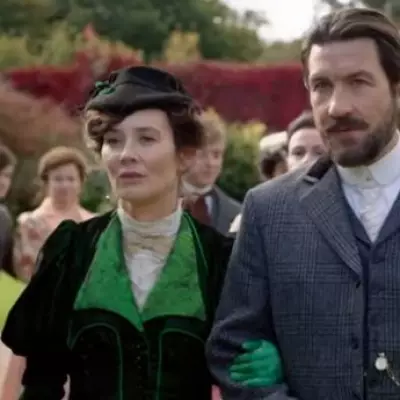
The same Cubitts frames recently appeared again in cinemas, this time worn by Glen Powell in Edgar Wright's remake of The Running Man. In the new series of The Night Manager, Tom Hiddleston channels Clark Kent energy with his neat Mykita Mylon Triton frames, removing them when stepping out from behind a desk as if they were a plot device themselves.
Even reality television has its bespectacled heartthrob. Stephen Libby from The Traitors took to Instagram last week to explain how his perfectly circular glasses are actually a family heirloom that he fitted with his own prescription.
The Marty Supreme Effect
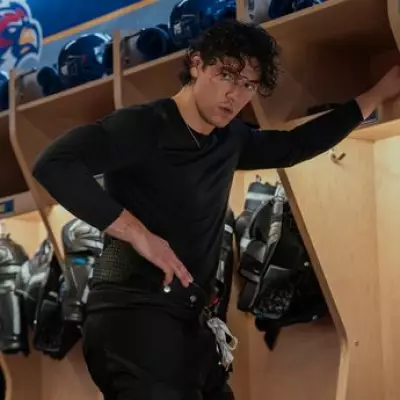
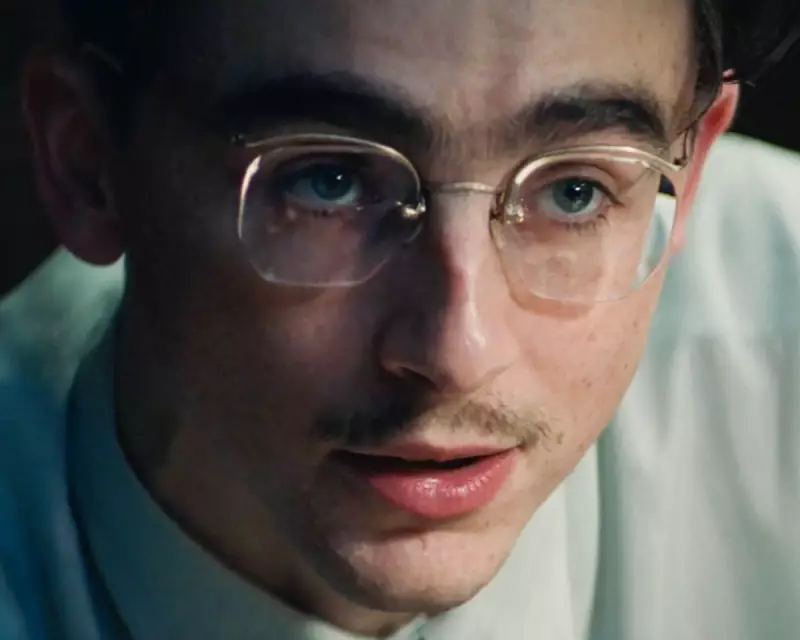
Perhaps no single image has captured this trend better than Timothée Chalamet as Marty Supreme. Over recent months, it has been nearly impossible to avoid coverage of Chalamet's titular protagonist, and in almost every image, he's wearing teeny tiny, rimless glasses. Their soft beveled curves create a striking contrast against what might be Hollywood's most perpendicular jawline.
Broughton suggests this burgeoning era of men's statement eyewear has been building for some time. "Five years ago, everyone wanted to buy the same 'Panto' shape," he says, referring to the flat-topped, rounded frame with a keyhole bridge that played into mid-century Gregory Peck aesthetics.
From Catwalks to Red Carpets
The trend has moved beyond screen characters to influence fashion directly. On recent catwalks at Paul Smith and Prada, models wore spectacles—a notable departure from the usual sunglasses. This year's awards season has been awash with tinted lenses, eyewear that sits somewhere between sunglasses and opticals, accessorising slick tailoring on stars like Jacob Elordi and Michael B Jordan at the Golden Globes.
For those not in the know, while standard sunglasses might feature an 85% tint, these fashion-forward pairs are more like 40% or even less, allowing the wearer's eyeline to remain readily visible while adding a sophisticated filter to their appearance.
The Psychology Behind the Frames
Today's eyewear market is "bifurcated" between oversized, almost cartoonish acetate frames and a "super slim, almost-not-there vibe," according to Broughton. He notes that low-key frames are declining in popularity, suggesting this new drive for statement eyewear may relate to our collective increase in screen time.

"Being in a post-Covid world with us all still on Zoom calls definitely plays into it," he observes. "People realise that their haircut, makeup and glasses are increasingly important."
Interestingly, many of the celebrities driving this trend don't actually need corrective lenses. Jonathan Bailey revealed in a GQ interview that he has 20/20 vision and faked an eye test as a child to get his first pair. Timothée Chalamet doesn't require them either—though director Josh Safdie asked him to wear -10 contacts under +10 spectacles for added ocular authenticity in his role.
This separation between function and fashion isn't unusual. About 15% of Cubitts customers purchase frames without prescription lenses, proving that capable vision is no longer a prerequisite for stylish eyewear.
More Than Just Accessories: The Emotional Connection
For many wearers, glasses have evolved beyond mere accessories to become emotional companions. As one spectacles wearer confesses, "I almost feel like I need my glasses as some kind of social crutch. They've become little windows I can hide behind when I'm out in the world."
Stylist Tom O'Dell confirms this isn't an isolated experience. "An actor I work with said that sometimes, when in the public eye, a pair of tinted glasses acts as a barrier between you and the public," he reveals. "It gives you a little bit of distance, without a full pair of sunglasses."
O'Dell believes tinted glasses can lend a look of "gravitas," while Broughton suggests they might simply serve as a handy excuse to wear sunglasses indoors. Either way, they represent an improvement in how men approach personal style and public presentation.
The Future of Men's Eyewear
As we move forward, it's clear that men's relationship with eyewear has fundamentally changed. What began as functional necessity has become a powerful tool for self-expression, confidence, and style. From the boardroom to the red carpet, from Zoom calls to cinema screens, glasses are no longer just about seeing better—they're about being seen differently.
In an era where personal presentation matters more than ever, the right frames can frame your face, accentuate your eyes, and serve as the perfect finishing touch to any outfit. More importantly, they can make you look more put together, more capable, and more confident—whether you actually need them to see or not.