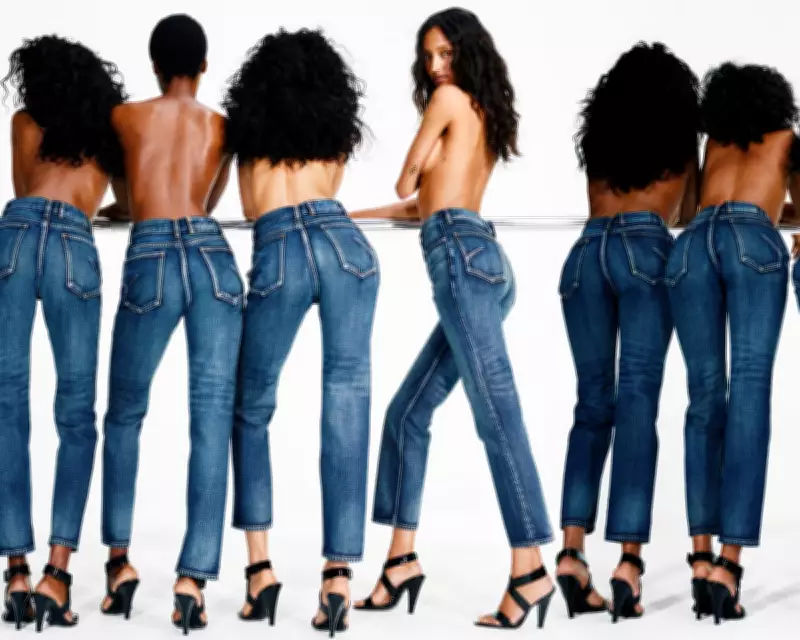
Luxury vs High Street Jeans: Can You Spot the £800 Difference?
The resurgence of 90s minimalism has sparked an explosion in denim popularity, but a pressing question lingers: can a pair of jeans ever justify an £800 price tag? Denim mania is sweeping across the fashion spectrum, from luxury brands to high street collaborations, with both ends experiencing wild demand.
The High-End and High-Street Contrast
At the luxury end, Alaia has launched a line of Aegean blue jeans crafted from Japanese denim, retailing at £800. These jeans are designed to be comfortable and flattering, with such high demand that customers are advised to reserve styles in store or call ahead before visiting. On the opposite side, JW Anderson's collaboration with Uniqlo offers jeans at £34.90, featuring a straight cut that has become a front-row staple at recent fashion weeks and routinely sells out online.
Both options are proving immensely popular, but the core issue remains: can consumers discern the difference? Initial wear reveals that Alaia jeans sit perfectly, while Uniqlo's slide on nicely at first. However, after some use, the cheaper pair begins to lose shape in key areas, highlighting a potential gap in durability.

Expert Insights on Denim Quality
Amy Leverton, founder of the denim consultancy Denim Dudes, explains that comparisons are complex due to differing manufacturing methods. "Sagging and bumming depend on factors like weave density and stretch content," she says. "If jeans feel soft upon wearing, it might indicate a loose weave, affecting longevity."
Evoléna de Wilde d'Estmael, co-founder of the sustainability-focused secondhand app Faircado, emphasises that the real distinction emerges in denim care. "A £30 pair that bags out quickly leads to frequent washing, breaking down fabric faster and wasting water—a vicious cycle," she notes. "Quality denim holds its shape, requires less washing, and improves with wear, fostering a deeper relationship with the garment."
Sustainability and Transparency in Fashion
For many, £35 jeans with slight sagging might be acceptable, especially when compared to the cost of a flight to Mexico. However, high prices don't always guarantee quality. The introduction of digital product passports this year aims to expose this by requiring transparent records of materials, supply chains, and environmental impacts.
"Once every pair has this transparency, it becomes harder to hide behind low prices," says d'Estmael. "Fast fashion may struggle, but quality brands have a significant opportunity." Leverton agrees, adding, "That's why I prefer secondhand Levi's."
The Rise of Luxury Denim
The trend of luxury jeans has been building for years. In 2022, Bottega Veneta sold out a £5,100 leather jean in two weeks, followed by costly versions from Valentino and Erdem on catwalks. Margot Robbie's Chanel jeans, yet to be released, are expected to join high-priced offerings from Versace (£2,310), Balenciaga (£1,550), Brunello Cucinelli (£1,200), and Khaite (£600).
Leverton argues that inflation has made artisan Japanese denim prices more acceptable. Alaia uses slow-made selvedge denim from Kojima, Japan, which is in high demand but faces production challenges. Reports from WWD indicate 10 to 20 factory closures due to ageing ownership and skilled worker shortages.
D'Estmael concludes, "An £800 price can be justified if jeans last, maintain shape, and retain resale value. Considering raw materials, manufacturing, and transport, the true cost reveals an economic illusion. The real sweet spot is buying these pieces secondhand."