Dior's Paris Menswear Revival: Anderson's Confident Vision Signals Fashion Turnaround
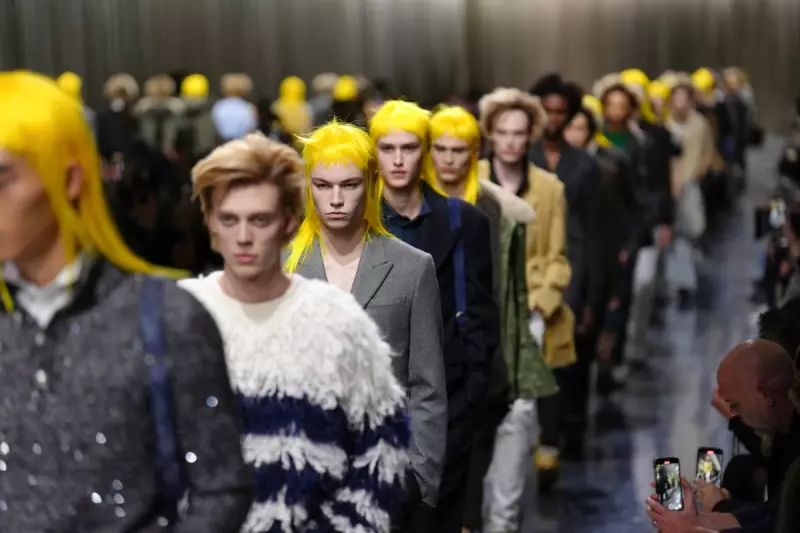
Dior's menswear show arrived in Paris with a stripped-back set and a loud signal of intent. Spiky neon-yellow wigs read like a flag planted firmly on the runway, marking a pivotal moment for the luxury house after recent creative uncertainties.
A Statement of Authority
In an annex of the Rodin Museum lined with curtain fabric, Jonathan Anderson pared the décor down to near-nothing. The 41-year-old Northern Irish designer, celebrated for transforming Loewe into one of luxury's most admired labels, now serves as Dior's creative director across all collections. On Wednesday, his clothes finally carried the argument with undeniable confidence.
The stakes were visible in the room, with VIPs including Robert Pattinson, Lewis Hamilton, and SZA packed in close. As one front-row attendee remarked, "Dior is back. It's a good day for fashion." This show felt like authority reclaimed, moving beyond a montage of strong ideas into a coherent, sharpened vision.

Sharpened Silhouettes and Grounded Innovation
Anderson's gender-bending designs came through with weight and purpose, anchored literally in masculine boots and small-heeled lace-ups. This smart back-and-forth signature reflects the designer's acclaimed work at Loewe, suggesting he has found his groove within Dior's weighty heritage.
The strongest argument emerged in outerwear, with coats serving as the collection's sublime backbone in both cut and stance. Anderson riffed lightly but knowingly on Dior's most guarded codes—the Bar jacket and New Look line—with subtle nods including an ever-so-faint curve at the hip and hints of structure that recalled the house's postwar hourglass without old ceremony.
Industry Context and Creative Pressure
Dior represents one of luxury conglomerate LVMH's flagship houses, a pillar of the group's fashion-and-leather-goods engine at a moment when luxury demand faces significant pressure. Across the sector, the terrain has turned harsher, with rival Kering battling prolonged slumps at Gucci that have shown steep sales declines.
In Paris this week, Kering's biggest runway names are absent from official menswear and couture schedules, leaving both spotlight and scrutiny focused on LVMH's tentpoles. Following Maria Grazia Chiuri's departure last year after increasingly mixed critical notices, Dior has placed an unusually large wager on Anderson—the first designer in Dior's modern history to oversee women's ready-to-wear, haute couture, and menswear under a single creative hand.
Coherent Contradictions and Construction
Dior's house notes cast the collection's characters as modern-day flâneurs—aristo-youth roaming Paris, jolted into new connections by couture history. The brand pointed to Paul Poiret, known for fluid forms and far-reaching references, pitching the collection as contradiction made coherent.
On the runway, these collisions worked best when treated as construction rather than mood. Tailoring appeared slender and precise with elongated jackets, mercilessly shrunken blazers, tailcoats, cropped Bar jackets, and lean trousers. Outerwear fused pragmatic and dramatic elements, with bombers flowing into brocade capes, balloon-back field jackets, and cocooning coats.
Strategic Accents and Controlled Drama
The palette remained somber, which only sharpened the punctuation marks—the shock of yellow hair and glittering glam-rock epaulettes suggesting a designer in full command of his own drama. Accessories reinforced this strategy, with lace-ups and loafers keeping the body planted to blur masculine-feminine lines without letting clothes drift.
The wigs shouted their confident message, while the clothes demonstrated they no longer needed to. Anderson's vision has turned a corner for Dior menswear, establishing authority through sharpened silhouettes, grounded innovation, and coherent contradictions that signal a significant fashion turnaround.