War of the Worlds Reimagined as a Fever Dream of Xenophobic Paranoia
War of the Worlds Reimagined as a Fever Dream of Paranoia

War of the Worlds Review – HG Wells Recast as a Fever Dream of Fear and Xenophobia

A visually arresting and technically dazzling adaptation of HG Wells' classic science fiction novel, War of the Worlds, is currently captivating audiences at Cast in Doncaster. This production, however, trades the traditional Martian menace for a heavy-handed metaphor rooted in Enoch Powell-era paranoia, creating a politically pointed yet often confusing theatrical experience.

A National Emergency of a Different Kind

The Lancaster-based theatre company Imitating the Dog thrusts Wells' narrative into a dystopian vision where the threat of annihilation stems not from extraterrestrial invaders but from internal societal decay. The stage is set with a fictional Daily Mail headline declaring a "national emergency to repel invaders," accompanied by images of London reduced to a smouldering wasteland. Crumbling buildings, food shortages, and corpses litter the landscape, but the invaders hinted at are not from Mars. Instead, projections of an Enoch Powell rally and talk of "rivers of blood" suggest fears about a different kind of alien—foreigners and immigrants.

This adaptation shoves the original story into a context where lack of trust, suspicion of outsiders, and a selfish lust for survival are the real dangers. While there are occasional glimpses of extraterrestrial tripods and squid-like tentacles, the production seems largely unconcerned with the Martian threat, leaving audiences to wonder what attracted the creators to Wells' book in the first place.

Wide Pickt banner — collaborative shopping lists app for Telegram, phone mockup with grocery list

The Fever Dream of William Travers

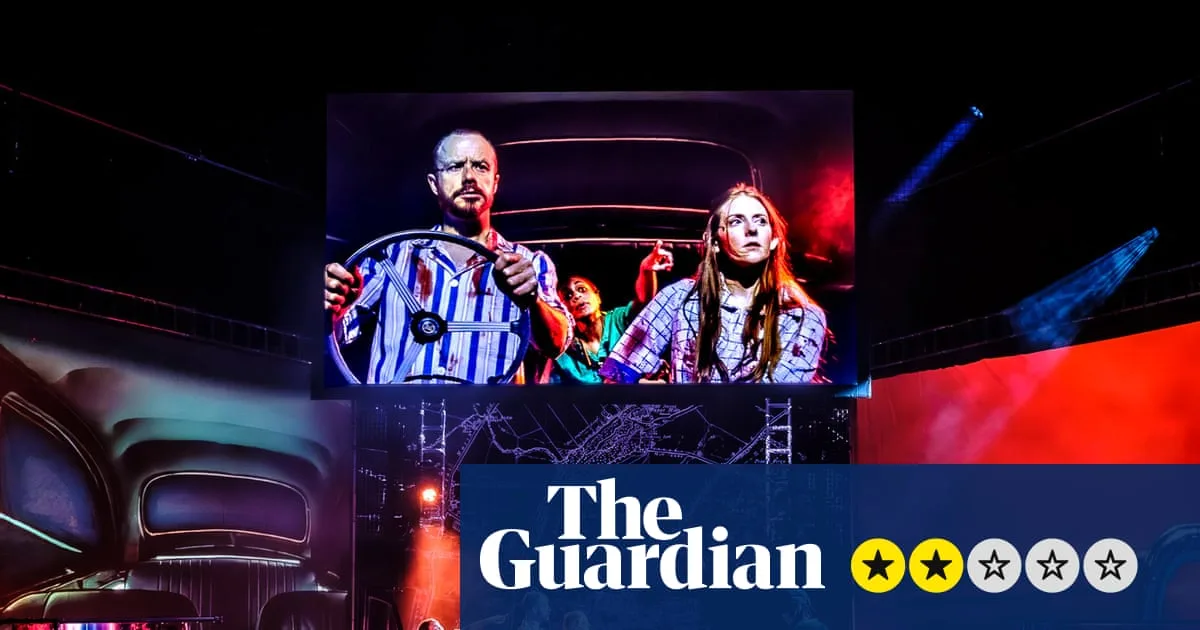
The narrative follows William Travers, portrayed by Gareth Cassidy, who is not the worldly narrator of the original but a right-wing acolyte of Enoch Powell. After suffering a heart attack from being knocked over by a horse at a rally, Travers wakes up in his hospital pyjamas to an apocalypse. He wanders through a charred landscape of empty corridors, deserted underground stations, and crazed survivors, his face etched with a perpetual look of panic.

However, this look is often all he can convey, as the adaptation by directors Pete Brooks, Andrew Quick, and Simon Wainwright relies heavily on visual storytelling with minimal dialogue. The four actors can only imply their thoughts through curt interactions, leaving motivations and psychology largely a mystery. Travers' transition from fear and bewilderment to unaccountable anger adds to the emotional ambiguity, making the political message feel both shoehorned and confusing. Is London dealing with Martian invaders or not? The production never fully clarifies, creating a dramaturgical flaw that undermines its pointed commentary.

A Technical Triumph on Another Planet

Despite these narrative shortcomings, the production is impressively told through innovative technical means. Using handheld cameras, back projections, and miniature props, the precisely choreographed actors provide a live feed for a filmic odyssey projected above their heads. Abby Clarke's set design adheres to a claustrophobic palette of dirty greens and fiery ochres, enhancing the sense of dread and decay. James Hamilton's ever-present score swells in symphonic waves and electronic pulses, adding depth to the atmospheric tension.

Technically, this adaptation is a triumph, showcasing a blend of live performance and multimedia that pushes the boundaries of theatrical storytelling. Yet, emotionally, it remains on another planet, struggling to connect with audiences beyond its visual spectacle. The heavy-handed political metaphors, while timely in exploring themes of xenophobia and societal breakdown, often feel forced, detracting from the coherence of Wells' original tale.

This War of the Worlds is a bold reimagining that challenges conventions but may leave viewers more dazzled by its technical prowess than moved by its message. It tours until 2 May, offering a unique, if perplexing, take on a classic story.

Pickt after-article banner — collaborative shopping lists app with family illustration