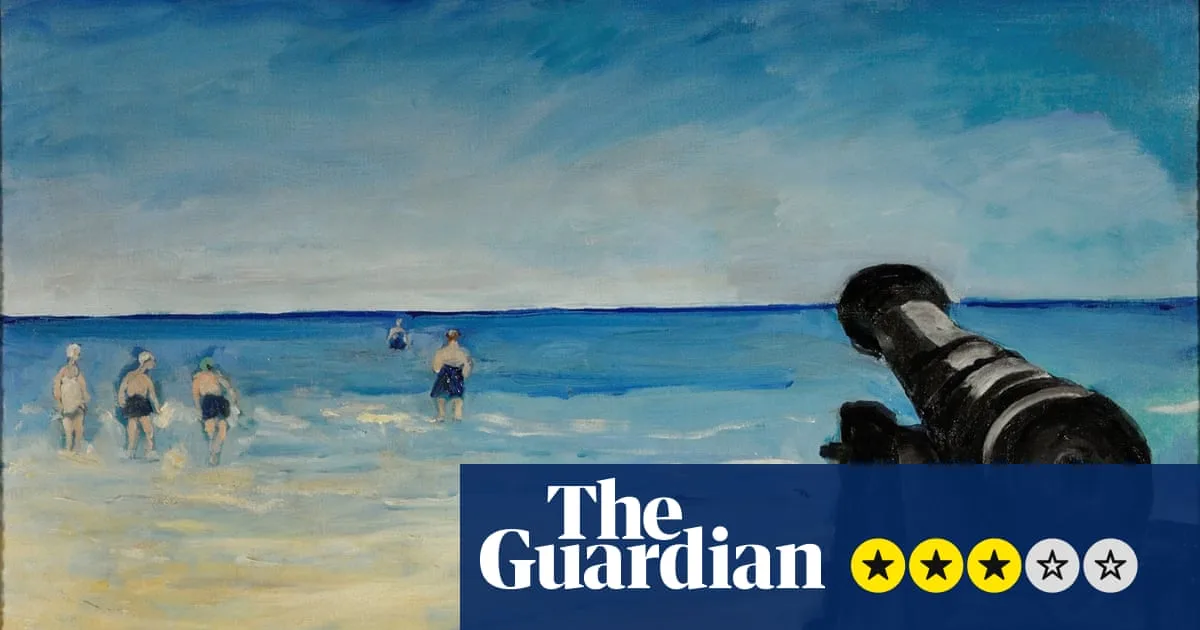
Winston Churchill: The Painter Review – Daubing with Joy at Wallace Collection
Winston Churchill: The Painter Review – Daubing with Joy

The Wallace Collection in London is hosting an exhibition titled "Winston Churchill: The Painter," showcasing the amateur paintings of Britain's wartime prime minister. Churchill, who served as prime minister during World War II and again in the 1950s, was first and foremost a politician and statesman, but he also took up painting as a hobby. He famously referred to his works as "daubs," emphasizing their role as a form of mild stress relief rather than serious artistic endeavors. The exhibition, curated by Xavier Bray and Lucy Davis, features nearly 60 paintings acquired from across the UK and private collections, offering a unique glimpse into Churchill's personal life and historical context.

A Hobby Born of Stress Relief

Churchill took up painting in the 1920s, exhibiting modestly and anonymously in minor salons. He described his approach with an innocent charm, declaring that "the simplest objects have their beauty." His works are not technically proficient but rather the output of a Sunday painter, focused on capturing moments of beauty without seeking fame or recognition. The paintings serve as primary historical sources, recording where he was, when, and what he saw—from stately mansions and bottles of his favorite drinks to views of Blenheim Palace, the French Riviera, and even Jerusalem in 1921, shortly after the Cairo Conference.

Artistic Techniques and Influences

Churchill adopted techniques from Walter Sickert, including establishing an initial monochrome layer beneath the color and using a projector to transfer compositions from photographs onto squared canvas. This tracing method explains why many scenes feel adjacent to action, with poor pictorial compositions that give a skewed, uninhabited feel. His seascapes of the south of France are considered his best work, demonstrating a love of bright, simplistic but dazzlingly contrasting colors. However, his attempts at figures and donkeys in Marrakech scenes are less successful, drawing comparisons to L.S. Lowry's style.

Wide Pickt banner — collaborative shopping lists app for Telegram, phone mockup with grocery list

Historical Significance

The curators wisely avoid reading political views into the paintings, though they occasionally hint at symbolic links, such as a cannon pointing out to sea in "The Beach at Walmer" (c. 1938), which parallels Churchill's warnings against Nazi Germany. The exhibition includes personal items like Churchill's eyeglasses (+2 strength in each lens) and his beloved palette, loaned from Blenheim Palace. The timing of the exhibition, opening amid global turmoil, highlights a contrast with Churchill's era of genteel diplomacy and leadership, where he gifted his modest creations to U.S. presidents including Roosevelt, Truman, and Eisenhower.

Exhibition Details

"Winston Churchill: The Painter" runs from May 23 to November 29 at the Wallace Collection in London. It offers a hermetic cocoon of civility and passion for painting for its own sake, appealing both to art enthusiasts and those interested in Churchill as a historical figure. The exhibition is a curio that reveals the man behind the statesman, his joys, and his amateurish yet heartfelt attempts at capturing the world around him.

Pickt after-article banner — collaborative shopping lists app with family illustration