Sixteen years after The Social Network, Aaron Sorkin returns with a sequel of sorts, directing his own script. The new film, The Social Reckoning, shows Mark Zuckerberg as basically evil, but also weirdly slow-talking, as if the zinging, smart-alecky Sorkinesque dialogue energy of the first film has been siphoned away in early middle age and dispersed among the insurgents in the new cast.
A whistleblower’s mission
The story follows how in 2021, Zuckerberg’s Facebook empire was challenged by courageous whistleblower-employee Frances Haugen and Wall Street Journal investigative reporter Jeff Horwitz. They were on a mission to tell the world how Zuckerberg, scared by falling revenue, changed the algorithm so that engagement was supercharged by rage bait and hate speech, malice and envy. Facebook, moreover, didn’t factcheck political ads, thus driving a huge, nationwide surge in extremist groups and teen bullying and becoming a major player in the Capitol riots. The film does not say aloud the word “Trump” and rather cravenly declines to specify Maga activity.
Mikey Madison sympathetically plays the unhappy, principled, supersmart Haugen, who is dismissed as a “disrupter”. Jeremy Allen White does a capable, unflashy, unrisky job as Horwitz, a stolid performance that perhaps tells us about the diligent professionalism of old-school print journalism.
Zuckerberg as a cameo
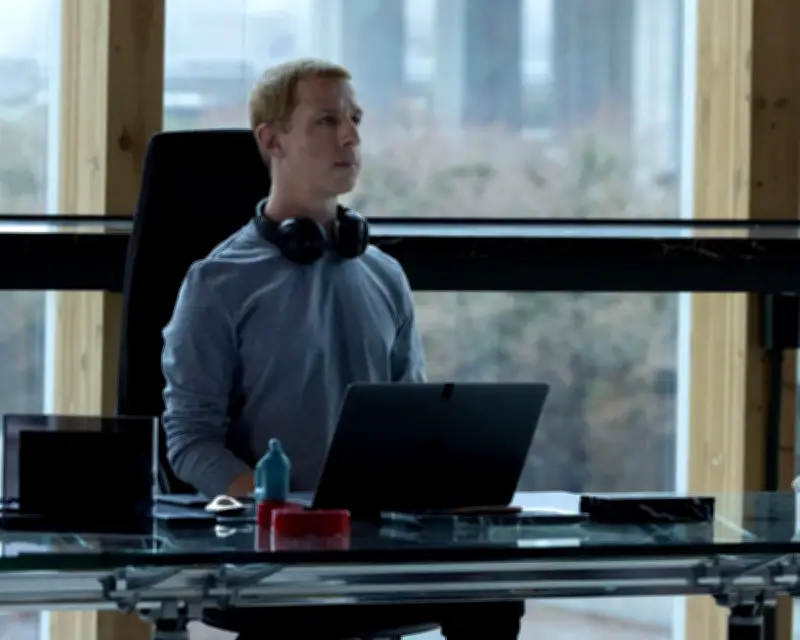
Zuckerberg is played by Jeremy Strong, who does a very interesting impersonation, standing and sitting like a Thunderbird puppet, modifying the torpid sadness of his Kendall Roy in TV’s Succession. This makes it the unhurried contempt of someone simultaneously burdened and energised by knowing he’s richer and therefore smarter than everyone else. The film starts by telling us that Facebook is worth a trillion dollars.
Zuckerberg, though, is almost a cameo, with no equals with whom he can exchange dialogue, only employees. The film imagines one former investor-turned-critic called Charlie (Bill Burr) who heckles Zuckerberg’s practice performance before a confessional hearing, with Zuckerberg amusingly having to be told how to smile. Charlie is the angry, unheeded voice of conscience.
False notes and a disturbing opening
The resulting drama rattles along at an entertaining clip, although there are false notes. When Frances has secret meetings with Horwitz in a hotel, the film has her wearing a slinky evening dress, supposedly as a kind of disguise. Later, Horwitz affectionately tells her to be less “mean”. But she is not “mean”. She just speaks Sorkinspeak. So does Horwitz. The ubiquity of Sorkinspeak effaces the difference between all the characters.
The most disturbing scene comes at the very beginning, showing a drunk woman livestreaming her racist abuse of traffic cops; this is the woman whom Haugen recognises as an acquaintance of hers, radicalised by Facebook. Towards the end we glimpse her again, looking ambiguously appalled by what she has become. The closing-credit titles concede that Facebook still isn’t checking political ads.
The film is set at the start of the Trump interregnum of 2020-24, when it seemed as if the Capitol riots were the ultimate wake-up call and moderation had returned. Nowadays Trump and his tech bro courtiers are more vainglorious than ever, and the values of investigative journalism have been thrown out at the Washington Post by its owner Jeff Bezos. This is a film which doesn’t reckon with the future we’re living in. The Social Reckoning is out on 8 October in Australia, and 9 October in the UK and US.