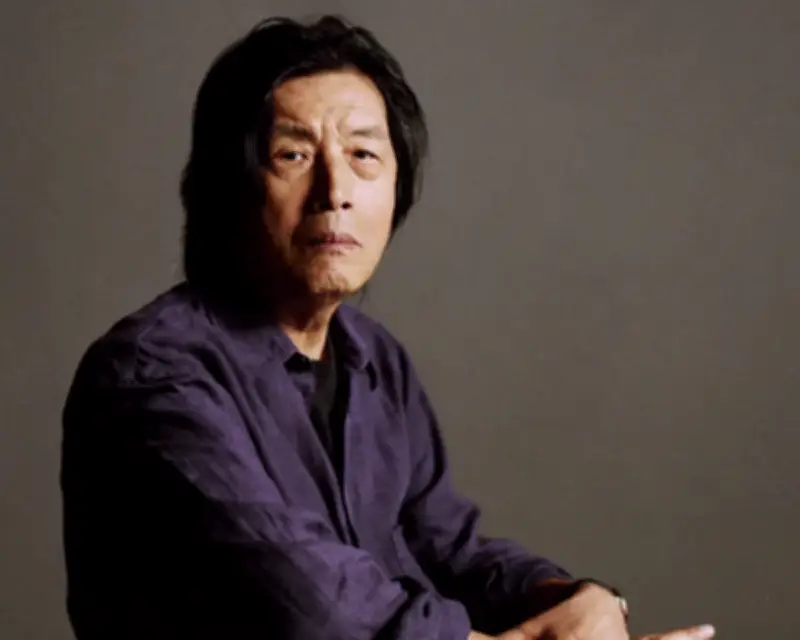
Director Lee Chang-dong's new film, Possible Love, which won the grand jury prize at the Venice film festival, examines labor, capital, and the fallout of redundancy. The film's premise, a private equity firm targeting a company, originated over a decade ago from a standoff that "fundamentally changed the Korean labour movement".
A Decade in the Making
In 2009, workers at Ssangyong Motors protested plans to lay off between 37 and 43% of the workforce, staging a 77-day strike and occupation of the factory that was eventually broken up by riot police. "Until that point in time in Korea, labourers' rights were widely accepted," Lee says, speaking through an interpreter in a central London hotel; "however, afterwards, the basic rights of labourers changed; to the public, they couldn't be seen as more important than market profitability or corporate competitiveness."
Lee shelved the project at the time, questioning his own motives. "The more I examined the pain of these individuals" – after the violent crackdown, there were several suicides and reports of long-term mental health issues – "I constantly asked myself: am I worthy of telling this story? And if I am, how do I tell it? Do I stand close to the workers, or keep my distance?"
A Film Within a Film
Later, Lee and co-writer Oh Jung-mi wrote "many different" scripts, including one with post-apocalyptic elements, before Oh suggested introducing a documentary film-maker character, allowing Lee to work in his ambivalence about his intentions. The result is a "Russian doll" of a film that places a narrative about "labour and its relationship to capital" within a broader story about the ethics of film-making.
The film opens with the 10th commandment, "Thou shalt not covet," which is swiftly broken. We see Ho-seok, fired from a metal factory, reprimanding his wife Mi-ok for caring about her clothes. They attend the funeral of Ho-seok's former colleague, who killed himself after being made redundant, and meet film-maker Lee Ye-ji and her financier husband Sang-woo. Ye-ji, inspired by a stay at a luxury resort in Qatar, is making a film about labour in Korea and sees them as ideal subjects.
Class and Capital
Lee, now 72, has long made films about disempowered people in brutal economic circumstances. He questions the usefulness of the term "class" now. "It's difficult to use the word 'class' because it is so vast," he says. He describes Sang-woo as a "symbol of capital … It's not even that Sang-woo is a wealthy man. It's about how he is capable of moving and controlling a huge amount of capital. And that capital creates further wealth."
Lee wanted to study the "issue of the gaze"; "the ethics of capturing and observing the lives and pain of others". He feels a "closeness" to Ye-ji, "and cameras by their nature search for drama." On equality between film-maker and subject, he says: "It's very hard to be equal because the person holding the camera without even realising it is given power. And it's a one-sided relationship."
Moral Responsibility and the Fight for Dignity
Lee became a film-maker almost by accident. As a writer in 1980s South Korea, he felt called to draw attention to human suffering: "That was our moral responsibility." He later took up screenwriting and then assistant directing, "because I almost wanted to punish myself in a way, make myself go through something very tough."
Lee has described his films as stories about people taking on impossible fights against large entities. "However, despite that, I think the fight itself has meaning. I think these fights the individuals take on against the world is quite possibly the only way they are able to reclaim dignity. Regardless of your chances of winning, I think the fight itself is significant and meaningful."
Lee struggled to find domestic funding for the film, given the "structural crisis" facing the Korean industry, caused by economic losses from a strict Covid-19 lockdown and the rise of streaming services. Netflix stepped in to fund it. "I feel like she and I are in the same shoes. I am also dependent on capital to get my films made. You could say that I am also someone who is married to capital, but trying to protect my own voice, which I almost think is the fate of all film-makers."
After its Venice victory, the film is South Korea's submission for best international feature at the Oscars. On success, Lee says: "I've always made films wanting to connect with audiences. It's always meaningful for me when my audiences accept the questions that I ask through my films and try to find their own answers. And hopefully that leads to a very small change in their lives."
Possible Love is in cinemas now, and on Netflix November 6.