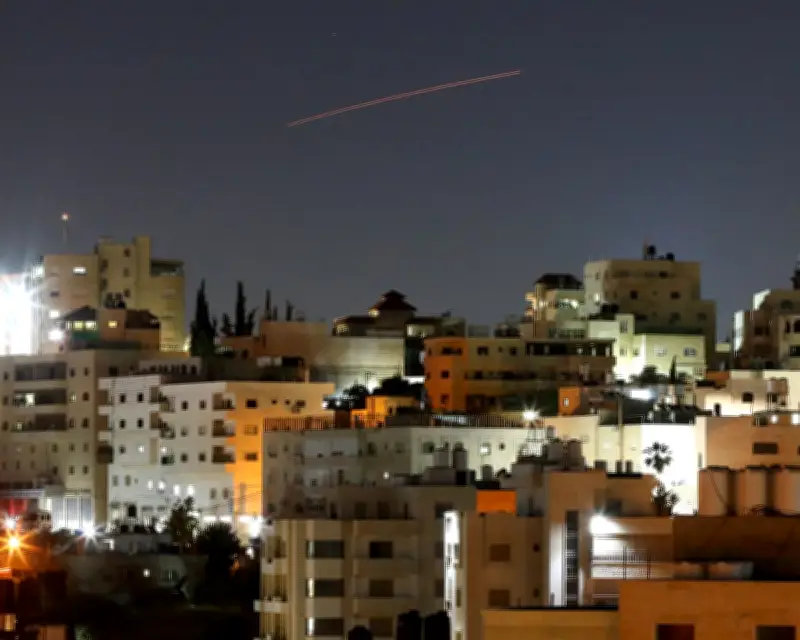
Iran launched missiles at Israel on Sunday in response to Israeli strikes on Beirut's southern suburbs, shattering a fragile ceasefire and marking the most serious escalation since April, after 100 days of war.
Iranian Response and Threats
A senior Iranian official had promised a "decisive and painful" response to Israel's airstrikes on the southern suburbs of Beirut. The Israel Defense Forces said it had intercepted all Iranian ballistic missiles. US President Donald Trump called Israeli Prime Minister Benjamin Netanyahu urging him "not to strike back," adding he was "not happy about it" and that it would "not help" negotiations with Tehran.
Ebrahim Rezaei, spokesperson for the Iranian parliament's foreign policy committee, wrote on X: "We will give a decisive and painful response to the Zionist regime's attack on the suburbs... Watch the sky of the occupied territories tonight." Iran considers Israel to be occupied Palestine.

Mohammad Bagher Ghalibaf, speaker of Iran's parliament, said US bases and assets in the region had become "legitimate targets" after the Israeli strike.
Details of the Attack
Iran launched about 10 ballistic missiles at northern Israel. All were intercepted or struck open areas, according to the military. The Islamic Revolutionary Guard Corps said: "This operation is not a passing event, but rather the beginning of a full week of continuous strikes." It added: "Waves of missiles and drones will continue to be launched around the clock for the next seven days until the enemy is deterred."
Last week, Tehran threatened that any Israeli attack on Beirut would be considered a violation of the US-Iran ceasefire and would be met with an attack on Israel.
Israeli Strikes on Beirut
The Israeli strike hit two apartments in two separate buildings in the Dahieh district of Beirut, a Hezbollah stronghold, killing two people and wounding 11, according to Lebanon's state news agency. The Israeli prime minister's office said the strike targeted "terrorist headquarters" in response to Hezbollah's firing at Israeli territory.
The strikes showered streets with rubble and caused a wave of people to flee the southern suburbs. Hezbollah did not claim responsibility for the rocket fire that Israel said it intercepted earlier.
Trump's Response and Negotiations
Trump urged Tehran to return to the negotiating table, telling Fox News: "You've shot your missiles, that's enough. Get back to the table and make a deal." He expressed displeasure with Israel's strikes, saying they would not help negotiations. Trump told Axios: "If Netanyahu strikes back, it's just gonna keep going like the last 47 years." He also said the US was "very close" to a peace deal with Iran.
The strikes on Beirut came days after Hezbollah rejected a ceasefire proposal agreed by the Lebanese government and Israel. Washington had previously asked Israel not to strike Beirut, though Israeli media reported the US was informed before Sunday's strike.
Broader Conflict and Casualties
Fighting in Lebanon started on 2 March when Hezbollah launched rockets at Israel in retaliation for the killing of Iran's supreme leader Ali Khamenei, triggering an Israeli invasion. Israeli strikes have killed more than 3,613 people in Lebanon, while Hezbollah has killed at least 30 Israeli soldiers and three Israeli civilians.
Yvette Cooper, UK foreign secretary, wrote on X: "The resumption of conflict between Iran and Israel is in no one's interest. Both sides must show restraint and de-escalate immediately."
Before Sunday's strike, Israel issued a forced evacuation order for most of the city of Tyre. Plumes of smoke were later seen rising from the city. Israel also carried out airstrikes across southern Lebanon, while Hezbollah claimed rocket and artillery barrages against Israeli troops.
On Saturday, the Israeli military killed two Lebanese army soldiers and an army captain in a strike on their vehicle. The Lebanese army is not party to the Hezbollah-Israel war.
Gaza and Domestic Violence
In Gaza, Israeli strikes on a Hamas-run police station and a vehicle killed at least nine people and wounded 20 others, as mediators began new efforts to salvage a fragile truce. One strike hit a police post adjacent to a tent encampment in Khan Younis, killing five.

In Israel, an Arab Israeli gunman opened fire at a petrol station near Kokhav Yair, killing one person and wounding five before being shot dead by police. Authorities initially feared a coordinated attack but later concluded the incident involved the gunman and a single accomplice.