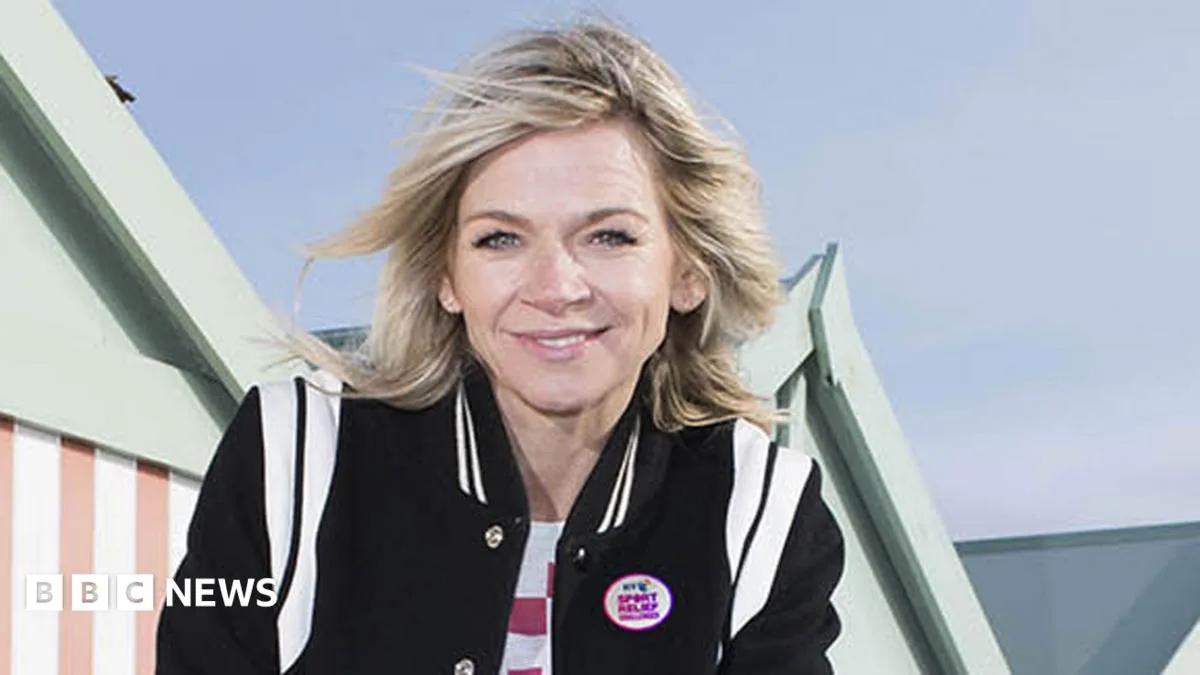
Zoe Ball in Tears Over Grandmother's Mental Health Struggles on Family History Show
Zoe Ball Weeps After Discovering Grandmother's Mental Health Ordeal

Zoe Ball was left in tears after discovering the traumatic upbringing of her late mother, Julia, and the mental health struggles of her grandmother, Peggy, during an emotional episode of Who Do You Think You Are?

Emotional Journey into Family History

The BBC Radio 2 presenter embarked on a quest to uncover her family's past, speaking candidly about her estrangement from her mother, Julia, who passed away in April 2024 after a cancer diagnosis. Zoe had previously revealed she had no contact with her mother from age five until they reunited when she was in her late teens.

Raised by her father, children's TV legend Johnny Ball, and stepmother Di, Zoe knew little about her mother's background, including the hardships she endured growing up.

Wide Pickt banner — collaborative shopping lists app for Telegram, phone mockup with grocery list

Discovering Grandmother's Story

Zoe's mother Julia was the daughter of Margaret (Peggy) and William (Bill) Anderson. While filming the BBC programme, Zoe uncovered details about Peggy's mental health struggles, recalling that Julia mentioned Peggy had been admitted to a psychiatric institution.

Reflecting on childhood photographs, Zoe wondered: "Was she well, was she not? I've no idea." She admitted: "I know very little about her."

Peggy, born in 1913 to a coal miner father, went to work as a girl to support her family. Traveling to the North-East, where her mother grew up, Zoe learned: "Peg is in this situation at home, there's no money coming in, she's the eldest, she's going to have to go out to work, but maybe that's a bit of a relief as well for her, to get out of this household."

Medical Records Reveal Mental Health Crisis

Peggy married Zoe's grandfather Bill but later spent time in an institution. Looking at medical records from 1953, Zoe fought back tears as she learned Peggy had been admitted with "acute mania" when Julia was a child.

Zoe read: "For some months, the patient had been excessively extravagant with money, living above her means and running out large bills unknown to her husband. At Easter she visited her daughter in Lancaster and was accused of shoplifting. After the summons she became disinterested in home and self, and fell asleep at every opportunity (she was exhausted), this continued the day before the hearing of the case (oh my goodness me, so she was up in court as well), when she suddenly changed and became cheerful. She then began to express grandiose ideas and behaved in a very abnormal way. When she gave evidence in the afternoon she was very confused and admitted to hospital. Patient described how upset and depressed she had been after her eldest daughter and husband and baby went to Lancashire."

Zoe continued: "So she was left at home with the youngest, my mum, who is 13, who is the only one at home." As a historian commented on the sadness, Zoe replied: "As an adult, it's hard to know how to look after someone who is going through a mental health crisis, so as a 13-year-old girl, yeah, both of them, I really feel for them."

She added: "It's fascinating, isn't it, that here is a lass who came from a very impoverished, working class family. Goes to work in a house for some very wealthy people, so she's suddenly surrounded by all that grandiose behaviour, so later on, she's probably a little bit confused. She's seen the good life, and she wants a bit of that herself."

Letters and Treatment

Zoe read letters from Peggy that were part of her medical records, calling them "an amazing demonstration of what it's like inside someone's mind who is going through something like this." She recalled her mother visiting Peggy in hospital, which would have been "daunting" but beneficial.

Visiting the institution in Newcastle, Zoe learned: "So she still has times when she has plenty of energy, is on top of the world, and at other times, she feels tired, depressed, sleepy and everything feels horrible. Looking at this, it looks a little like bipolar disorder perhaps."

While at the institution, Peggy would have been given heavy-duty sedatives and electro-convulsive therapy. Zoe admitted: "I dreaded the idea that she would have gone through this," fearing the therapy would have been "brutal." However, she was brought to tears after hearing how the therapy helped Peggy as it "seemed to work."

Pickt after-article banner — collaborative shopping lists app with family illustration

A Glimmer of Hope

A second letter revealed Peggy returned home and spent time with her daughters and granddaughters, including Zoe's cousins. Zoe commented: "She's sounding really well here." She tearfully continued: "I'm really happy to hear she's doing well. Aw Peggy, bless her heart. I'm so relieved that she was ok again." Wiping back tears, she added: "And seeing my mum's name in there..."

Sadly, Peggy was readmitted in 1979 with pneumonia, liver failure, and manic depressive psychosis. Zoe admitted: "I didn't see my mum during this period. I never knew that's what happened." She added: "I'm so relieved that Peggy had time after with her family, that was back in 1963 and she lived until 1979. She was young but she did come back into her family's life."

Understanding Her Mother

Zoe later revealed how much it meant to know about her mother's childhood and understand parts of her personality. She reflected: "It's really helping me put the puzzle together about Peg's life. The background she grew up in, a poor coal miner's daughter having to go away at 15 to work. But then seeing another side of life there, exactly the opposite, which helps you maybe understand what happened to her later in life."

She continued: "I was really apprehensive about seeing the hospital she was in, and in my mind the idea of my grandma being in treatment for her mental health, I had some pretty tough ideas of how it would have been in my head. I'm so glad that she managed to get the right treatment. She was able to live, for a few years, in between her visits to hospital and her treatment, she was able to be a mother and a grandma."

Zoe added: "I really wanted to talk to mum yesterday, and just be like, 'Mum, I understand!' and I would have been able to tell her more about Peggy and what Peggy went through. It's pretty moving stuff."

Why She Took Part

Ahead of the new series, Zoe explained: "I wanted to know more about my background. I mostly grew up with my dad and didn't reconnect with my mum until my late teens, but I know she was always really keen to look into her family history. Because of that, I wanted to understand more about that side of my family, especially after losing her two years ago."

She added: "It was really fascinating to learn where she came from and discover more about my ancestors. In particular, learning about her mother and the challenges she faced with her mental health made me feel much closer to that side of the family. Although we became much closer as I got older, I didn't really grow up with my mum. So it was very interesting to learn more about her mother, Peggy, and to understand that because of Peggy's mental health struggles, my mum Julia also missed out on time with her own mother growing up."

Zoe concluded: "I know my mum was really interested in finding out more about her family history, so it made me feel quite sad that I wasn't able to share this experience with her after losing her two years ago. Going on this journey has really allowed me to feel closer to my mum's side of the family, and I'm really glad I got to learn more about where they came from."

Who Do You Think You Are? airs from Tuesday, May 26, on BBC One and iPlayer.