The mob did it, on behalf of the Kennedy clan. That is the conclusion of Who Killed Marilyn? at the Emerald Theatre, a show that rehashes well-known conspiracy theories about Marilyn Monroe's death as if they were new. The production, which purports to reclaim Monroe as a talented actress and independent woman, instead ploughs the same prurient furrow explored by many since she died aged 36 in 1962.
A parody of breathy tones
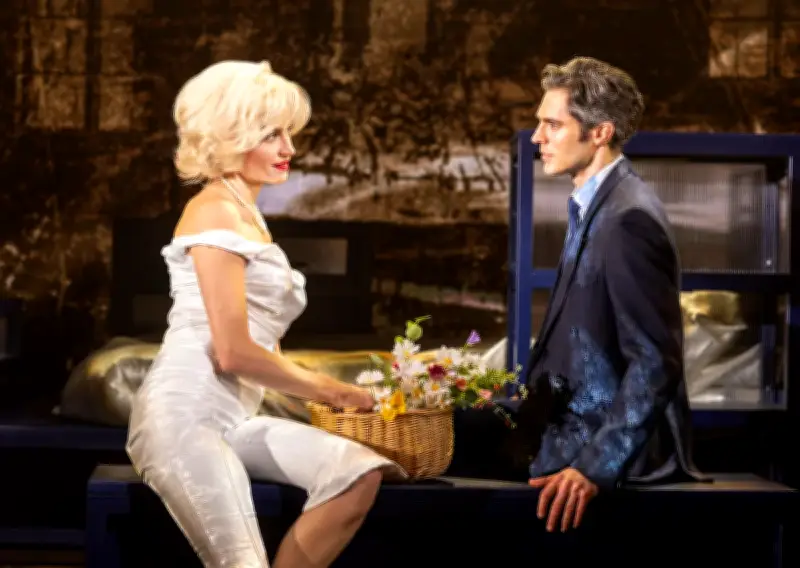
Pixie Lott narrates Monroe's story in a parody of her breathy tones, pouting and posing in a peroxide helmet. Sharleen Cooper Cohen's script tells rather than shows. The critic notes that if Monroe had not died of an accidental overdose (the official story) or one deliberately administered by bulb enema (the "truth"), she would be "DOA here, from exposure to exposition."
An almost all-male cast of supernumeraries mill around Lott in paint-spattered costumes, taking on caricatured versions of Jack and Bobby Kennedy, Joe DiMaggio, Arthur Miller and Mafia boss Sam Giancana. The American accents are generic or inaccurate, and the impression of Laurence Olivier is worse. The under-rehearsed cast trip over each other's lines and gesticulate like traffic policemen.

Staging and atmosphere
Director Philip WM. McKinley stages the action around a bed rotated by the cast while set pieces are latched on and off. Scumbled versions of famous images, including the calendar nude and the upskirt shot from The Seven Year Itch, are projected onto the back walls. The Emerald Theatre, formerly a cabaret venue and nightclub, has the atmosphere of a morgue.
Lott's angular face and slim figure bear little resemblance to Monroe's, but she falls into a knock-kneed, bottom-out "s-curve" stance whenever not reclining. Horrific elements of Monroe's life, such as her grandmother's attempt to smother her as an infant, are related in a pinup pose. Lott has two modes of expression: eyelash-batting flirtation and screaming anxiety.
Life story markers
The usual marker points of Monroe's life are ticked off: miscarriages and abortions, domestic violence from DiMaggio, and her marriage to Arthur Miller, for whom she converted to Judaism. The script includes a frank discussion of what Monroe was like in bed, described as smelling like a lavender field.
The show tells of Monroe's perfectionism and shrewdness as a producer, but also her chronic lateness and insecurity. Booze and pharmaceuticals numb the pain of belittlement and sexual exploitation, including by Giancana. She sings Happy Birthday to Jack Kennedy and shags him before he offloads her on Bobby, with a nameless FBI goon grinning: "A brother's sloppy seconds."
In her centenary year, Monroe is also the subject of a National Portrait Gallery exhibition and a biography by Andrew Wilson. This show, however, is a particularly egregious example of works that glory in her martyrdom. The critic saw it the night before opening night and doubted it would become less crass or inept. "Unfortunately our online content management system does not allow for zero-star reviews. If it did, this would be my first," he wrote.